
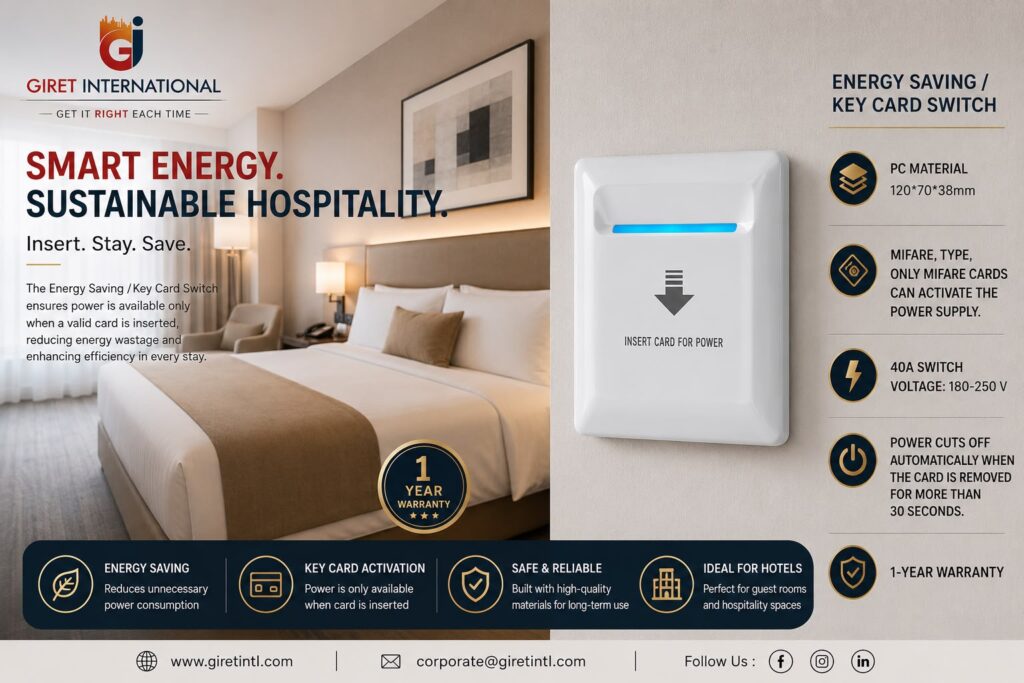
In today’s hospitality landscape, operational efficiency, sustainable infrastructure, intelligent automation, and superior guest experience have become defining factors that distinguish exceptional hotels from ordinary establishments. As the hospitality industry rapidly embraces smart technologies, one product has emerged as an indispensable component of modern guest room electrical management-the Hotel Energy Saver Switch (ESS), also widely known as the Hotel Card Holder Switch.
Whether it is a luxury five-star hotel, boutique resort, serviced apartment, premium business hotel, wellness retreat, corporate guest house, hospital, or institutional accommodation, effective energy management is no longer optional. Rising electricity costs, environmental compliance, sustainability commitments, and guest expectations have made intelligent room power management a strategic investment rather than a mere electrical accessory.
The ROC Series Energy Saver Switch (ESS) from Giret International has been engineered to address these evolving industry requirements by delivering reliable performance, intelligent energy optimization, enhanced safety, modern aesthetics, and seamless integration into contemporary hospitality environments.
This comprehensive guide explores every aspect of hotel energy saver switches-from technology and functionality to applications, specifications, procurement considerations, and industry best practices-providing architects, hotel owners, consultants, interior designers, MEP engineers, procurement professionals, project management consultants (PMCs), facility managers, electrical contractors, and hospitality investors with the knowledge required to make informed purchasing decisions.
What is an Energy Saver Switch (ESS) ?
An Energy Saver Switch (ESS) is an intelligent electrical switching device installed inside hotel guest rooms that controls the supply of electrical power based on the presence of a designated room access card. Commonly referred to as:
- Hotel Energy Saver Switch
- Hotel Card Holder Switch
- Hotel Power Saver Switch
- Hotel Room Energy Controller
- Hotel Key Card Switch
- Hotel Card Activated Power Switch
- Guest Room Power Switch
- RFID Energy Saver Switch
- Smart Card Holder Switch
- Key Tag Energy Saver
- Hotel Master Power Switch
- Hospitality Energy Saving Device
- Card Activated Energy Switch
- Hotel Electrical Card Holder
- Room Energy Management Switch
- Hotel Smart Power Controller
- Energy Conservation Switch
- Hotel Occupancy Power Switch
- Card Slot Energy Saver
- Intelligent Hotel Power Switch
The ESS automatically manages electrical power within guest rooms by activating or deactivating selected electrical circuits when the guest inserts or removes the designated room access card.
This intelligent functionality significantly reduces unnecessary electricity consumption while maintaining operational convenience and enhancing hotel sustainability initiatives.
Why Energy Management Matters in Hospitality ?
Energy expenditure represents one of the largest operational costs within hotels worldwide. A typical hotel consumes substantial electrical energy through:
- Air Conditioning Systems
- HVAC Equipment
- Room Lighting
- Decorative Lighting
- Television Systems
- Mini Refrigerators
- Mobile Charging Points
- Work Desk Power Outlets
- Bathroom Lighting
- Exhaust Fans
- Ceiling Fans
- Smart Controls
- IoT Devices
- Guest Convenience Equipment
Industry research consistently demonstrates that guest rooms account for a major share of a hotel’s total electricity consumption. In many cases, guests unintentionally leave lights, air conditioners, televisions, or other appliances running even after vacating the room.
Without an automated energy management system, this unnecessary power usage leads to:
- Increased operational expenditure
- Higher electricity bills
- Reduced energy efficiency
- Larger carbon footprint
- Increased equipment wear
- Poor sustainability performance
- Reduced profitability
- Greater maintenance costs
The implementation of an Energy Saver Switch addresses these challenges by intelligently controlling room power based on occupancy.
The Evolution of Hotel Room Energy Management
The hospitality industry has witnessed remarkable technological advancements over the past two decades.
Earlier hotel rooms relied entirely on manual electrical switches, requiring guests or housekeeping staff to remember to switch off every appliance before leaving. This approach presented several challenges:
- Lights left ON for extended periods
- Air conditioners operating in vacant rooms
- Television sets consuming standby power
- Chargers drawing phantom loads
- Increased maintenance requirements
- Elevated electricity costs
As hotel automation evolved, Energy Saver Switches became the preferred industry standard. Today’s premium hotels integrate ESS with:
- RFID Door Lock Systems
- Hotel Automation Systems
- Building Management Systems (BMS)
- Guest Room Management Systems (GRMS)
- Smart Thermostats
- Motion Sensors
- Smart Lighting
- HVAC Controls
- Central Energy Monitoring Platforms
The result is a smarter, greener, safer, and more economical hospitality infrastructure.
Why Every Modern Hotel Needs an Energy Saver Switch ?
Energy conservation has become a strategic priority across the hospitality sector.
An Energy Saver Switch delivers multiple operational and commercial advantages:
Significant Reduction in Electricity Consumption
By automatically disconnecting non-essential electrical circuits when rooms are unoccupied, hotels can substantially reduce avoidable electricity usage.
Improved Operational Efficiency
Hotel engineering teams spend less time monitoring unused rooms, while housekeeping personnel no longer need to manually inspect every appliance before room turnover.
Enhanced Sustainability
Hotels adopting intelligent energy-saving technologies strengthen their environmental initiatives, improve ESG performance, and support green building certifications.
Extended Equipment Life
Reducing unnecessary operating hours helps increase the lifespan of lighting fixtures, HVAC systems, televisions, and other electrical equipment.
Improved Guest Experience
Modern ESS units operate seamlessly, providing guests with intuitive and reliable room power management without compromising comfort.
Increased Return on Investment
Reduced electricity consumption contributes directly to lower operating expenses, allowing hotels to recover their investment over time through energy savings.
Industries Using Energy Saver Switches
Although originally developed for hotels, Energy Saver Switches are now widely used across multiple sectors, including:
- Luxury Hotels
- Business Hotels
- Boutique Hotels
- Resorts
- Heritage Hotels
- Budget Hotels
- Eco Resorts
- Serviced Apartments
- Corporate Guest Houses
- Clubs
- Holiday Homes
- Premium Hostels
- Student Accommodation
- Hospitals
- Healthcare Facilities
- Senior Living Communities
- Government Guest Houses
- Training Institutes
- Educational Campuses
- Religious Retreat Centres
- Wellness Centres
- Convention Facilities
- Dormitories
- Institutional Housing
- Commercial Accommodation Projects
Where is an Energy Saver Switch Installed ?
The Energy Saver Switch is typically installed near the entrance of a guest room, allowing occupants to insert their room access card immediately upon entry. Common installation locations include:
- Hotel Guest Room Entrance
- Suite Entry
- Resort Villa Entrance
- Apartment Entrance
- Guest House Entry
- Staff Accommodation
- Executive Suites
- Hospital VIP Rooms
- Premium Hostel Rooms
- Resorts
- Villas
- Service Apartments
- Corporates
This placement ensures convenient operation while maximizing energy-saving effectiveness.
Primary Use Case :
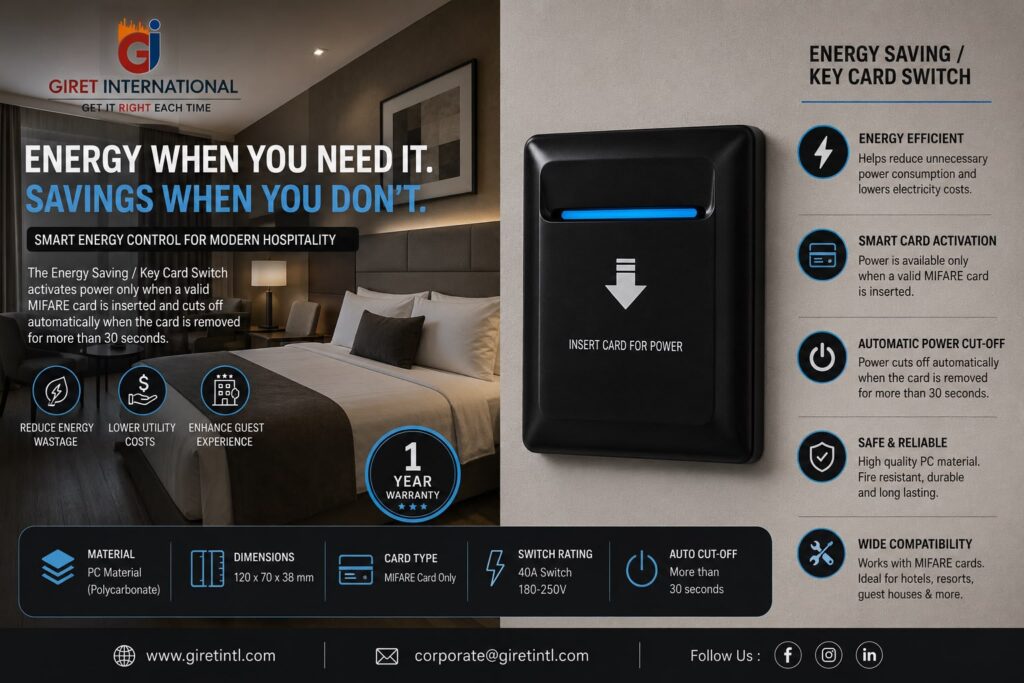
Imagine a guest checks into a hotel and enters the assigned room. Upon inserting the room access card into the Energy Saver Switch, the system immediately activates the designated electrical circuits, enabling lighting, selected power outlets, air conditioning, and other configured amenities.
When the guest leaves the room and removes the card, the switch initiates a short programmable delay before disconnecting non-essential electrical loads. This allows guests sufficient time to exit comfortably while preventing unnecessary energy consumption in an unoccupied room.
Critical circuits-such as refrigerators, emergency lighting, fire alarm systems, communication equipment, or designated medical devices-can remain continuously powered according to the hotel’s electrical design and operational requirements.
Giret ROC Series–Engineered for Modern Hospitality
The ROC Series Energy Saver Switch by Giret has been developed specifically for the demanding requirements of the hospitality industry. Designed with an emphasis on durability, aesthetics, operational reliability, and compatibility with modern hotel electrical systems, it offers a practical solution for efficient guest room power management.
Suitable for new hotel developments as well as renovation projects, the ROC Series integrates seamlessly into a wide range of hospitality environments while complementing contemporary interior design.
About Giret International
Socials : Instagram | Facebook | Pinterest | Youtube | Thread | X