
Soiled Linen Trolley is one of the most underrated efficiency tools inside hotel operations. While guests focus on clean rooms and fresh bedding, the real performance battle happens behind the scenes in corridors, service elevators and laundry rooms.
Every delay between room checkout and washed linen returning to stock affects occupancy flow. When linen transport lacks structure, piles accumulate, washing schedules shift and room readiness slows. A properly implemented Soiled Linen Trolley transforms that fragile chain into a predictable and high-speed system.
Laundry speed begins with transport discipline.
Soiled Linen Trolley and Continuous Linen Flow
Laundry departments operate on rhythm. Machines function best when loads arrive steadily, not in chaotic bursts. When housekeeping staff collect linen without coordination, some floors send excess at once while others delay transfer.
A Soiled Linen Trolley introduces consistent collection rounds. Instead of unpredictable dumping, linen reaches the laundry area in organized intervals.
Balanced inflow protects washing schedules.
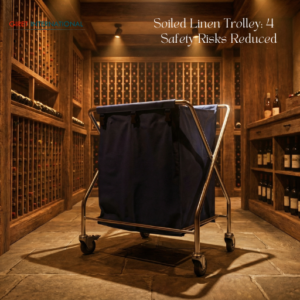
For safety structure reference:
/soiled-linen-trolley-4-safety-risks-reduced
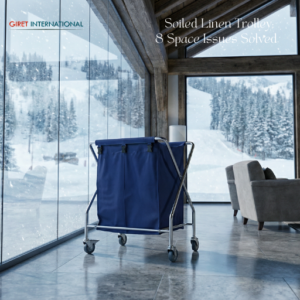
For spatial discipline insights:
/soiled-linen-trolley-8-space-issues-solved
Order in movement protects speed in processing.
1. Removes Corridor Holding Bottlenecks
In many properties, linen waits temporarily in service corners before final transfer. These holding points slow the entire system.
A Soiled Linen Trolley eliminates intermediate storage. Linen moves directly from guest room to centralized containment.
Direct routing shortens turnaround time significantly.
2. Reduces Excessive Transport Trips
Manual collection requires multiple small trips across floors. Each trip consumes time that could be spent cleaning additional rooms.
A Soiled Linen Trolley increases load capacity per round. Housekeeping teams collect more linen in fewer cycles.
Reduced repetition accelerates the entire process.
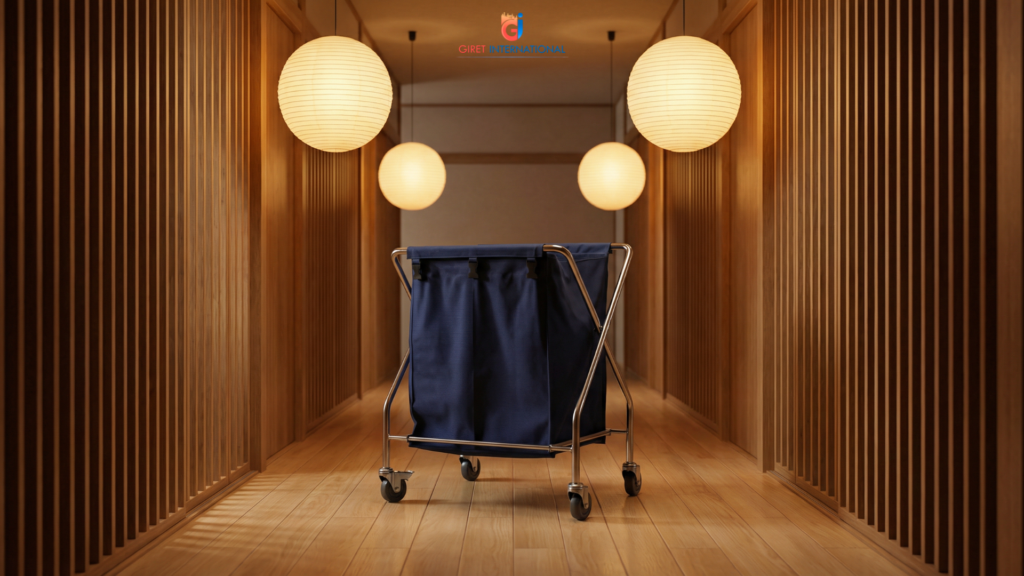
3. Optimizes Service Elevator Scheduling
Elevators are shared resources. When linen transfer happens randomly, waiting times increase.
A Soiled Linen Trolley supports scheduled transfer windows. Predictable usage reduces elevator congestion and prevents cross-department delays.
Better coordination equals faster delivery.
4. Improves Batch Planning in Laundry Rooms
Laundry machines perform efficiently when loads are consistent in size and timing. Sudden overloads create machine queuing, while idle gaps waste operational time.
A Soiled Linen Trolley delivers steady, controlled batches. Laundry supervisors can plan washing cycles with accuracy.
Controlled volume improves processing efficiency.
5. Reduces Sorting Confusion
Mixed, loosely transported linen increases sorting time. Sorting delays extend washing cycles.
A Soiled Linen Trolley keeps linen centralized and easier to unload. Structured containment simplifies categorization at the laundry entry point.
Efficient sorting shortens total turnaround.
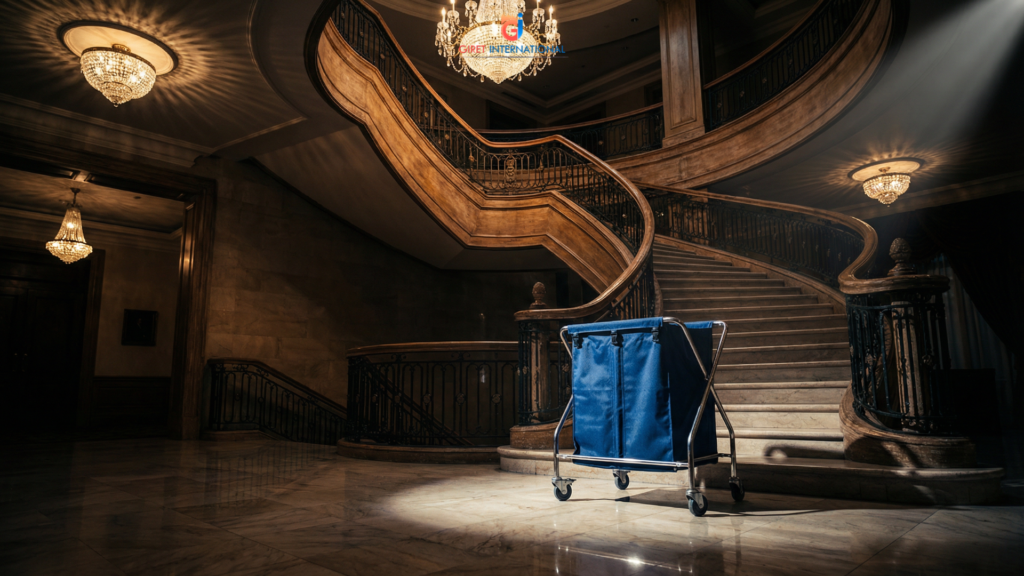
6. Enhances Departmental Communication
Operational delays often arise from miscommunication. Housekeeping may not inform laundry teams about incoming volume.
With a Soiled Linen Trolley, transport follows predictable intervals. Laundry teams anticipate arrival and prepare accordingly.
Anticipation reduces idle machine time.
7. Stabilizes Performance During Peak Occupancy
High occupancy periods test every system. Linen volume multiplies, increasing pressure on backend operations.
A Soiled Linen Trolley absorbs increased volume while maintaining structured rounds. Even under peak conditions, transfer remains controlled.
Scalability ensures consistent turnaround speed.
Soiled Linen Trolley and Reduced Idle Gaps
Laundry efficiency depends not only on speed but on eliminating idle gaps. When linen arrives inconsistently, machines may wait unused.
A Soiled Linen Trolley ensures that flow remains uninterrupted. Continuous transfer keeps equipment engaged without overload.
Operational rhythm strengthens productivity.
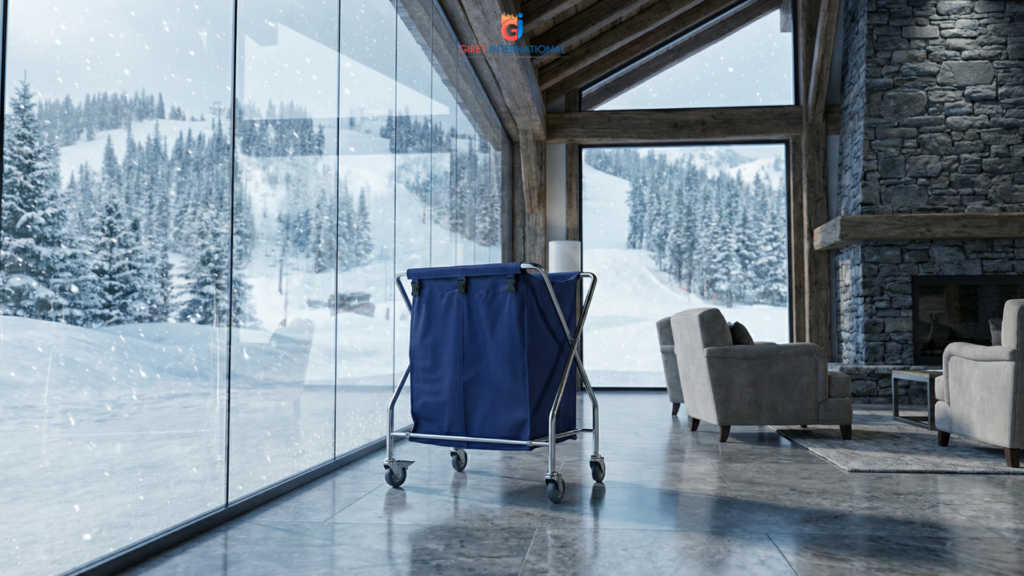
Soiled Linen Trolley Protects Linen Lifecycle
Faster turnaround also protects linen inventory. Delays often cause shortages of fresh sheets during high demand.
By accelerating transport, a Soiled Trolley ensures washed linen returns to storage promptly.
Improved circulation protects stock balance.
Soiled Linen Trolley Supports Energy Efficiency
Unplanned washing cycles waste electricity and water. Balanced batch management improves utility usage.
A Soiled Trolley contributes indirectly to sustainability by enabling steady machine scheduling.
Structured inflow enhances resource control.
Improves Staff Productivity
Housekeeping teams perform better when processes are clear. Repeated interruptions caused by unscheduled linen movement reduce focus.
A Soiled Linen Trolley allows staff to follow defined routes and collection schedules.
Clear routines increase operational momentum.
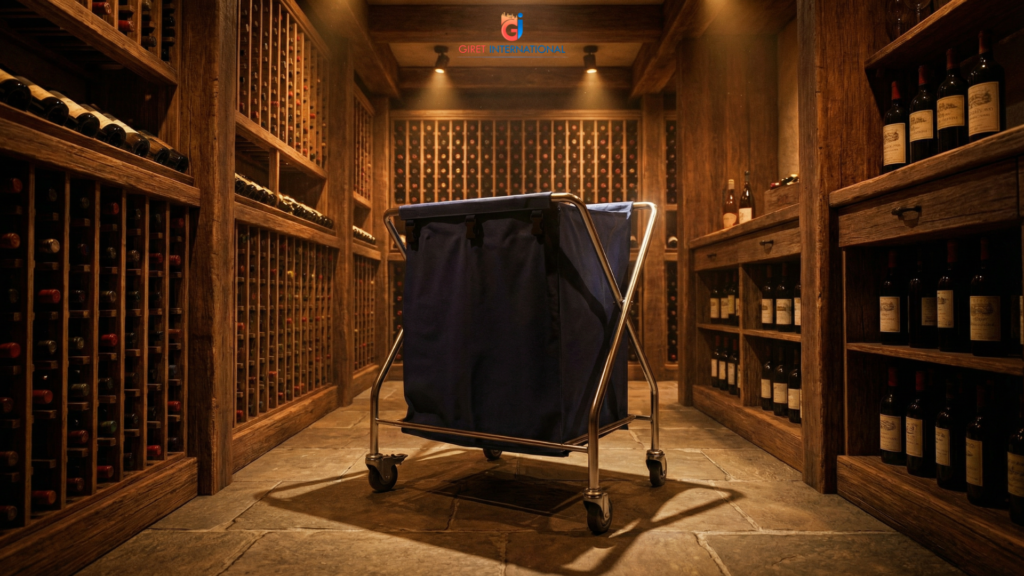
Minimizes End-of-Shift Backlogs
End-of-day backlogs occur when linen transfer lags throughout the shift. Laundry teams then face overwhelming loads late in the evening.
A Soiled Linen Trolley prevents backlog accumulation by encouraging continuous collection cycles.
Balanced distribution protects evening productivity.
Strengthens Operational Predictability
Predictability allows managers to measure performance accurately. When transport timing varies, identifying bottlenecks becomes difficult.
A Soiled Linen Trolley introduces measurable structure into the process.
Measured systems are easier to optimize.
Soiled Linen Trolley as a Turnaround Accelerator
Room turnover speed depends on linen availability. If washed sheets return late, clean rooms wait unnecessarily.
A Soiled Linen Trolley accelerates the critical link between collection and washing, supporting faster room readiness.
Quick linen rotation supports guest satisfaction.
Long-Term Efficiency Through Structured Transport
Small delays repeated daily accumulate into significant operational inefficiency. Structured systems prevent this gradual decline.
A Soiled Linen Trolley embeds speed into everyday routine rather than relying on reactive effort.
Consistency creates lasting efficiency.

Final Thoughts
Laundry turnaround is not determined solely by washing speed. It begins with how linen moves through the property.
By implementing a Soiled Trolley, hotels reduce corridor delays, stabilize elevator usage, optimize batch processing and prevent backlogs.
Controlled movement improves flow.
Balanced loads protect scheduling.
Structured transfer increases speed.
In hospitality, faster linen cycles mean faster room readiness and faster room readiness strengthens revenue performance.
About Giret International
Contact Us
Hospitality Products
Instagram | Facebook | Pinterest | YouTube | X (Twitter)