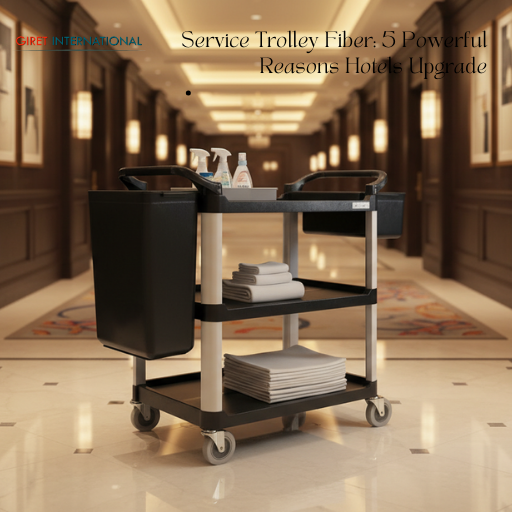
service trolley fiber has become a preferred operational tool for modern hotels that want faster service, better hygiene control, and smoother workflow. As hospitality standards rise, hotels can no longer depend on outdated metal carts that create noise, rust issues, and handling challenges. The shift toward fiber-based utility carts is not a trend it is a calculated operational upgrade.
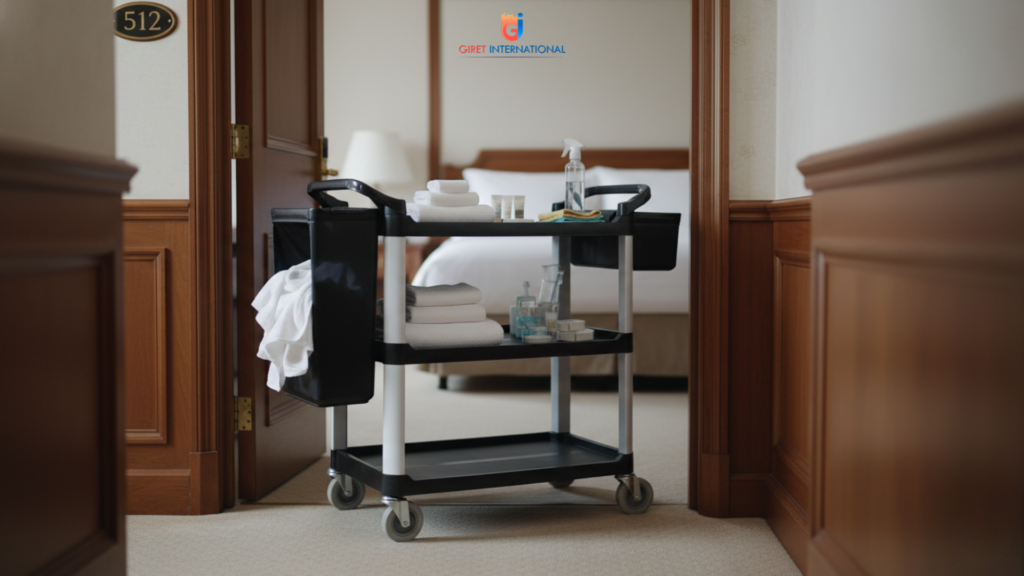
In this blog, we break down five powerful reasons hotels are upgrading to service trolley fiber models and why this change directly impacts efficiency, durability, and guest satisfaction.
Why Hotels Are Replacing Traditional Service Carts
For years, metal trolleys dominated hotel service areas. However, they created repeated operational problems:
- Rust in humid environments
- Noise in guest corridors
- Heavy handling on carpeted floors
- Visible wear and tear
A service trolley fiber model solves these issues while improving daily usability. That’s why upgrades are accelerating across hospitality properties.
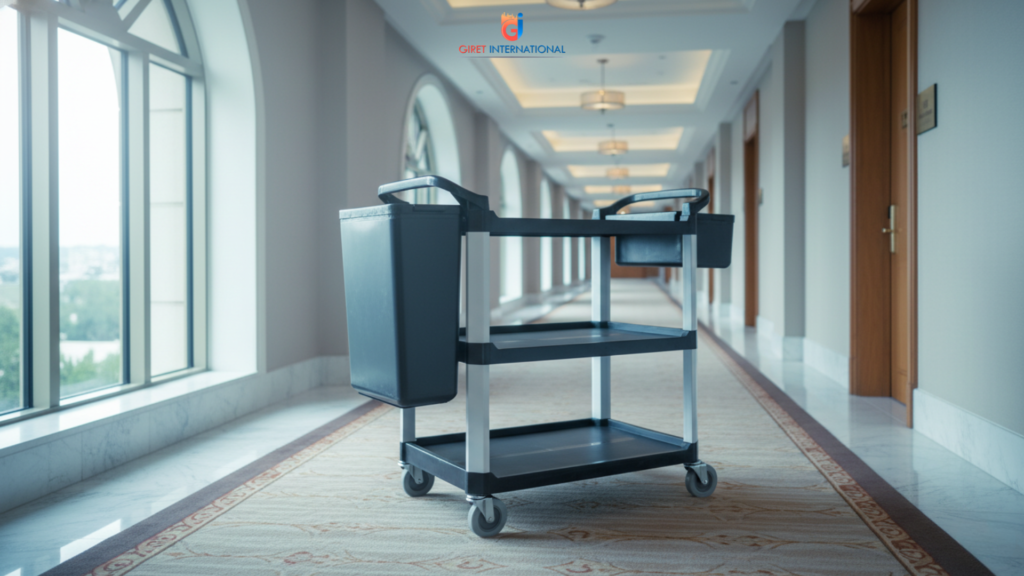
Reason 1: Lightweight Yet Strong Construction
The first powerful reason hotels upgrade is weight control without sacrificing durability.
A service trolley fiber built with ABS and aluminium offers:
- Structural strength
- Reduced overall weight
- Balanced load distribution
Lighter construction means staff move faster without physical strain.
Why Lightweight Matters in Hotels
Hotels operate across multiple floors. Staff push carts continuously for hours. Heavy metal carts increase fatigue, while a service trolley fiber supports smoother, controlled movement throughout shifts.
Reason 2: Rust-Free and Maintenance-Friendly
Rust is a silent operational cost.
Metal carts exposed to cleaning chemicals and humidity develop corrosion. A service trolley fiber eliminates this problem because fiber and ABS materials do not rust.
Reduced Maintenance Downtime
When equipment resists corrosion:
- Repairs decrease
- Replacement cycles extend
- Maintenance budgets reduce
Hotels prefer solutions that last without constant upkeep.
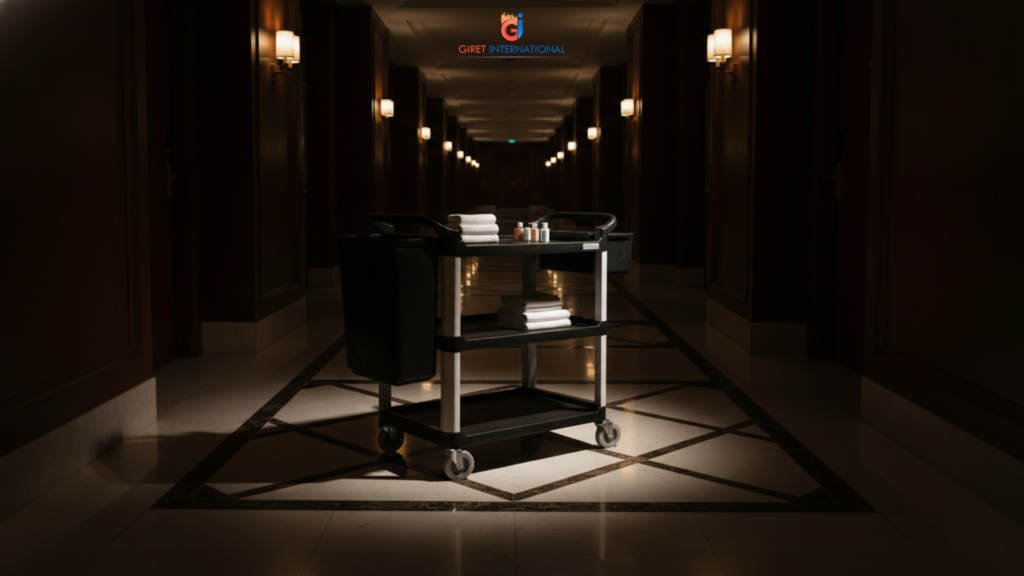
Reason 3: Smooth and Silent Movement
Guest-facing areas demand quiet service.
Traditional carts often create wheel vibration and metallic noise. A service trolley fiber offers smoother rolling performance, especially on carpeted corridors.
Why Silence Improves Guest Experience
Guests resting or working in rooms appreciate minimal disturbance. Quiet service movement enhances the perception of professionalism.
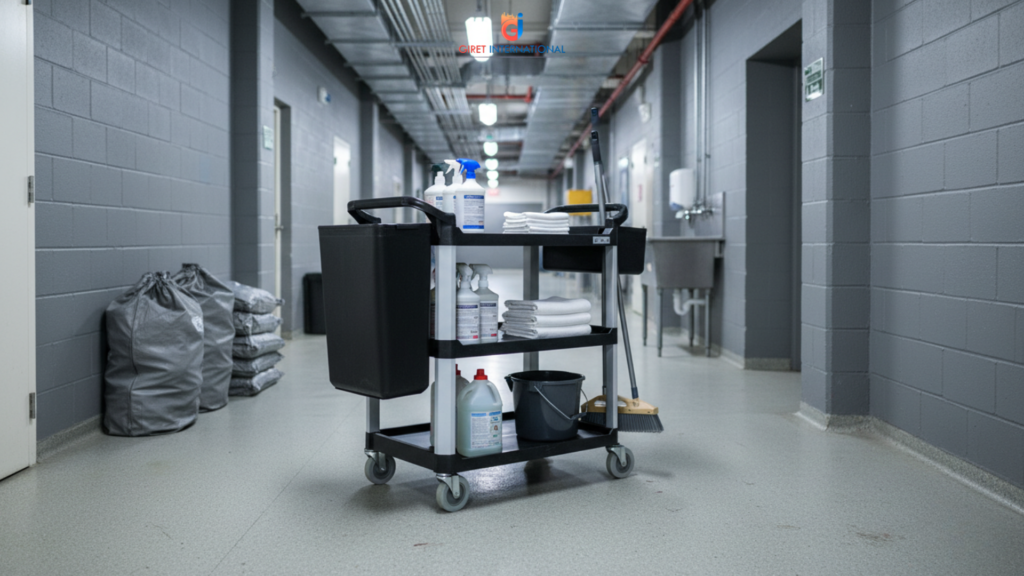
Reason 4: Better Hygiene Control
Hygiene is a non-negotiable hospitality standard.
A service trolley fiber supports hygiene because:
- ABS surfaces are easy to wipe
- No rust flakes contaminate items
- Smooth surfaces reduce dirt accumulation
This improves cleanliness in both housekeeping and food service operations.
Easy Cleaning Between Shifts
Smooth fiber surfaces allow quick sanitation. Staff can clean and reset carts efficiently without extended downtime.
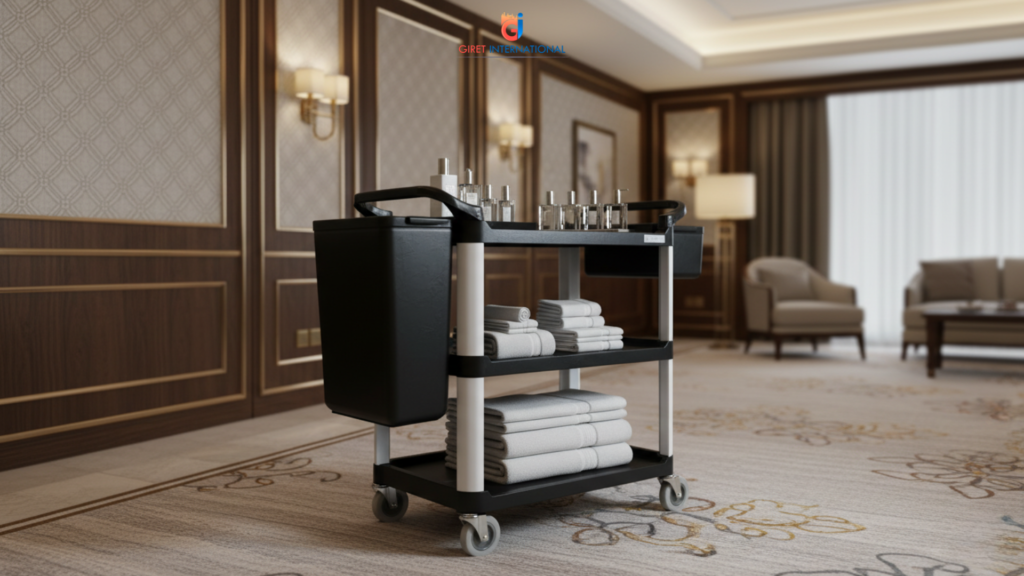
Reason 5: Professional Modern Appearance
Visual presentation matters.
A service trolley fiber offers a sleek, clean finish that aligns with modern hotel interiors. Unlike scratched metal carts, fiber models maintain a polished look for longer.
First Impressions Count
Guests and event attendees often see service carts in corridors and banquet areas. A professional-looking trolley reflects operational quality.
ABS and Aluminium Material Advantages
Modern service trolley fiber designs combine:
- ABS molded tiers
- Aluminium structural support
This combination ensures strength without unnecessary weight.
ABS material resists impact, while aluminium prevents structural weakness.
3-Tier Design Efficiency
Most hotels prefer a 3-tier configuration because it:
- Separates items logically
- Improves organization
- Prevents overcrowding
A service trolley fiber with three tiers supports structured workflow, especially in banquets and room service.
With or Without Side Bins Why Flexibility Matters
Side bins offer optional functionality.
A service trolley fiber with side bins allows:
- Waste separation
- Linen control
- Quick disposal access
Hotels can choose models with or without side bins depending on operational needs.
Long-Term Cost Comparison
At first glance, fiber trolleys may appear comparable in cost to metal alternatives. However, over time:
- Rust repair costs disappear
- Replacement cycles extend
- Maintenance needs drop
A service trolley fiber often proves more cost-effective over multiple years.
Why Hotels Standardize Fiber Trolleys
Standardization simplifies operations.
Hotels that adopt a single service trolley fiber model across departments benefit from:
- Uniform staff training
- Predictable handling
- Easier inventory planning
Consistency leads to smoother service execution.
Operational Impact Across Departments
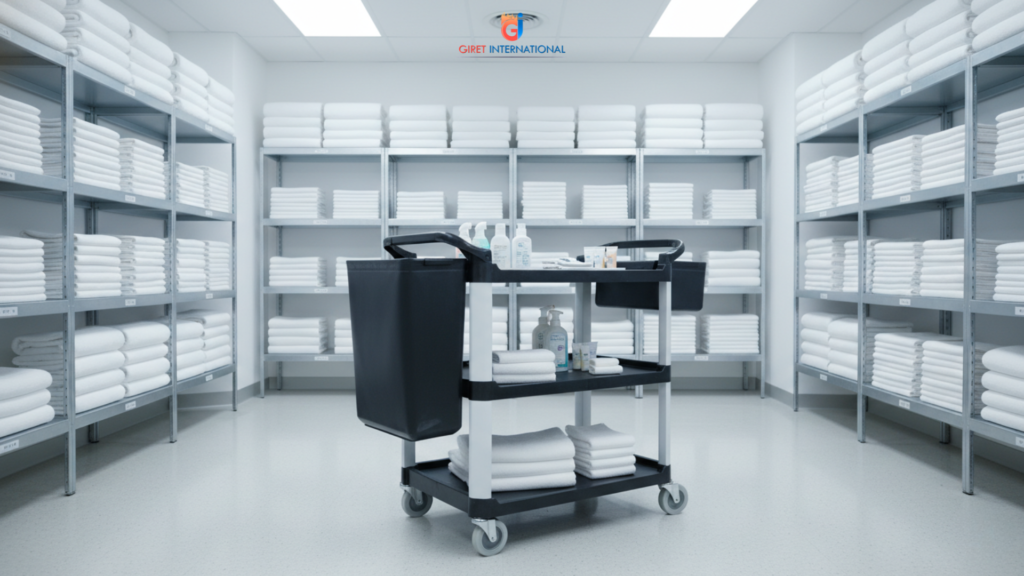
A service trolley fiber is versatile enough for:
- Housekeeping
- Room service
- Banquet operations
- Maintenance support
This versatility increases its value as a long-term investment.
Environmental and Practical Considerations
Fiber and ABS materials resist environmental stress. Unlike metal, they do not degrade quickly under moisture or chemical exposure.
This makes a service trolley fiber suitable for diverse hotel climates and cleaning standards.
Staff Feedback and Performance
Hotels that upgrade report:
- Less fatigue among staff
- Faster service movement
- Reduced operational interruptions
A service trolley fiber directly improves the physical experience of daily work.
Final Verdict
A service trolley fiber upgrade is not cosmetic it is strategic.
The five powerful reasons hotels upgrade include:
- Lightweight yet strong construction
- Rust-free durability
- Silent and smooth handling
- Improved hygiene control
- Professional modern appearance
Hotels that prioritize efficiency, hygiene, and guest experience increasingly rely on fiber-based service trolleys to support high operational standards.
In hospitality, equipment that moves smoothly, lasts longer, and looks professional becomes more than a tool it becomes part of the service experience itself.
About Giret International
Contact Us
Hospitality Products
Instagram | Facebook | Pinterest | YouTube | X (Twitter)