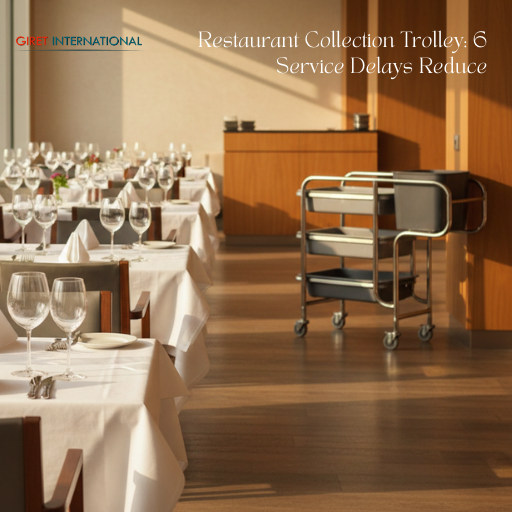
Restaurant Collection Trolley directly influences how quickly guests receive attention inside a restaurant. While kitchens often get blamed for slow service, the real delay frequently begins on the dining floor. When tables remain occupied by used plates, servers hesitate to approach, new guests wait longer, and the rhythm of hospitality breaks.
A structured clearing method changes this completely. The moment a Restaurant Collection Trolley becomes part of service movement, response time starts improving without hiring additional staff.
Service speed is not only about cooking fast it is about resetting space fast.
Understanding Service Delay in Restaurants
Guests rarely measure time using a clock.
They measure it through visible inactivity.
When finished plates remain on tables, customers assume staff is unavailable. Even if servers are busy elsewhere, perception becomes negative. A Restaurant Collection Trolley removes this visual waiting signal quickly and silently.
Speed therefore becomes visible before interaction begins.
Restaurants improving clearing efficiency often notice improved review ratings without changing menu or pricing.
Restaurant Collection Trolley and Response Time
Servers frequently walk long distances just to drop plates at washing areas. This interrupts order taking and reduces presence in the dining section.
Introducing a Restaurant Collection Trolley shortens travel cycles. Instead of multiple trips, one round clears several tables.
Staff stays closer to guests.
Closer presence means faster response.
For understanding how hygiene handling works alongside service speed, read:
/restaurant-collection-trolley-5-hygiene-problems-solved
For workflow efficiency foundation, refer:
/restaurant-collection-trolley-7-efficiency-gains
6 Major Causes of Slow Service
1. Repeated Walking Routes
Staff moving back and forth wastes time.
A Restaurant Collection Trolley centralizes removal points.
2. Waiting for Free Hands
Servers delay greeting new guests while holding plates.
Clearing station solves hand availability instantly.
3. Blocked Tables
Occupied dirty tables cannot be reassigned.
Fast clearing frees seating quickly.
4. Kitchen Coordination Lag
Dishwash area receives uneven load.
Balanced collection improves backend readiness.
5. Staff Overlap
Two employees performing same clearing task causes confusion.
Defined routes using a Restaurant Collection Trolley prevent overlap.
6. Late Table Reset
Housekeeping waits for removal before wiping.
Immediate removal shortens reset cycle.
Restaurant Collection Trolley and Movement Optimization
Restaurants operate best when movement patterns become predictable.
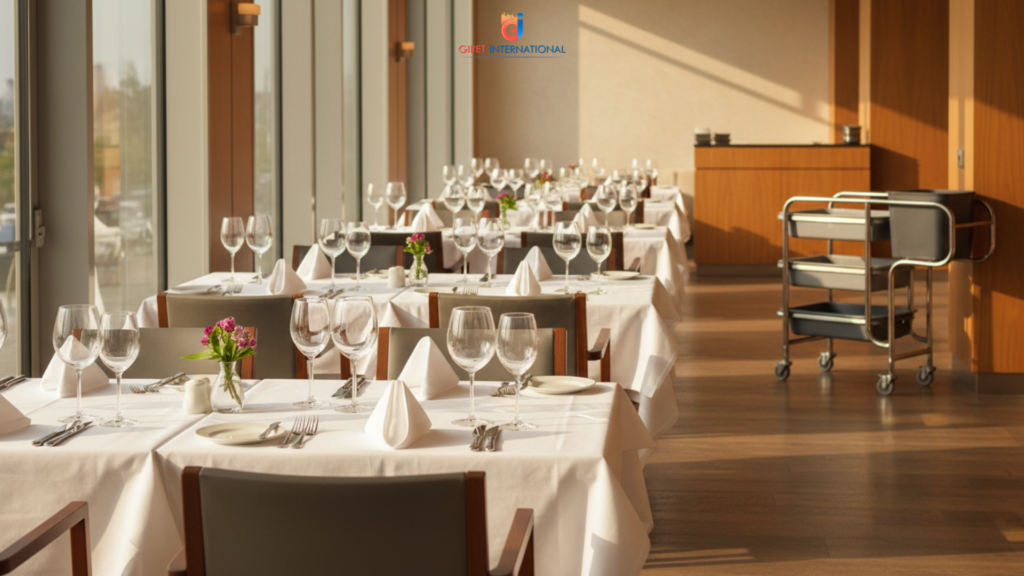
Instead of random paths, a Restaurant Collection Trolley creates circular routes. Staff cover their assigned zones and deposit items during one pass.
This produces three benefits:
- fewer interruptions
- smoother coordination
- visible professionalism
Managers can also assign responsibilities per section, reducing dependency on experienced employees.
Table Turnover & Guest Waiting Psychology
Every empty clean table represents opportunity.
Every dirty occupied table represents delay.
A Restaurant Collection Trolley converts occupied tables into available seating faster. Guests waiting at entrance perceive quicker service even before ordering.
This psychological advantage improves satisfaction levels because customers associate speed with care.
Shorter wait times also reduce walkouts during peak hours
Staff Coordination Between Floor & Kitchen
Service and kitchen teams depend on each other’s timing. When dishes arrive in batches, washing slows and plating gets delayed.
Using a Restaurant Collection Trolley, items arrive in organized sequence rather than sudden piles. Dishwashing becomes continuous instead of reactive.
Continuous washing = continuous plating.
This stabilizes service pace across courses.
Ideal Placement Inside Dining Layout
Placement determines effectiveness.
Position the Restaurant Collection Trolley midway between sections rather than near the kitchen door. This prevents crowding and keeps traffic balanced.
Suggested method:
- Divide dining hall into zones
- Assign each zone clearing intervals
- Transfer items periodically to wash area
This keeps the dining floor active but never chaotic.
Operational Consistency for Peak Hours
Rush hours expose operational weaknesses.
If clearing fails during peak time, service collapses quickly.
A Restaurant Collection Trolley acts as a stabilizer because it maintains predictable pace regardless of volume. Staff follow routine rather than improvisation.
Consistency leads to reliability and reliability builds reputation.
Final Thoughts
Fast restaurants are not necessarily those with the quickest chefs.
They are the ones where movement never stops.
By implementing a Restaurant Collection Trolley, hotels remove invisible delays that accumulate throughout service hours. Guests receive attention sooner, tables become available earlier, and staff remain composed under pressure.
Speed becomes natural instead of forced.
And when service flows naturally, guests remember comfort rather than waiting time.
About Giret International
Contact Us
Hospitality Products
Instagram | Facebook | Pinterest | YouTube | X (Twitter)