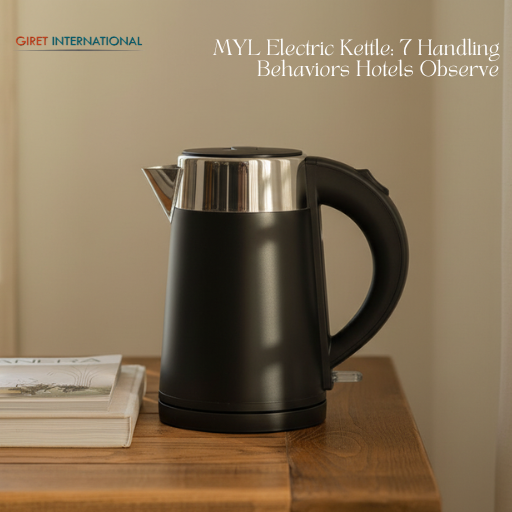
MYL Electric Kettle has become a closely observed in-room appliance in hotels where operations teams, housekeeping staff, and supervisors constantly track how guests interact with everyday utilities. In hospitality environments, handling behavior matters just as much as features or design. How an appliance is lifted, refilled, switched on, or placed back after use directly affects safety, durability, and operational efficiency.
Why Hotels Monitor Handling Behaviors
Hotels do not rely only on complaint logs to understand appliance performance. Instead, they analyze behavioral patterns seen by housekeeping and maintenance teams during daily room checks. Handling behaviors reveal early signs of misuse, safety risks, or design stress points.
The MYL Electric Kettle is frequently included in these observations because it is used multiple times a day across different guest profiles business travelers, families, and long-stay guests.
MYL Electric Kettle: Handling Behavior 1 – Lifting & Carrying Patterns
Hotels closely observe how guests lift the kettle from the base. Some guests carry it filled with water, while others lift it empty and refill elsewhere.
This behavior matters because:
- Excessive tilting can cause water spillage
- Filled lifting increases strain on the handle
- Mishandling during movement increases drop risk
Operational teams note that a stable grip and balanced weight distribution reduce damage frequency.
MYL Electric Kettle: Handling Behavior 2 – Refilling Methods Guests Use
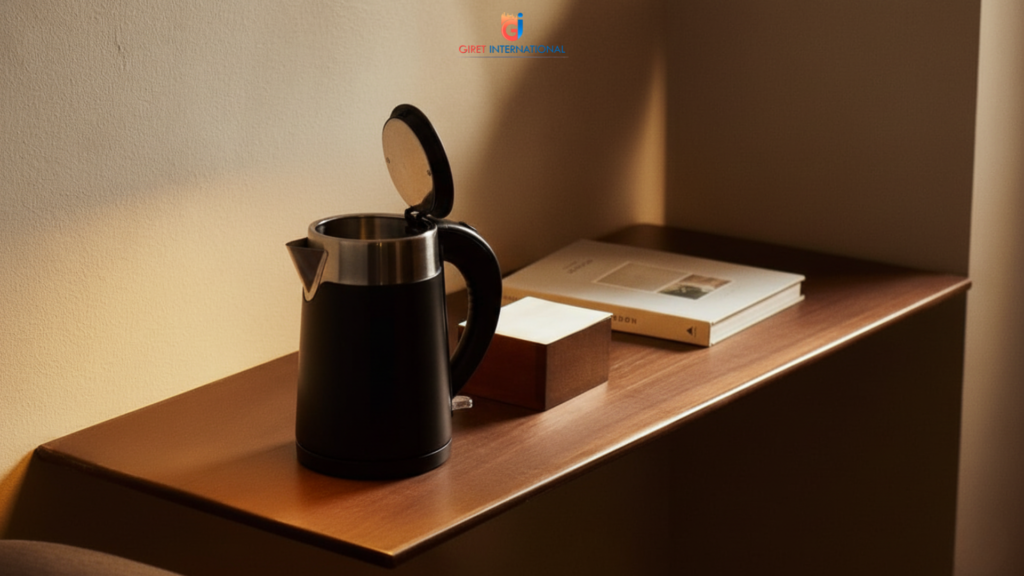
Guests refill kettles in different ways some directly under taps, others using cups or bottles. Hotels observe this behavior to understand water exposure around electrical components.
Key observations include:
- Overfilling beyond the water window
- Refilling without fully emptying old water
- Spillage around the base area
These insights help hotels define housekeeping refill guidelines and guest instruction placement.
MYL Electric Kettle: Handling Behavior 3 – Lid Interaction & Opening Style
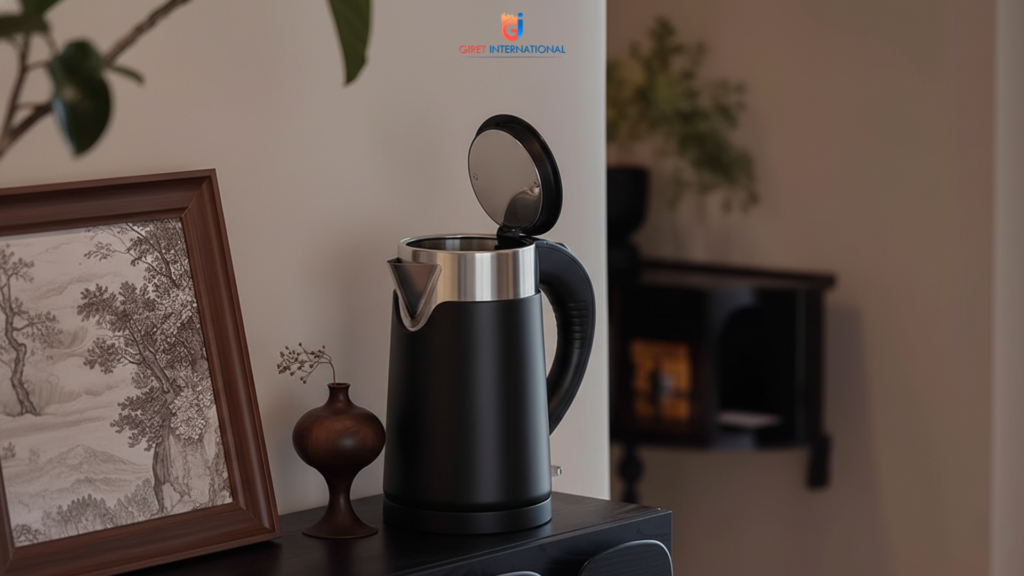
Another important observation is how guests open and close the lid. Some press firmly, others twist or pull aggressively.
Hotels monitor:
- Lid stress points
- Incomplete closure before boiling
- Frequent opening immediately after boil
This behavior affects steam release, internal pressure, and long-term lid alignment.
MYL Electric Kettle: Handling Behavior 4 – Base Placement & Alignment
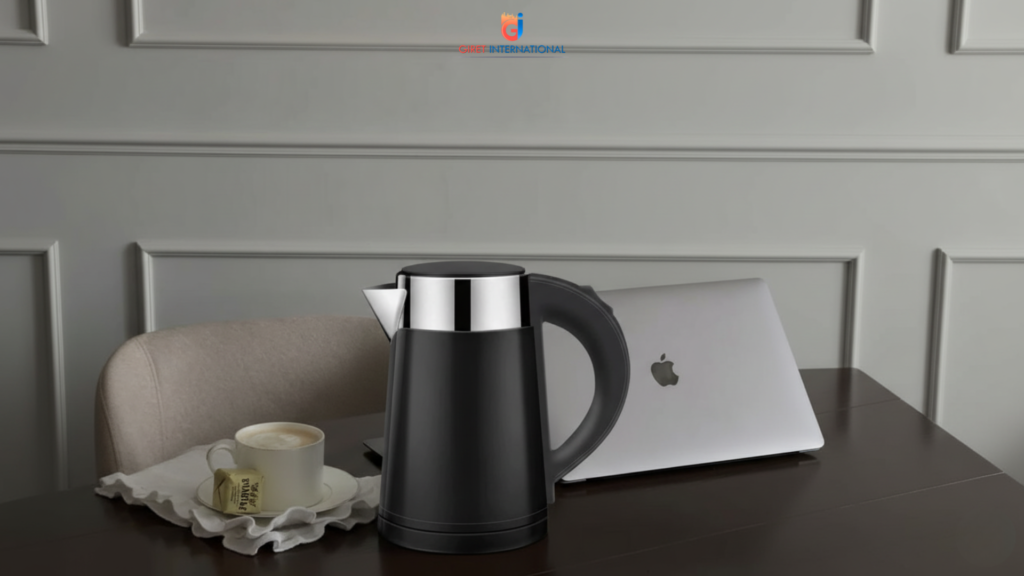
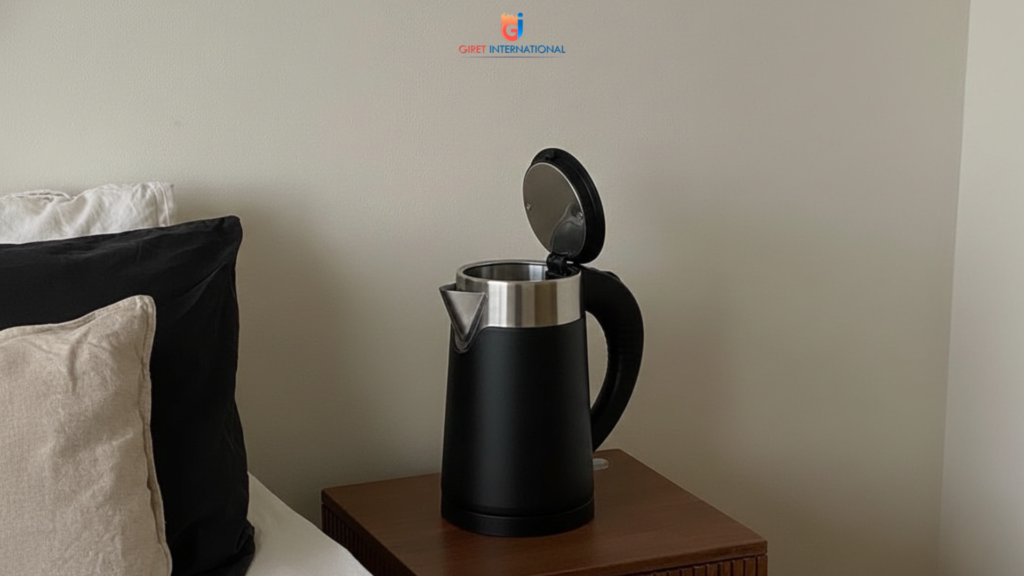
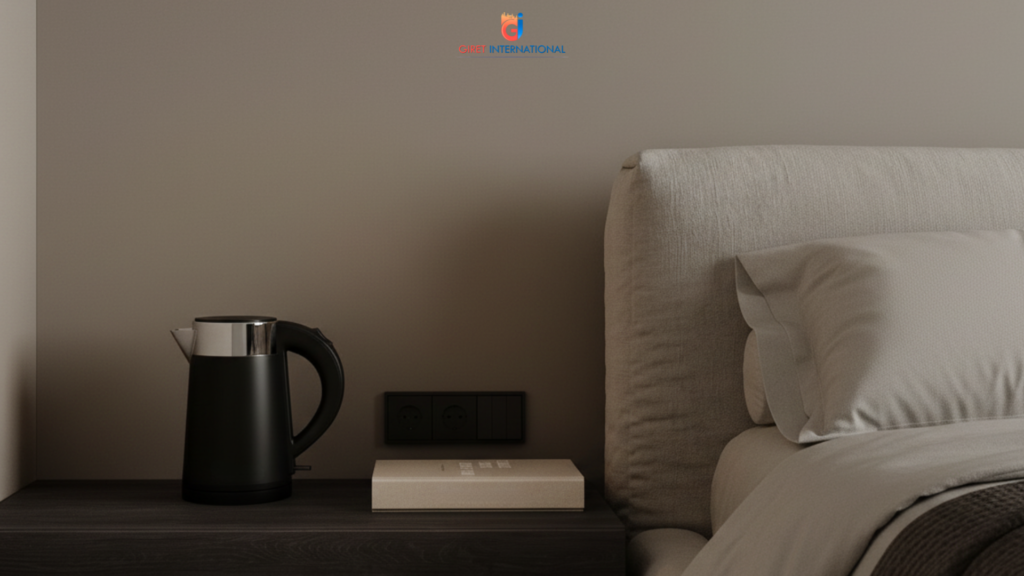
The base alignment is one of the most observed operational factors. Guests often reposition the kettle to different surfaces such as bedside tables, desks, or trays.
Hotels watch for:
- Misalignment on the power base
- Placement near water sources
- Placement near soft furnishings
These observations directly inform room layout planning and safe placement guidelines.
MYL Electric Kettle: Handling Behavior 5 – Switching On & Off Habits
Switch usage patterns reveal a lot about guest awareness. Some guests toggle the switch multiple times, while others force it when it does not activate instantly.
Hotels track:
- Repeated switching within short intervals
- Switching on before proper placement
- Switching immediately after auto cut-off
Such behaviors influence switch durability assessments and training instructions for housekeeping checks.
MYL Electric Kettle: Handling Behavior 6 – Post-Boil Movement
Once boiling is complete, guests often move the kettle immediately to pour water. Hotels observe how quickly this happens and where the kettle is placed after use.
This matters because:
- Hot surfaces increase burn risk
- Moving too fast may cause spillage
- Incorrect resting surfaces may trap heat
These patterns guide safety messaging inside rooms.
MYL Electric Kettle: Handling Behavior 7 – Storage After Use
Some guests neatly return the kettle to its base, while others leave it on trays, near sinks, or unplugged on desks.
Hotels observe:
- Cable handling habits
- Storage without drying the exterior
- Leaving water inside for long durations
This affects hygiene, electrical safety, and appliance lifespan.
Operational Insights Hotels Gain from These Behaviors
By tracking these seven handling behaviors, hotels gain:
- Early warning signs of misuse
- Data for refining SOPs
- Better placement strategies
- Reduced replacement frequency
- Improved guest safety outcomes
The MYL Electric Kettle becomes not just an appliance, but a behavioral indicator within the guest room.
How This Connects with Previous MYL Kettle Studies
This blog connects closely with earlier internal studies such as:
- MYL Electric Kettle: 6 Risk Factors Hotels Must Manage
- MYL Electric Kettle: 5 Common Issues Hotels Encounter
Together, these posts form a structured content cluster covering risk awareness, operational issues, and now behavioral observation, helping search engines understand topical authority.
Conclusion
Handling behavior is often overlooked, yet it plays a critical role in hotel room safety and efficiency. By observing how guests lift, refill, place, switch, and store the MYL Electric Kettle, hotels gain actionable insights that improve room design, staff training, and appliance longevity.
In modern hospitality operations, understanding how an appliance is used is just as important as knowing what it does. This behavioral lens allows hotels to reduce risks, improve consistency, and deliver a smoother guest experience without increasing operational complexity.
About Giret International
Contact Us
Hospitality Products
Instagram | Facebook | Pinterest | YouTube | X (Twitter)