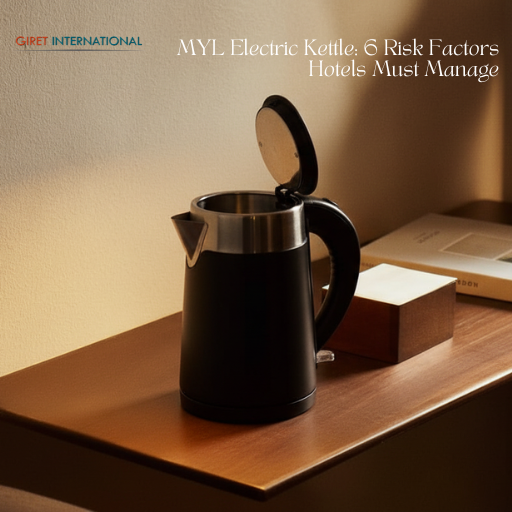
MYL Electric Kettle plays a critical role in hotel room operations, yet it is also one of the most commonly overlooked risk points in hospitality rooms. While guests see a simple appliance, hotel operators understand that a kettle directly affects safety compliance, hygiene standards, guest behavior, and daily room efficiency.
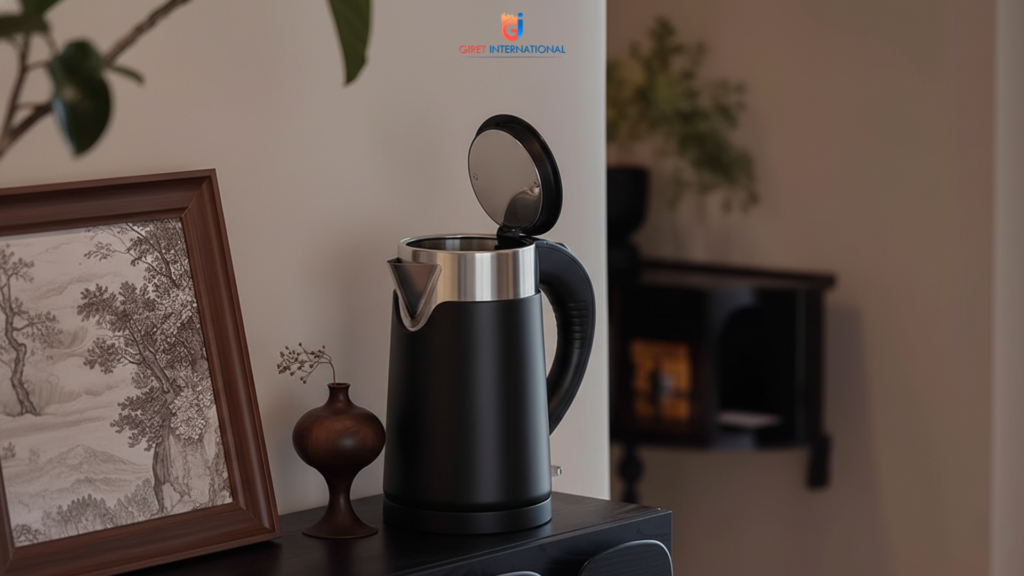
In modern hospitality, unmanaged appliance risks lead to guest complaints, operational disruptions, safety incidents, and unnecessary replacement costs. This is why hotels evaluate the MYL Electric Kettle not as a basic amenity, but as a controlled utility that must consistently perform under real-world room conditions.
This article breaks down the six major risk factors hotels must actively manage when deploying kettles in guest rooms and explains how a hospitality-focused electric kettle helps reduce exposure at every level.
Why Electric Kettles Are a Hidden Risk in Hotels
Electric kettles are used daily by guests with different habits, expectations, and levels of care. Unlike controlled back-of-house equipment, in-room appliances face unpredictable usage. Guests may overfill, underfill, operate kettles without water, or move them to unsafe surfaces.
From an operational perspective, each misuse event increases the hotel’s exposure to safety complaints, electrical issues, or accelerated wear. This is why hotels that standardize room utilities analyze risk first, convenience second.
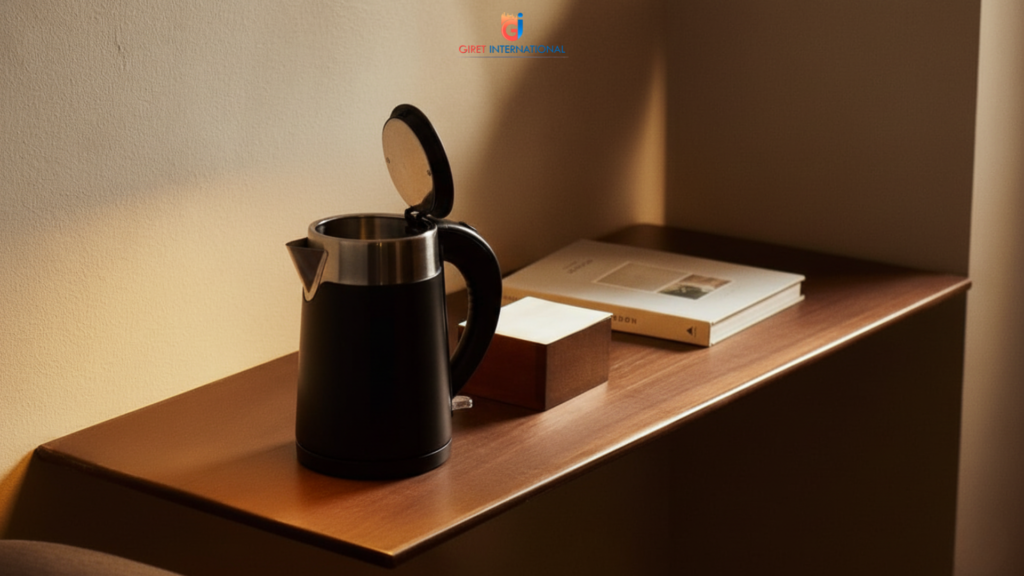
The MYL Electric Kettle is evaluated specifically for how well it limits these risks during continuous guest turnover.
MYL Electric Kettle Risk Factor 1: Dry-Boil Incidents
One of the most serious operational risks hotels face is dry-boil usage. Guests often switch on kettles without checking the water level, either unintentionally or due to unfamiliarity.
Dry boiling can cause:
- Internal heating damage
- Electrical safety hazards
- Burnt odor complaints
- Shortened appliance lifespan
Hotels reduce this risk by selecting kettles designed to shut down automatically when water levels are insufficient. Dry-boil protection is not a luxury feature in hospitality it is a requirement for risk containment.
MYL Electric Kettle Risk Factor 2: Overheating Control
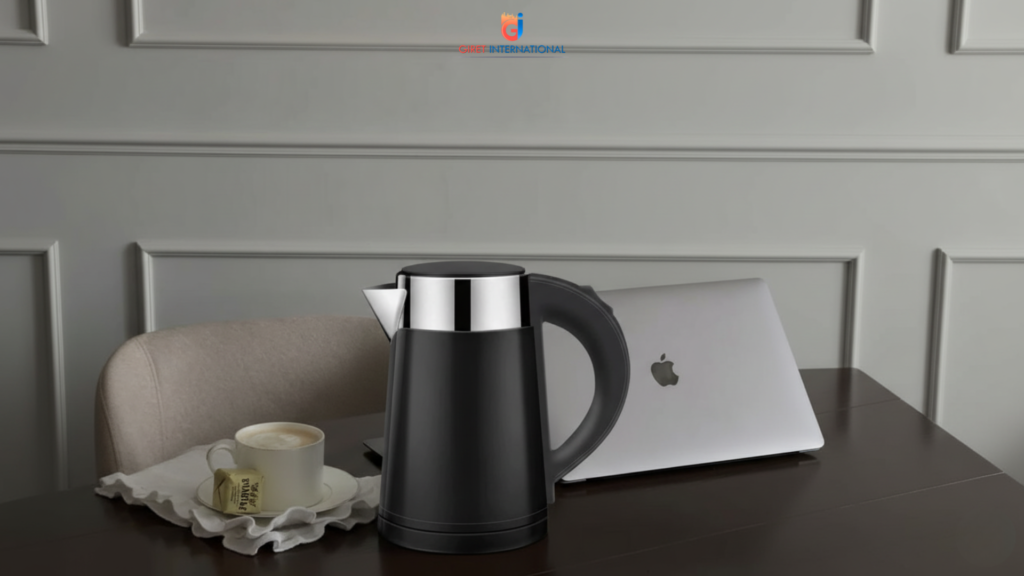
Overheating is another risk factor directly tied to guest behavior. Continuous boiling, repeated reheating, or unattended operation can raise internal temperatures beyond safe limits.
In hotel rooms, overheating risks affect:
- Electrical sockets
- Nearby surfaces
- Fire safety compliance
- Guest trust and brand reputation
Hotels manage this exposure by relying on kettles that include automatic cut-off systems and controlled heating cycles. Stable temperature regulation reduces both safety incidents and maintenance calls.
MYL Electric Kettle Risk Factor 3: Hygiene Exposure
Hygiene is a silent but powerful risk factor in guest rooms. Guests expect clean, odor-free boiling water without residue or contamination. Plastic interiors, poor material choices, or moisture retention increase hygiene complaints.
Hygiene-related risks include:
- Taste complaints
- Water contamination concerns
- Negative reviews
- Increased housekeeping workload
Hotels manage this risk by using kettles with easy-to-clean interiors, moisture-resistant construction, and visible water-level indicators that discourage improper filling.
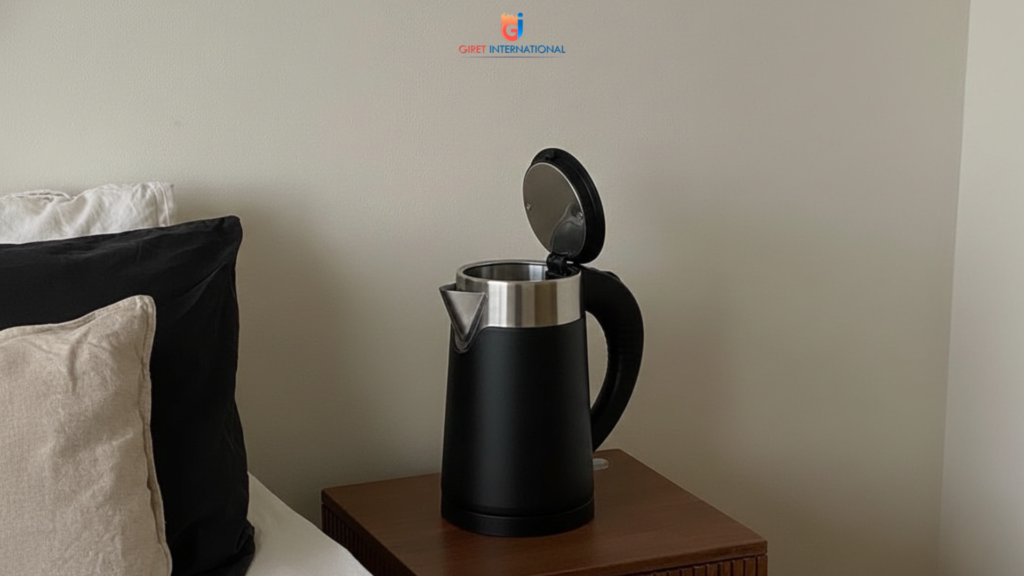
MYL Electric Kettle Risk Factor 4: Guest Misuse Patterns
Guests use kettles for more than boiling water. Some attempt to heat food, milk, or other liquids not intended for kettle use. Others move the kettle closer to beds or bathrooms, increasing electrical exposure.
These misuse patterns create:
- Internal residue buildup
- Heating inconsistency
- Safety risks
- Premature replacement cycles
Hotels cannot control guest behavior, but they can control how resilient the appliance is to misuse. A well-designed kettle limits damage even when used incorrectly.
MYL Electric Kettle Risk Factor 5: Water-Level Visibility Errors
Incorrect water filling is one of the most common operational problems. Guests may overfill, leading to spillage, or underfill, triggering dry-boil risks.
Water-level visibility errors result in:
- Electrical short risks
- Countertop damage
- Guest complaints
- Housekeeping intervention
Hotels reduce this risk by selecting kettles with clear water windows that allow guests to confirm levels instantly without opening lids or guessing.
MYL Electric Kettle Risk Factor 6: Daily Room Handling Stress
Hotel kettles are handled multiple times a day by guests and staff. Lifting, repositioning, cleaning, and storage create physical stress on handles, bases, and lids.
Daily handling risks include:
- Loose components
- Wobbling bases
- Lid misalignment
- Increased maintenance costs
Hotels manage this by standardizing kettles with stable bases, secure lid mechanisms, and durable outer construction suitable for repetitive use cycles.
How Hotels Reduce Risk Through Smarter Kettle Selection
Hotels that reduce operational risk do not rely on retail-grade appliances. They select kettles designed specifically for hospitality environments where safety, hygiene, and durability intersect.
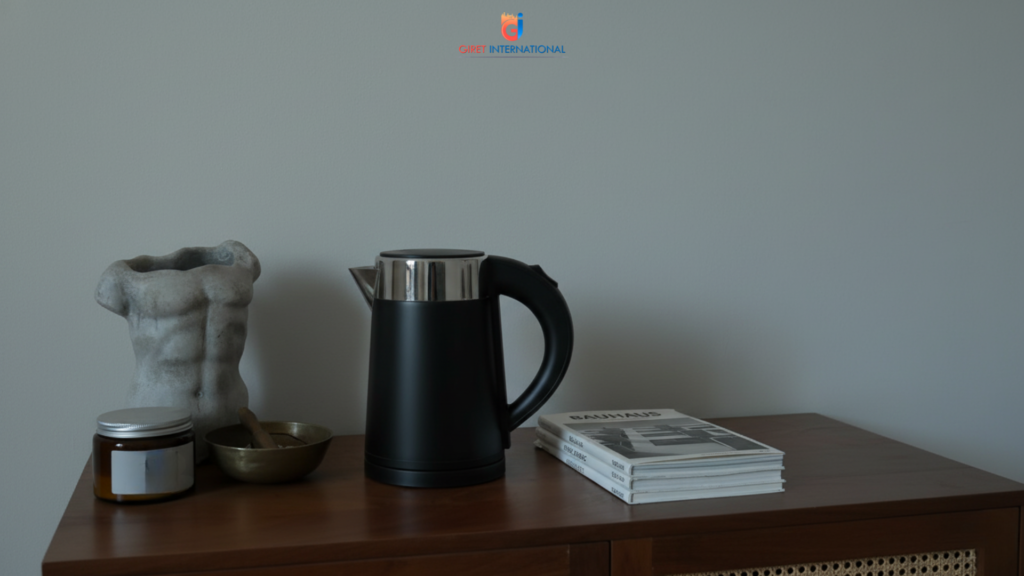
Key risk-reduction considerations include:
- Automatic safety cut-off systems
- Dry-boil protection mechanisms
- Clear water-level visibility
- Easy-to-clean interiors
- Stable, spill-resistant bases
By addressing risk at the product level, hotels prevent downstream problems that affect guests, staff, and brand perception.
Final Thoughts for Hotel Decision-Makers
The MYL Electric Kettle is not just a guest convenience—it is a risk-management tool within the hotel room ecosystem. Every design choice, safety mechanism, and material decision directly influences how effectively hotels control daily operational exposure.
Hotels that treat kettles as controlled utilities rather than simple amenities experience:
- Fewer guest complaints
- Lower maintenance frequency
- Improved safety compliance
- Stronger operational consistency
Managing risk starts with understanding it. Selecting the right electric kettle is one of the simplest yet most impactful decisions hotels can make to protect both guests and operations.
About Giret International
Contact Us
Hospitality Products
Instagram | Facebook | Pinterest | YouTube | X (Twitter)