Introduction: Why Guest Room Touchpoints Matter
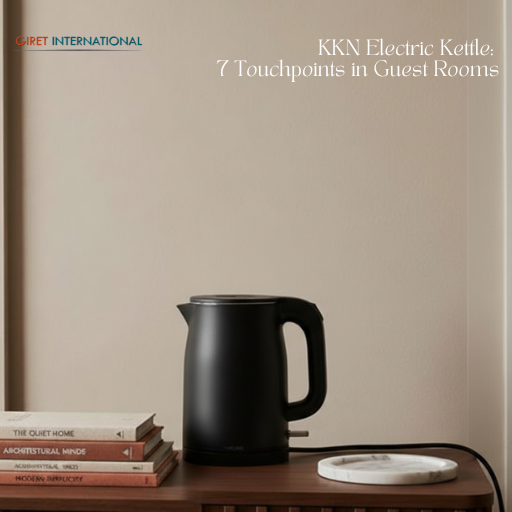
KKN Electric Kettle plays a quiet but essential role in guest room operations because modern hotels are designed around touchpoints, not just amenities. Every object in a room interacts with guests at specific moments throughout the day.
From morning routines to late-night needs, guest satisfaction depends on how smoothly these touchpoints function. A poorly planned appliance disrupts room flow, creates service calls, and adds pressure on housekeeping and engineering teams.
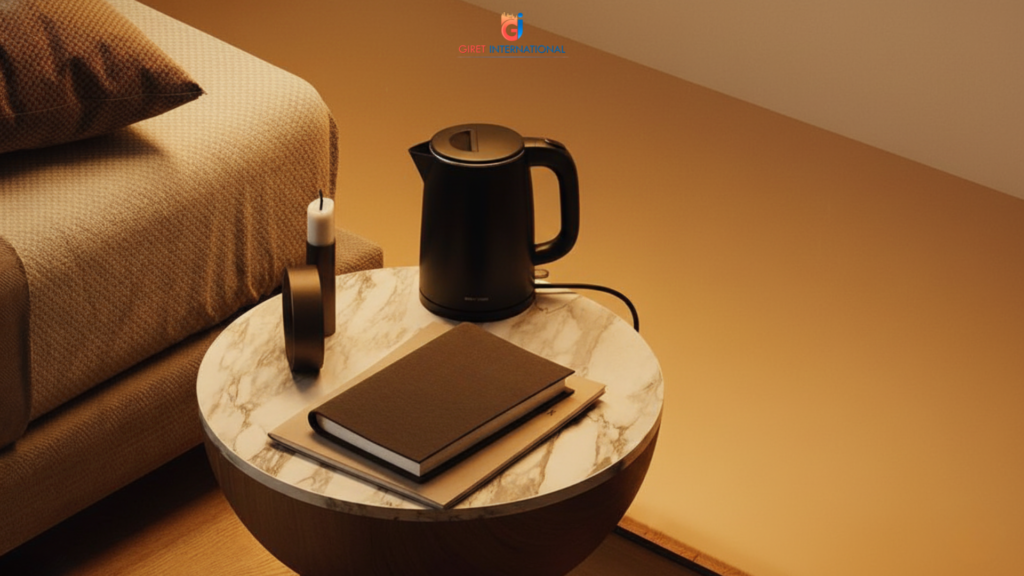
Hotels that focus on optimizing touchpoints improve efficiency, reduce friction, and maintain consistent room standards. This is where hospitality-engineered utilities become operational tools rather than basic accessories.
KKN Electric Kettle in Daily Hotel Room Operations
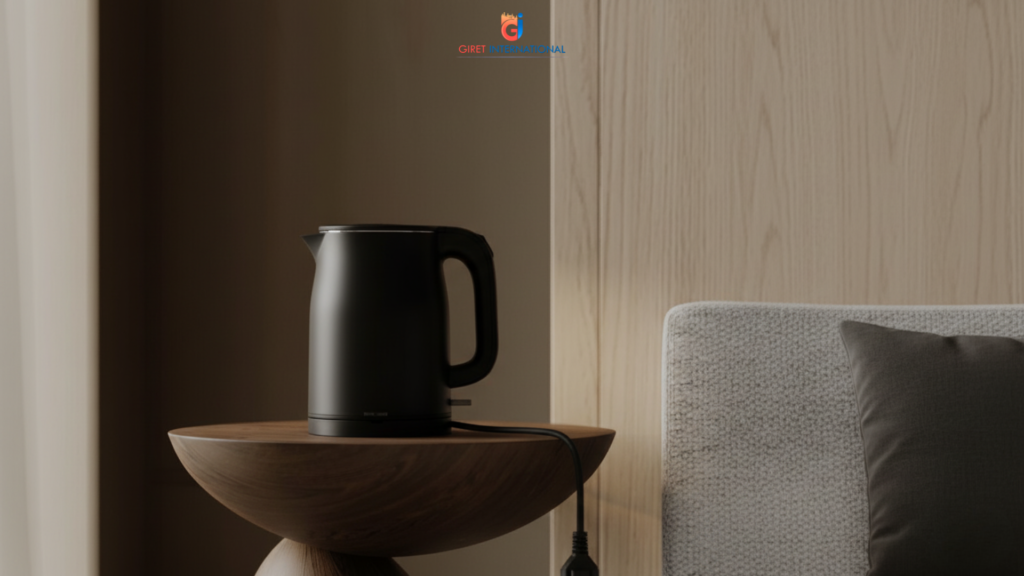
KKN Electric Kettle fits naturally into hotel rooms because it supports multiple daily interactions without demanding attention. Unlike complex smart devices, it integrates quietly into routines guests already follow.
Its value lies in predictability. Guests know how it works, housekeeping knows how to handle it, and engineering teams know how it behaves under continuous use.
This predictable performance is why the kettle becomes part of the room’s daily operational rhythm.
KKN Electric Kettle Touchpoint 1: Morning Beverage Preparation
Morning is the highest-frequency usage window in hotel rooms. Guests wake up at different times and expect immediate access to hot water.
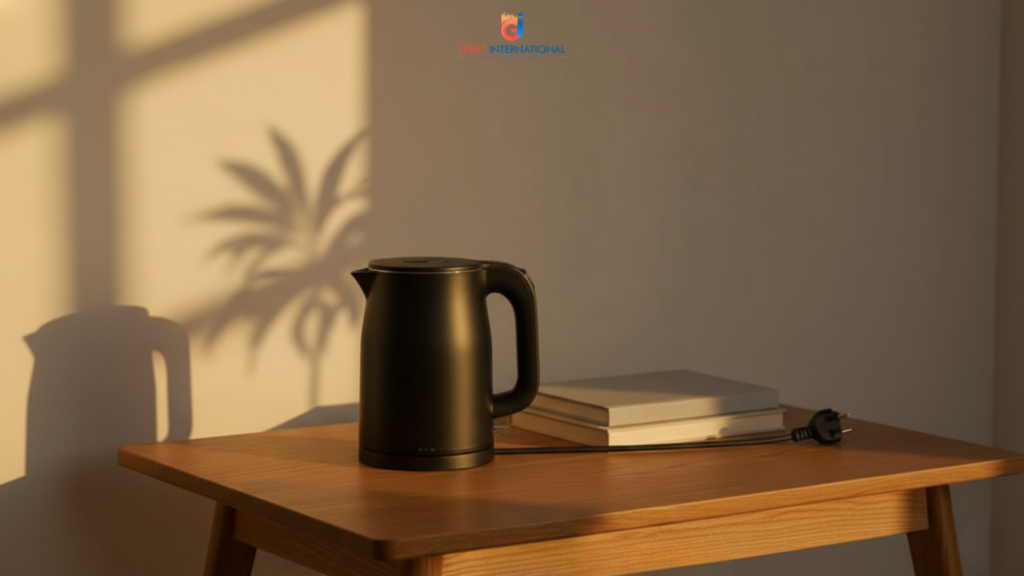
KKN Electric Kettle supports this touchpoint by offering:
- Controlled heating
- Stable placement on counters
- Simple on-off operation
Guests prepare tea, coffee, or instant meals without contacting room service. This reduces early-hour service calls and helps hotels manage staffing efficiently.
Morning convenience is a critical driver of guest satisfaction scores.
KKN Electric Kettle Touchpoint 2:
Late-Night Guest Convenience
Late-night needs are unpredictable. Guests may return from travel, events, or long meetings and need warm water quickly.
KKN Electric Kettle supports this moment by functioning quietly and safely, without disturbing others in the room. The kettle’s operational stability ensures guests can use it confidently even during low-visibility hours.
This touchpoint improves perceived room autonomy and reduces dependency on hotel staff during off-peak hours.
KKN Electric Kettle Touchpoint 3:
In-Room Hygiene Support
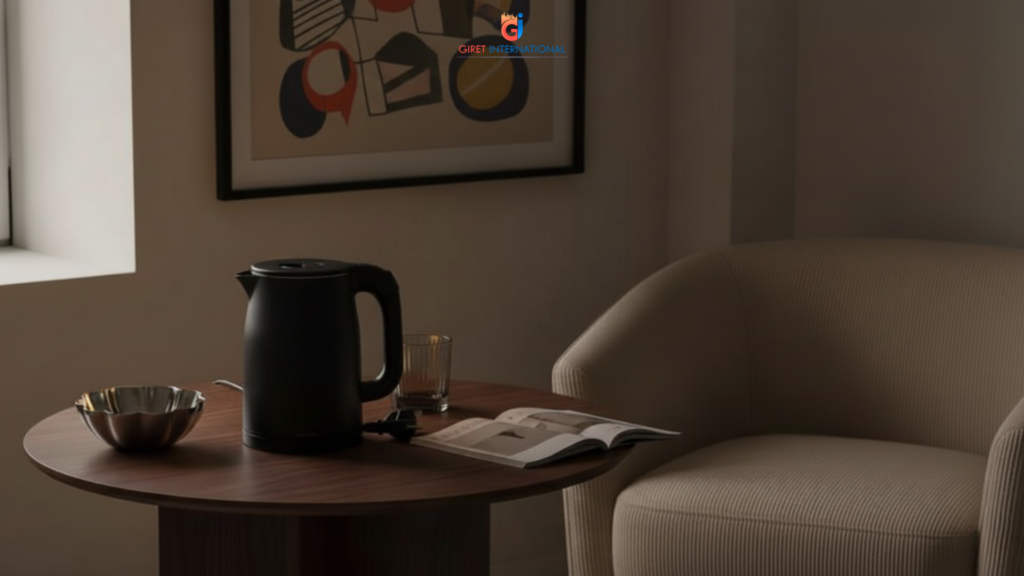
Hygiene expectations have increased across all hotel categories. Guests often use boiled water for personal hygiene routines beyond beverages.
KKN Electric Kettle enables:
- Hygienic water access
- Controlled boiling without contamination
- Quick availability without shared spaces
This reduces foot traffic to common areas and supports private, in-room hygiene needs especially important for long-stay and family guests.
KKN Electric Kettle Touchpoint 4: Business Traveler Utility
Business travelers depend heavily on predictable room utilities. Tight schedules demand fast, reliable in-room functions.
KKN Electric Kettle supports this segment by integrating seamlessly into work routines. Guests can prepare beverages during calls, presentations, or late-night planning without interruption.
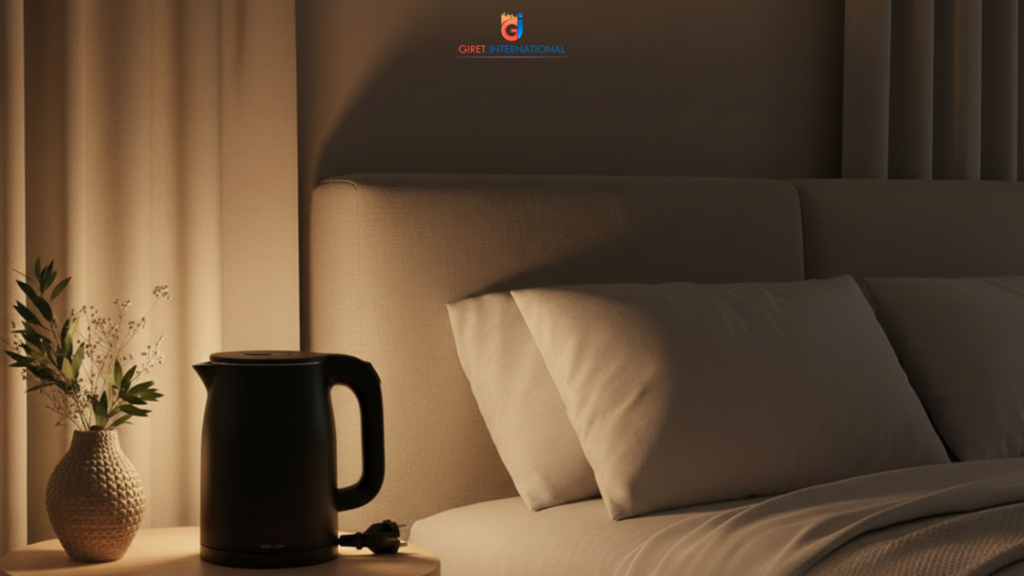
This touchpoint directly influences how business guests evaluate room functionality and return value.
KKN Electric Kettle Touchpoint 5: Housekeeping Workflow Integration
Every in-room appliance affects housekeeping efficiency. Complex or fragile items slow down cleaning and increase breakage.
KKN Electric Kettle integrates smoothly into housekeeping workflows due to:
- Simple external cleaning
- Stable design during movement
- Minimal setup requirements
Housekeepers can reset rooms quickly without worrying about alignment, water residue, or accidental damage. This improves room turnaround time and consistency.
KKN Electric Kettle Touchpoint 6: Safety-Controlled Guest Handling
Guest safety is a critical operational priority. Appliances must protect users even when handled incorrectly.
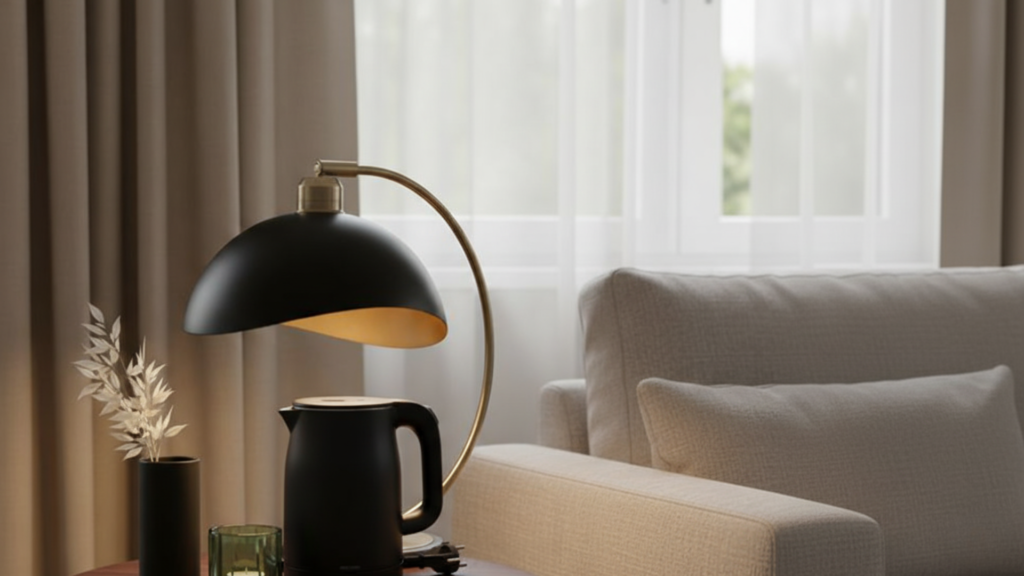
KKN Electric Kettle supports safe handling by offering controlled operation and stable structure. Guests can lift, pour, and place the kettle without facing burn risks or instability issues.
This touchpoint reduces incident reports and aligns with hotel safety compliance standards.
Touchpoint 7: Energy and Operational Efficiency
Energy usage is monitored closely in modern hotels. Appliances that waste power disrupt cost controls.
KKN Electric Kettle contributes to efficiency by heating only when needed and stopping automatically after use. This reduces unnecessary power draw and supports sustainability goals.
Energy-efficient touchpoints help hotels maintain predictable operating costs across large room inventories.
How These Touchpoints Improve Overall Room Flow
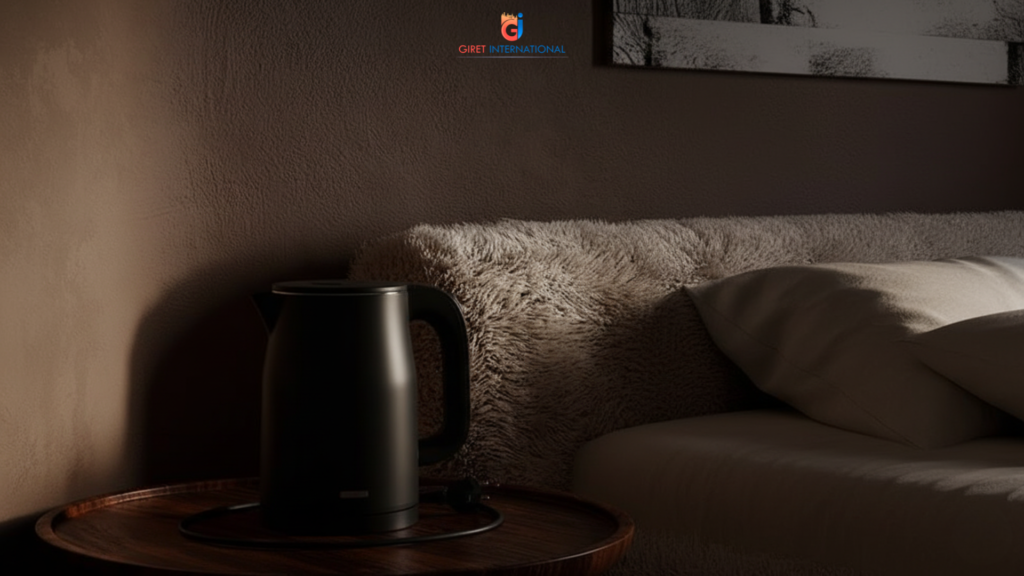
When individual touchpoints function smoothly, the entire room experience improves. Guests move through their routines without friction, and staff intervention becomes minimal.
KKN Electric Kettle enhances room flow by:
- Reducing service calls
- Supporting independent guest behavior
- Simplifying housekeeping processes
- Lowering maintenance intervention
This alignment between guest needs and operational control is essential for scalable hotel management.
Conclusion: Touchpoint-Driven Room Planning
Hotel rooms are ecosystems built around daily interactions. KKN Electric Kettle proves that even simple utilities can influence room efficiency, guest comfort, and operational stability.
By supporting multiple touchpoints from morning routines to housekeeping workflows the kettle becomes an invisible yet powerful contributor to room performance.
Hotels that plan rooms around reliable touchpoints achieve higher consistency, better reviews, and smoother operations over time.
- KKN Electric Kettle: 6 Powerful Factors Hotels Consider
- KKN Electric Kettle: 5 Safety Aspects for Hotels
About Giret International
Contact Us
Hospitality Products
Instagram | Facebook | Pinterest | YouTube | X (Twitter)