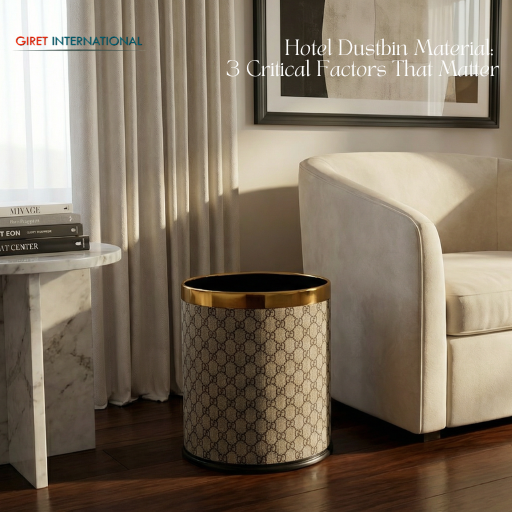
Hotel Dustbin Material is one of the most overlooked yet most decisive elements in hotel waste management. Many hotels focus on design, size, or price, but material choice quietly determines hygiene levels, lifespan, maintenance effort, and long-term cost. In hospitality, where products are used daily and cleaned repeatedly, material is not a technical detail it is a strategic decision.
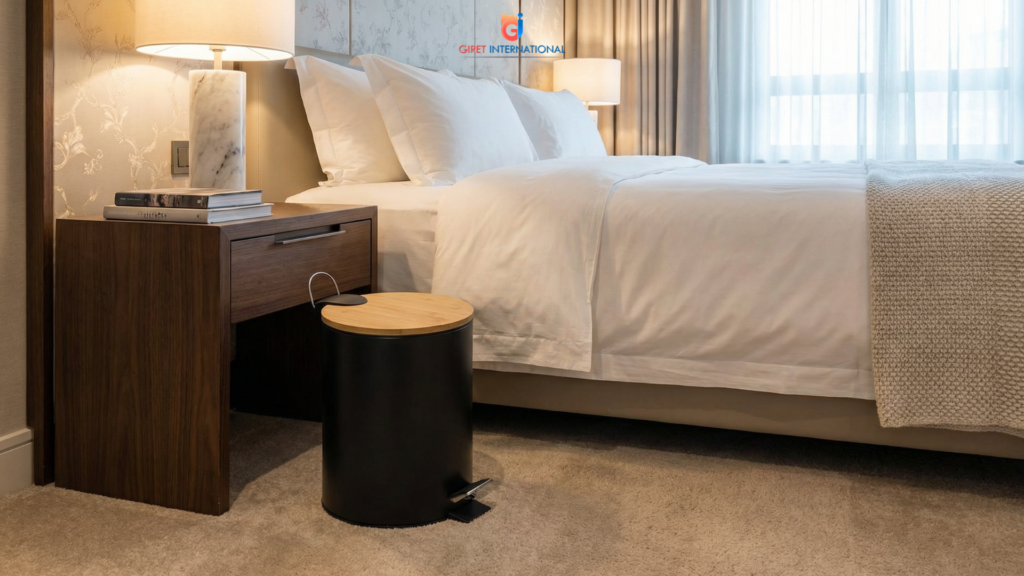
A poorly chosen material leads to odor retention, surface damage, faster wear, and frequent replacements. A well-chosen Hotel Dustbin Material supports hygiene, looks professional, and performs consistently under hotel operating conditions. This is why experienced hoteliers evaluate material before anything else.
Why Hotel Dustbin Material Deserves Attention
Hotels are high-usage environments. A single dustbin is handled dozens of times a day by guests, housekeeping staff, and maintenance teams. Cleaning chemicals, moisture, physical handling, and time all put stress on the product.
This is where Hotel Dustbin Material becomes critical. The wrong material may look fine initially but degrades quickly. Cracks, stains, odor absorption, and surface damage create hygiene risks and visual inconsistency across rooms.
Material selection is not about trends. It is about matching product performance with real hotel conditions.
Factor 1: Hygiene Performance of Hotel Dustbin Material

Hygiene is the first and most important factor. Different materials behave very differently when exposed to waste, moisture, and cleaning chemicals.
A strong Hotel Dustbin Material should:
- Resist odor absorption
- Prevent bacterial buildup
- Allow frequent sanitization
Porous or low-grade materials absorb smells and stains over time, making them difficult to clean completely. This directly affects bathroom and room hygiene perception.
Hotels that prioritize hygiene always start material evaluation here—especially for bathrooms and guest-facing areas.
Factor 2: Durability and Lifespan Under Hotel Use
Durability defines how long a dustbin performs without replacement. Hotels expose products to constant movement, emptying, washing, and accidental impact.
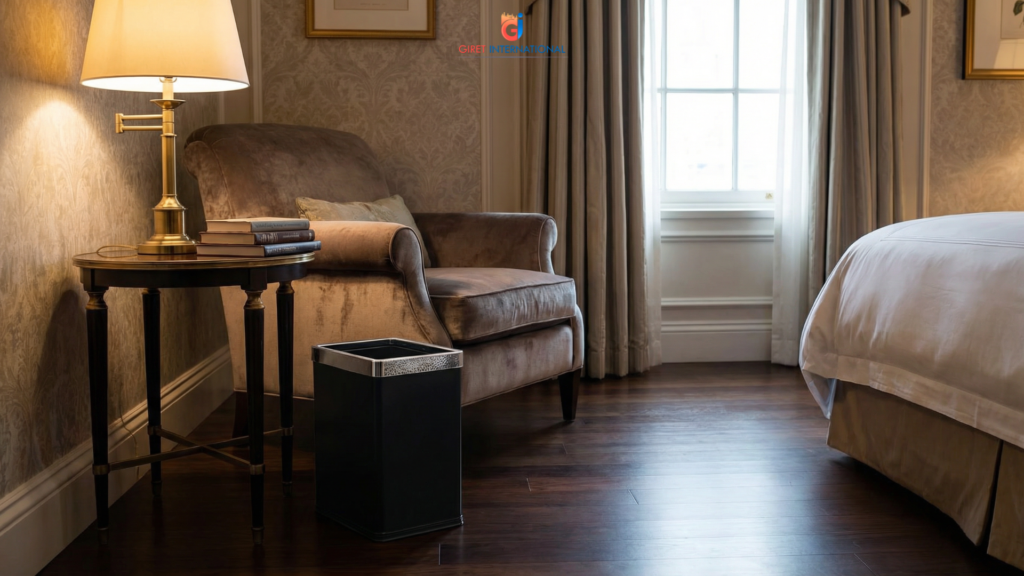
A reliable Hotel Dustbin Material must:
- Withstand daily handling
- Resist cracking, chipping, or bending
- Maintain shape and finish over time
Short lifespan materials increase replacement frequency, disrupt uniformity, and add hidden costs. Hotels aiming for operational stability choose materials that perform consistently for years, not months.
This durability factor is one reason many hotels prefer metal-based options, especially stainless steel, for long-term use.
Factor 3: Maintenance, Cost, and Operational Impact
Upfront price is visible; maintenance cost is silent. A smart Hotel Dustbin Material reduces daily cleaning effort and long-term expense.
Material affects:
- Cleaning time per room
- Use of chemicals and water
- Replacement and repair cycles
Low-maintenance materials reduce housekeeping workload and help teams maintain hygiene even during peak occupancy. Over time, this improves staff efficiency and reduces operational stress.
Hotels that evaluate total lifecycle cost rather than purchase price consistently make better material decisions.
Common Materials Used in Hotels and Their Limitations
Hotels typically encounter a few common material options:
- Plastic: Lightweight and low-cost, but prone to odor absorption, staining, and cracking.
- Coated metal: Better appearance initially, but coating can peel or rust in moisture-heavy areas.
- Stainless steel: Non-porous, durable, and hygienic, but higher initial cost.
Each option has trade-offs, but from a performance perspective, stainless steel consistently outperforms others in hygiene and lifespan. This is explained in detail in
Stainless Steel Dustbin for Hotels: 5 Proven Benefits.
Understanding these limitations helps hotels avoid material-related hygiene issues later.
How Hotel Dustbin Material Impacts Guest Perception
Guests rarely analyze materials consciously, but they react to the results. Clean-looking, odor-free bins signal professionalism. Stained or damaged bins reduce trust instantly.
A well-chosen Hotel Dustbin Material supports:
- Better cleanliness perception
- Consistent room appearance
- Higher guest confidence
In online reviews, cleanliness complaints often originate from material failure rather than cleaning failure. Guests notice when things look worn or unhygienic—even if they don’t name the cause.
Linking Material Choice with Smart Buying Decisions
Material selection should never be isolated. It must align with usage area, hygiene standards, and budget planning.
Hotels that choose the right Hotel Dustbin Material also:
- Standardize across rooms and bathrooms
- Simplify procurement
- Reduce training complexity for staff
This material-first approach prevents many of the buying mistakes hotels make when sourcing waste solutions. It also supports consistency across renovations and expansions.
Final Insight for Hotel Buyers
A Hotel Dustbin Material is not just a technical specification it is a long-term operational decision. Hygiene performance, durability, and maintenance impact should always guide material choice.
Hotels that prioritize material quality reduce complaints, protect brand image, and support housekeeping efficiency. Those that ignore it often pay the price through replacements, hygiene issues, and inconsistent guest experience.
In hospitality, strong systems are built on strong fundamentals. And material choice is one fundamental that quietly decides how well everything else performs.
About Giret International
Contact Us
Hospitality Products
Instagram | Facebook | Pinterest | YouTube | X (Twitter)