
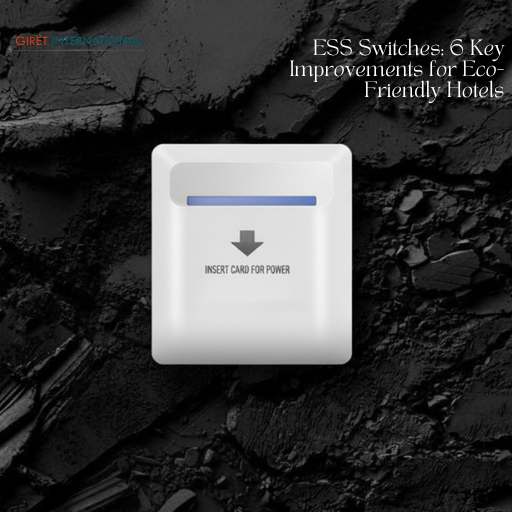
Eco-friendly hotels are no longer a trend they are the new standard for modern hospitality. Travelers expect sustainability, global brands promote energy-smart operations, and hotels worldwide are transforming the way they manage their electricity consumption. In this shift toward environmental responsibility, ESS Switches play a crucial role by allowing hotels to automate, regulate, and optimize power usage with precision.
Electricity is one of the most misused and under-controlled resources in hotels. Guests leave lights on, HVAC systems run unnecessarily, and appliances remain plugged in even when not in use. All this creates excessive energy waste, higher bills, and increased carbon emissions. Automation solves these problems naturally, making eco-friendly operation possible without compromising guest comfort.
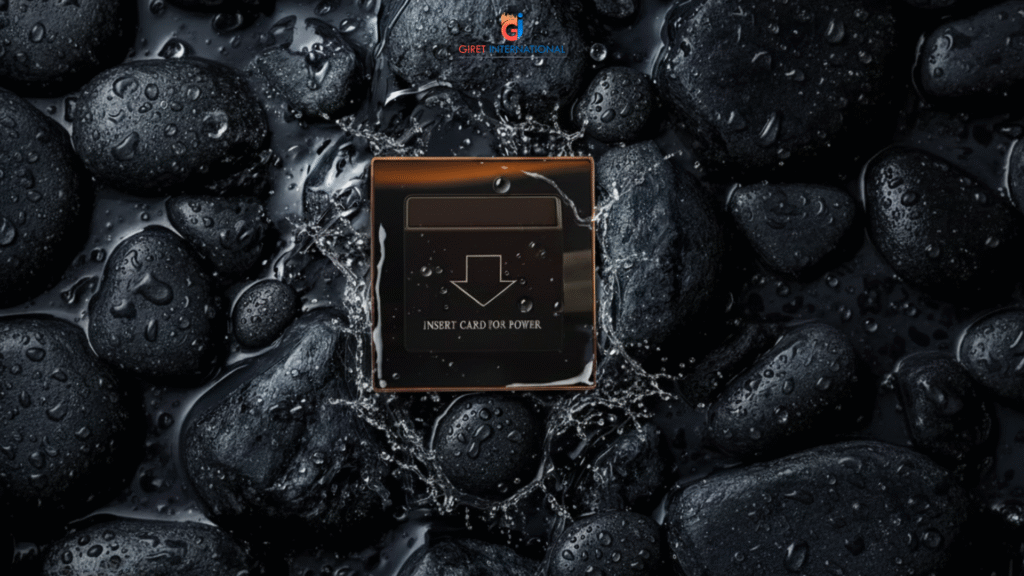
To explore the hidden savings hotels overlook, you may also check:
ESS Switches: 5 Energy-Saving Secrets Modern Hotels Ignore.
Below are six key improvements that help hotels become truly eco-friendly while maintaining superior service quality.
1. ESS Switches and the Improvement of Genuine Occupancy-Based Power Control
Most hotels still operate with traditional card slots where guests insert anything plastic tags, paper cards, wallet items to keep the room powered. This leads to massive energy waste because electricity flows even when the room is empty.
The first eco-friendly improvement is authentic occupancy control.
With RFID validation:
- Only hotel-issued cards activate power
- Fake occupancy tricks no longer work
- Lights and AC run only during real usage
- Rooms follow a disciplined power pattern
This reduces unnecessary electricity consumption and sets the foundation for green hotel operations.
Hotels achieve true occupancy-aligned energy savings the moment ESS Switches prevent guests from activating power with random cards.
To understand more about smart occupancy, explore:
ESS Switches: 7 Key Factors Behind Smart Hotel Energy Use.
2. ESS Switches and the Improvement of HVAC Efficiency
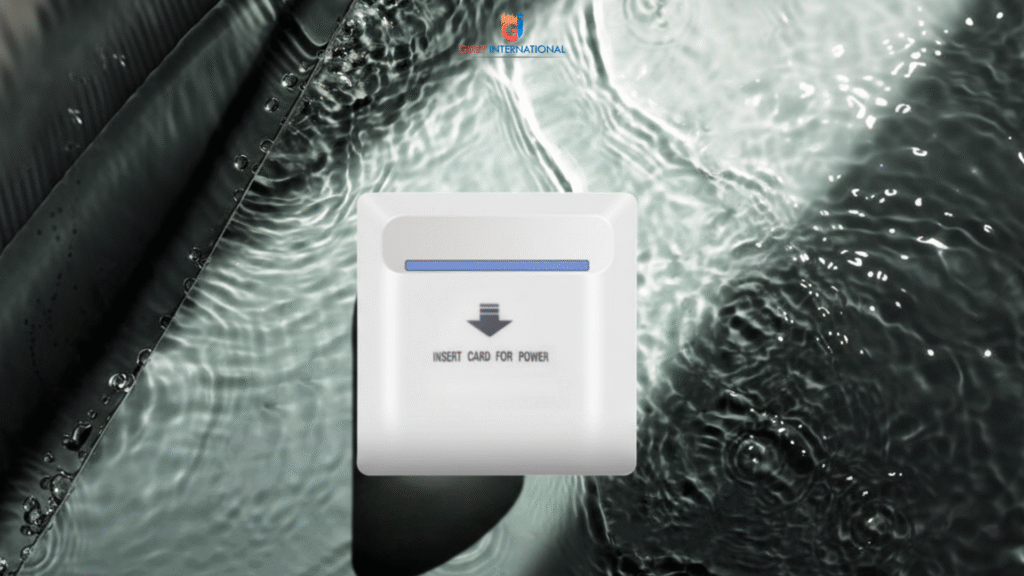
HVAC systems especially air conditioners consume more power than any other equipment in a hotel room. Without automation, guests unknowingly leave ACs running for hours even when the room is empty.
Timed HVAC cutoff is a major eco-friendly advancement.
This improvement ensures:
- AC automatically shuts off after the guest exits
- Compressor health improves
- Cooling cycles become predictable
- Monthly electricity bills drop drastically
- Rooms stay naturally temperature-balanced
Eco-friendly hotels cannot rely on manual control for HVAC the waste is too large and too frequent. Automation offers precise, repeatable, and measurable improvement.
Air conditioners operate sustainably when ESS Switches regulate runtime based on verified room occupancy.
For similar optimization strategies, refer to:
ESS Switches: 6 Strategic Ways Hotels Can Save Electricity.
3. ESS Switches and the Improvement of Lighting Automation

Lighting is one of the simplest yet most impactful areas of energy waste. Guests leave multiple lights turned on, housekeeping cannot check every room constantly, and hotels lose energy quietly in the background.
Automated lighting is a major eco-friendly improvement.
When the card is removed:
- All unnecessary lights turn off
- Lighting load becomes predictable
- Bulb lifespan extends significantly
- Electricity wastage disappears instantly
- Floor-wide lighting patterns stabilize
Green hotels depend on lighting automation to maintain consistency across all rooms. Manual switching is never reliable for sustainability goals.
Lighting consumption decreases naturally once ESS Switches manage illumination through entry and exit logic.
To explore lighting-related strategies, you may read:
ESS Switches: 9 Smart Approaches for Better Hotel Power Control.
4. ESS Switches and the Improvement of Electrical Safety

Eco-friendly hotels aren’t just about saving electricity they must also maintain a safe, controlled electrical environment. Unattended appliances like irons, kettles, and chargers quietly consume power and pose overheating risks.
Automated energy shutdown eliminates these issues.
With automation:
- Plugged-in devices stop drawing power
- Circuits stay protected
- Fire risks decrease significantly
- Appliance misuse becomes impossible
- Maintenance expenses reduce over time
Safety and sustainability go hand-in-hand. Hotels focusing on eco-friendly practices often overlook that automation is the backbone of safer operations.
Rooms become electrically safer when ESS Switches cut all appliance power during guest absence.
To explore common operational mistakes, see:
ESS Switches: 7 Hidden Rules Behind Efficient Hotel Energy Flow.
5. ESS Switches and the Improvement of Smart-Room Compatibility
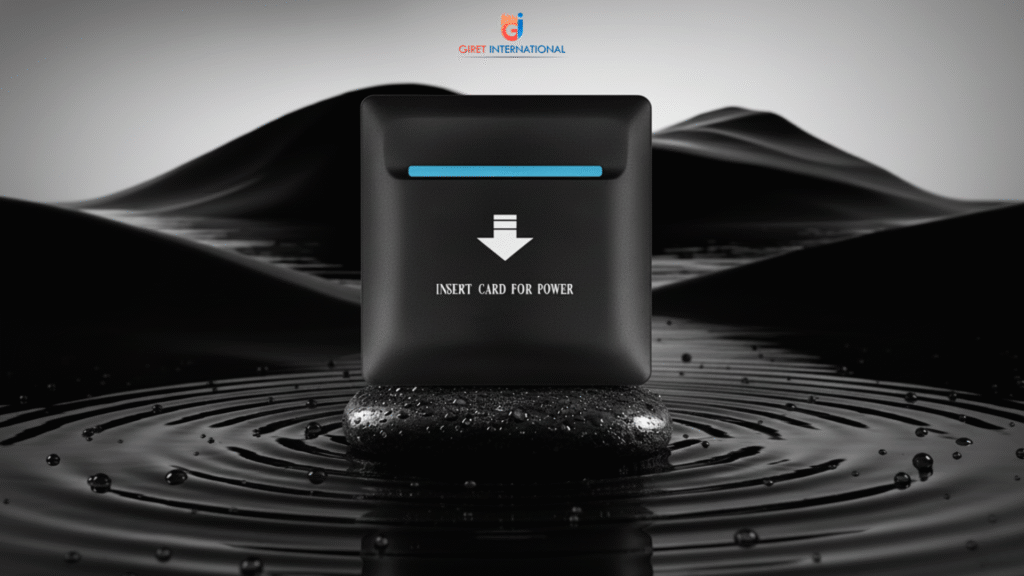
Eco-friendly design is not just about saving energy it is also about adopting modern, efficient technologies that improve guest comfort while reducing waste. Smart-room systems such as:
- Touch-sensitive panels
- DND/MUR glass indicators
- Digital doorbells
- Intelligent combo panels
require controlled power flow to operate correctly.
Automation ensures:
- These systems receive consistent power
- Malfunctions reduce dramatically
- Guests experience smoother interactions
- Engineering teams face fewer complaints
- The overall smart-room ecosystem becomes more sustainable
Eco-friendly hotels increasingly rely on smart automation to create low-waste, high-efficiency environments.
Smart-room functionalities work flawlessly once ESS Switches stabilize the electrical logic behind them.
6. ESS Switches and the Improvement of Predictable Energy Patterns

The final key improvement is consistency. Eco-friendly hotels must maintain predictable, measurable, and uniform energy patterns across all rooms and floors.
Automation standardizes energy usage by:
- Regulating every room with identical power rules
- Making electricity consumption predictable
- Reducing floor-wise spikes
- Supporting accurate audits
- Helping engineering teams plan better
Unpredictable energy behavior is one of the largest obstacles to sustainability. Automated control brings discipline and structure to every room.
Hotel engineers benefit greatly when ESS Switches bring consistent electricity behavior across all floors.
Eco-Friendly Hotels Depend on Automation: Here’s Why
Eco-friendly hospitality is built on three pillars:
1. Reduced waste
Energy should never flow when it is not needed.
2. Improved efficiency
Equipment must operate only when essential.
3. Optimized performance
Rooms should behave uniformly regardless of guest habits.
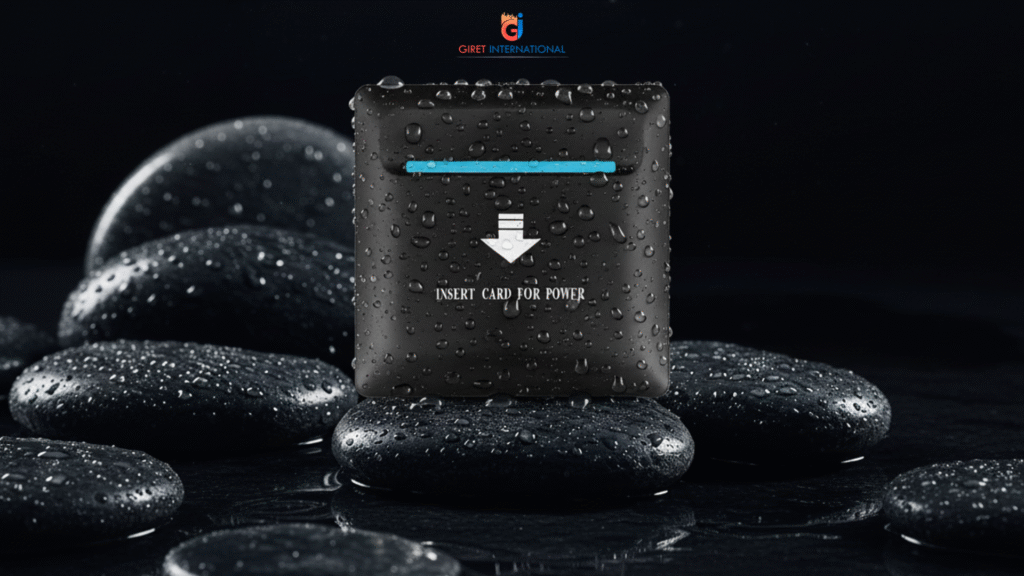
ESS-based automation supports all three pillars by regulating every watt of electricity with accuracy. This allows hotels to achieve sustainability goals while providing a premium guest experience.
Why Hotels Choose Giret International for Eco-Friendly Automation
Giret International’s hotel-grade energy solutions are engineered to deliver:
- RFID Mifare-only power activation
- 40A switching capability
- Tempered glass & PC body designs
- Precise 20–30 second delay cutoff
- Smart-room compatibility
- Long-lasting, durable construction
Hotels across India prefer Giret because their systems combine energy efficiency with luxury aesthetics an essential blend for eco-friendly hospitality.
About Giret International
Contact Us
Hospitality Products
Instagram | Facebook | Pinterest | YouTube | X (Twitter)