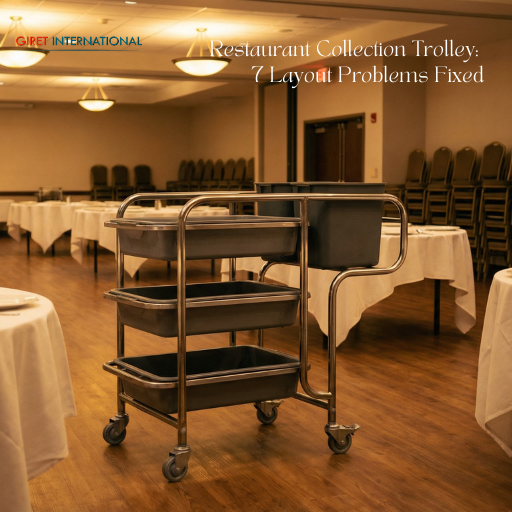
Restaurant Collection Trolley plays a strategic role in solving layout inefficiencies inside hotels and restaurants. Many dining spaces struggle with tight floor plans, high seating density and unpredictable guest movement. While architects design layouts carefully, daily operations often disrupt spatial balance.
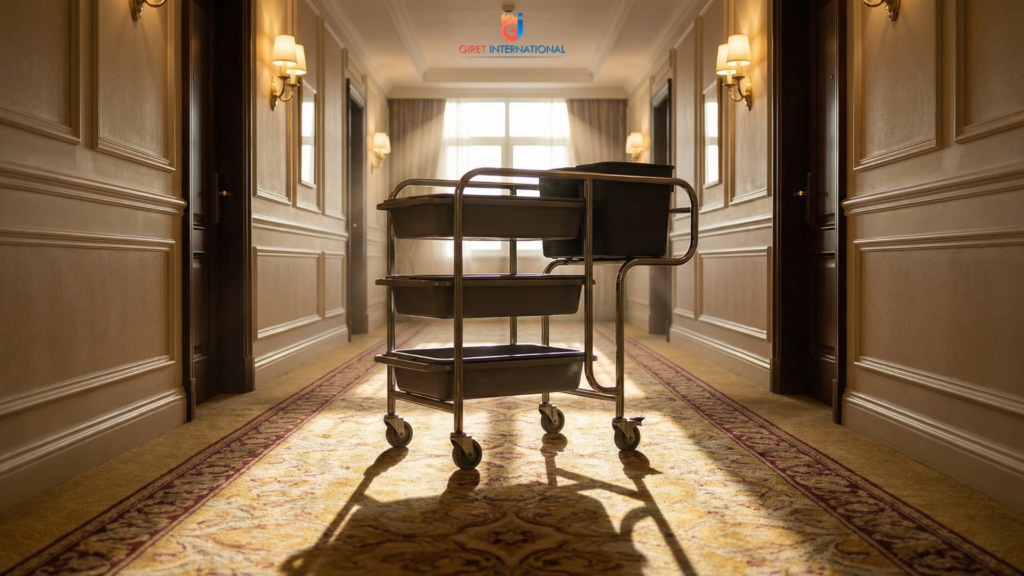
Plates stack near service stations, walkways narrow and congestion builds around kitchen entrances. A structured clearing method supported by a Restaurant Collection Trolley restores order without redesigning the space.
Smart layout management is about movement control, not floor expansion.
Why Restaurant Layout Impacts Guest Experience
Guests may not consciously evaluate floor plans, but they instantly sense congestion. Narrow paths, visible clutter and frequent staff interruptions affect comfort levels.
A Restaurant Collection Trolley reduces spatial disruption by organizing plate movement efficiently. Instead of occupying multiple horizontal surfaces, dishes remain stacked vertically in a compact footprint.
Open pathways improve relaxation and dining satisfaction.
Restaurant Collection Trolley and Spatial Efficiency
Space efficiency depends on how operational tools integrate with layout design. Random clearing methods introduce temporary obstacles that designers never intended.
A Restaurant Collection Trolley aligns with structured routes, minimizing interference with guest seating zones.
For training consistency insights:
/restaurant-collection-trolley-6-training-errors-reduced
For buffet flow understanding:
/restaurant-collection-trolley-5-buffet-problems-solved
Operational structure strengthens spatial design.
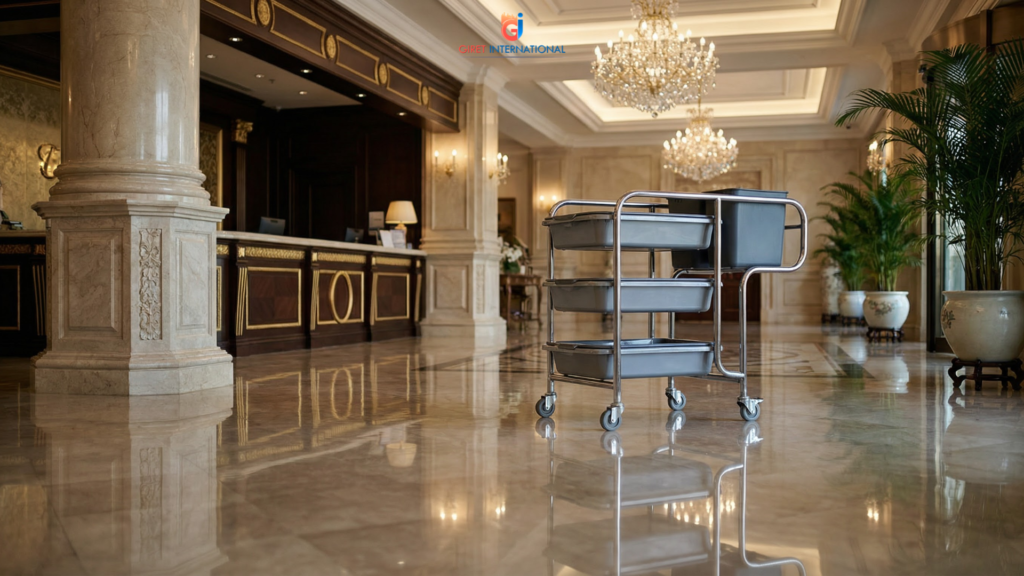
7 Common Layout Problems in Dining Areas
1. Congested Service Entrances
Multiple staff gather near kitchen access points.
A Restaurant Collection Trolley supports distributed clearing, reducing crowd concentration.
2. Narrow Walkway Blockage
Temporary stacking narrows passage width.
Mobile storage keeps aisles clear.
3. Corner Clutter Accumulation
Unused corners become dish holding zones.
Structured movement eliminates informal storage spots.
4. Overlapping Staff Routes
Servers cross paths frequently.
Defined trolley routes reduce collision probability.
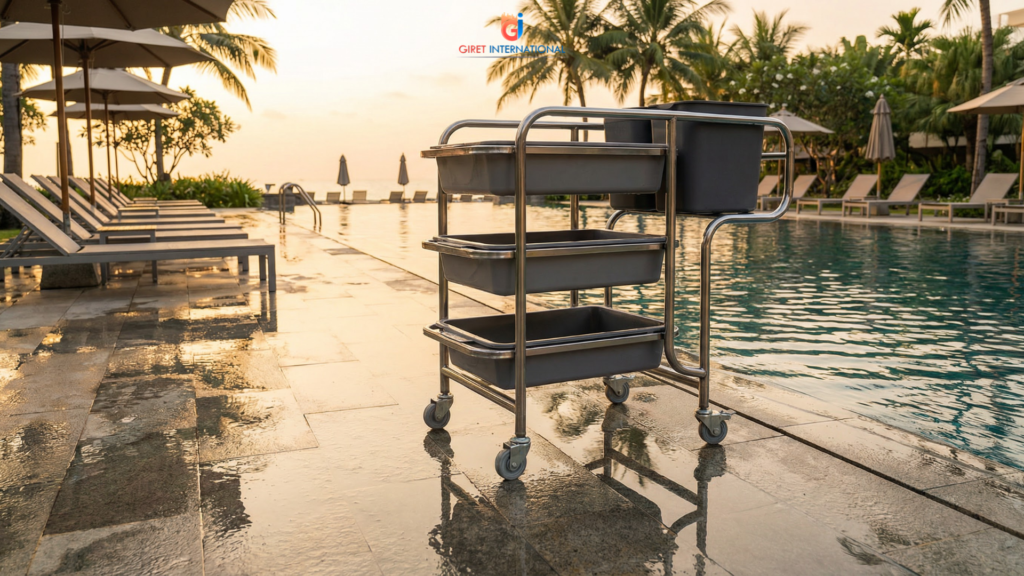
5. Disturbed Guest Seating Zones
Staff standing near tables while balancing plates affects privacy.
Quick deposit into a Restaurant Collection Trolley limits disturbance.
6. Inefficient Section Coverage
Some areas receive delayed clearing due to layout imbalance.
Zone-based assignments improve equal coverage.
7. Visual Imbalance in Premium Spaces
Luxury restaurants require aesthetic consistency.
Compact vertical storage preserves clean sightlines.
Each issue impacts guest perception more than expected.
Vertical Storage Advantage
Horizontal space is limited. Vertical space is underutilized.
A Restaurant Collection Trolley uses tiered design to store multiple loads in a small footprint. Instead of spreading plates across counters, storage consolidates into one structured unit.
Vertical efficiency maintains openness.
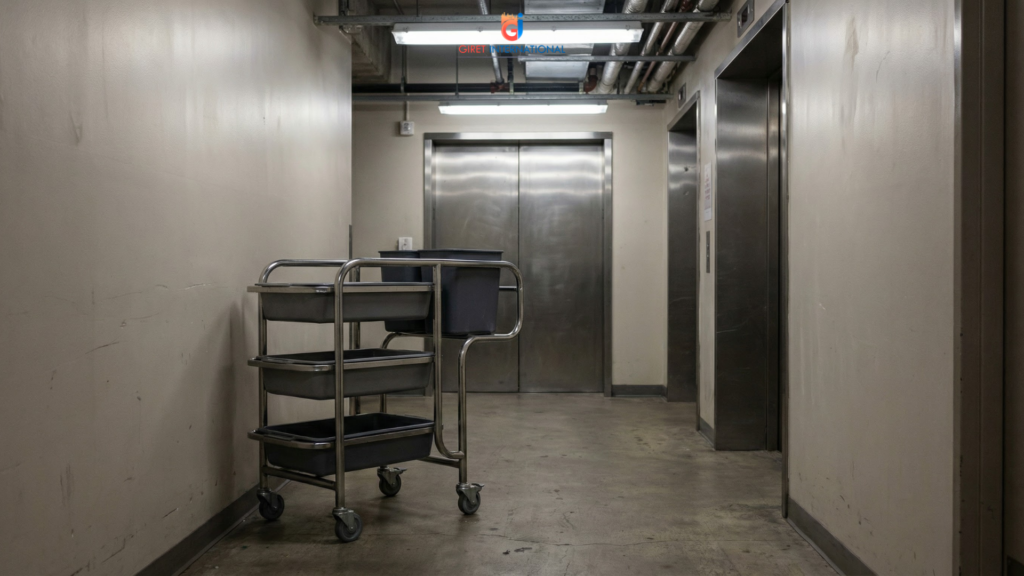
Traffic Flow Optimization
Restaurants function like traffic networks. Without controlled routes, congestion forms naturally.
A Restaurant Collection Trolley introduces predictable circulation patterns. Staff follow circular paths that align with seating clusters.
Predictable movement prevents sudden directional changes.
Flow becomes smooth instead of chaotic.
Section-Based Clearing Routes
Dividing the dining area into logical sections enhances layout control.
Using a Restaurant Collection Trolley, each section receives scheduled clearing cycles. This avoids random wandering across the floor.
Benefits include:
- shorter walking distance
- reduced crossing paths
- improved staff coordination
Defined routes strengthen spatial discipline.
Compact Design for Tight Spaces
Urban restaurants often operate within limited square footage. Every centimeter matters.
A Restaurant Collection Trolley supports high-capacity storage without occupying excessive area. Its compact design allows navigation through narrow aisles.
Efficient mobility preserves accessibility.
Guests move freely without feeling restricted.
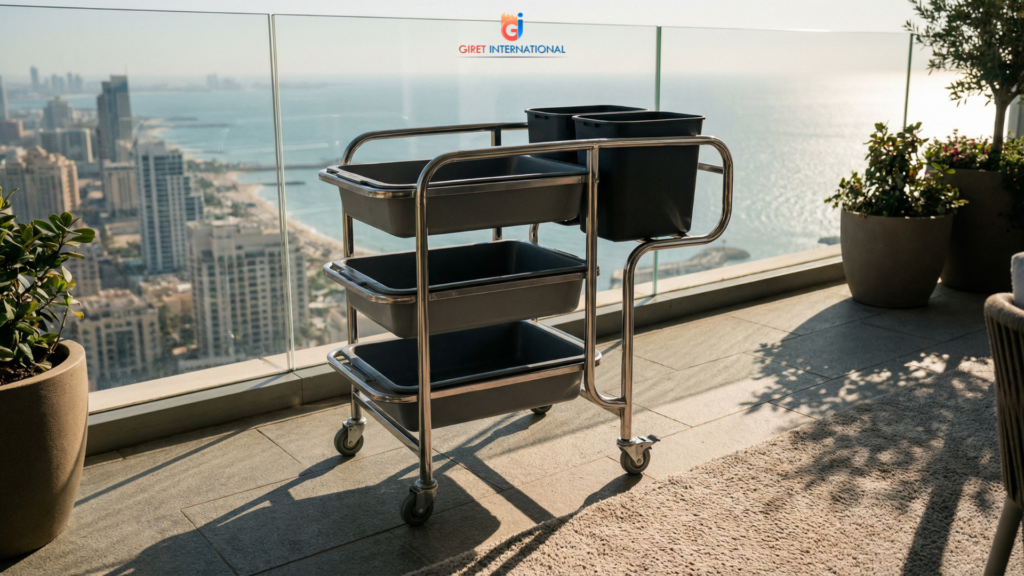
Enhancing Layout Stability During Peak Hours
Peak occupancy reveals layout weaknesses quickly. Increased guest movement amplifies congestion points.
A Restaurant Collection Trolley maintains continuous clearing, preventing buildup near high-traffic zones.
Stable removal protects floor balance even during rush periods.
Consistency reduces stress for both staff and guests.
Visual Cleanliness and Brand Identity
Layout clarity influences brand perception. Cluttered spaces appear disorganized, regardless of décor quality.
A Restaurant Collection Trolley supports visual harmony by centralizing dish transport.
Clear lines of sight enhance premium feel.
Guests associate spaciousness with professionalism.
Long-Term Layout Stability and Brand Perception
Layout adjustments can be costly. Structural changes require renovation budgets and operational downtime.
Implementing a Restaurant Collection Trolley provides a cost-effective alternative to redesign. Operational flow improves without altering architecture.
Structured clearing strengthens spatial efficiency long term.
Final Thoughts
Restaurant layout challenges rarely require architectural intervention. Often, they require operational refinement.
By integrating a Restaurant Collection Trolley, hotels and restaurants restore spatial balance, protect guest comfort and maintain smooth navigation.
Smart layout management depends on controlled movement.
When movement aligns with design, space feels larger, calmer and more professional.
About Giret International
Contact Us
Hospitality Products
Instagram | Facebook | Pinterest | YouTube | X (Twitter)