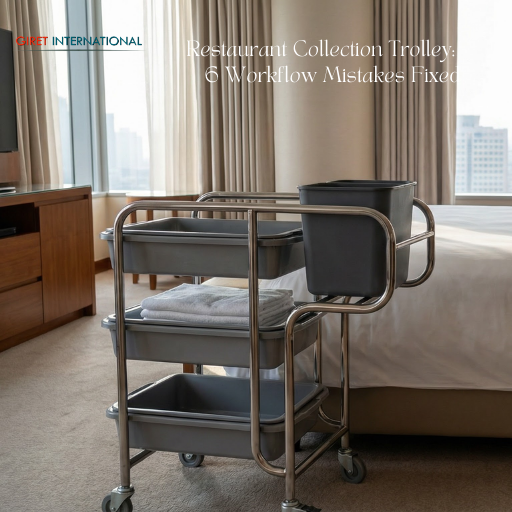
Restaurant Collection Trolley transforms operational confusion into structured coordination inside hotels and restaurants. Workflow mistakes in hospitality rarely happen because of lack of effort. They happen because processes are unclear, overlapping or reactive.
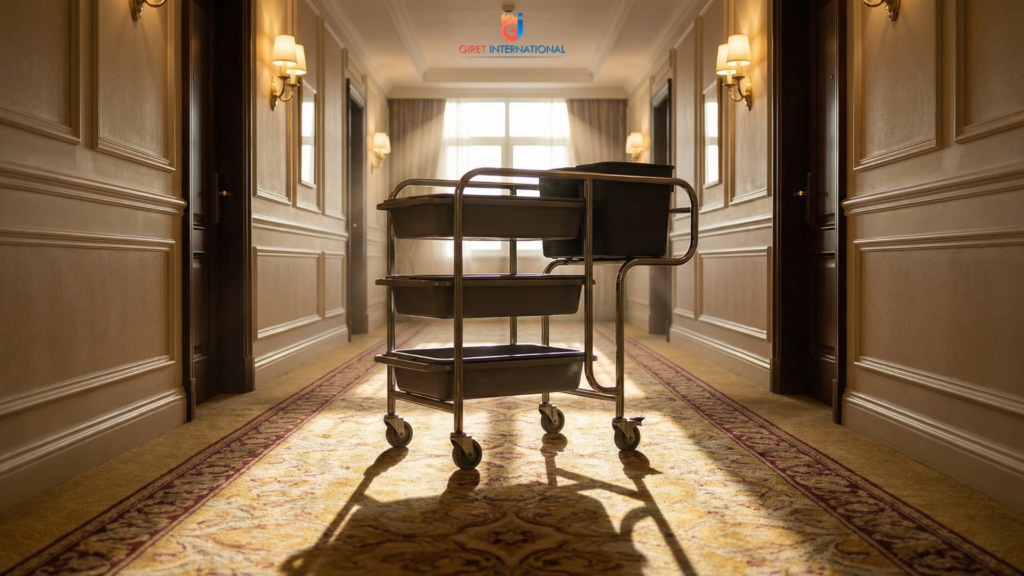
When clearing duties are undefined, servers interrupt each other, kitchen teams receive irregular dish loads and service rhythm breaks. A structured system supported by a Restaurant Collection Trolley eliminates these inefficiencies and brings predictability to daily operations.
Clear workflow equals consistent service performance.
Why Workflow Structure Matters in Restaurants
Restaurants operate on timing and coordination. Every second lost between service, clearing and dishwashing reduces overall efficiency.
Without defined movement paths, employees improvise. Improvisation may work during slow hours, but it collapses under pressure.
A Restaurant Collection Trolley introduces structured clearing routes. Instead of reacting to visible mess, staff follow a defined process that keeps operations aligned.
Structured systems reduce confusion.
Restaurant Collection Trolley and Operational Alignment
Operational alignment means every team understands their role clearly. When plate removal overlaps with serving, delays occur.
A Restaurant Collection Trolley separates responsibilities. One staff member can focus on clearing while another concentrates on guest interaction.
This division enhances coordination between dining floor and wash area.
For safety optimization reference:
/restaurant-collection-trolley-5-safety-risks-avoided
Workflow efficiency connects with both safety and equipment reliability.
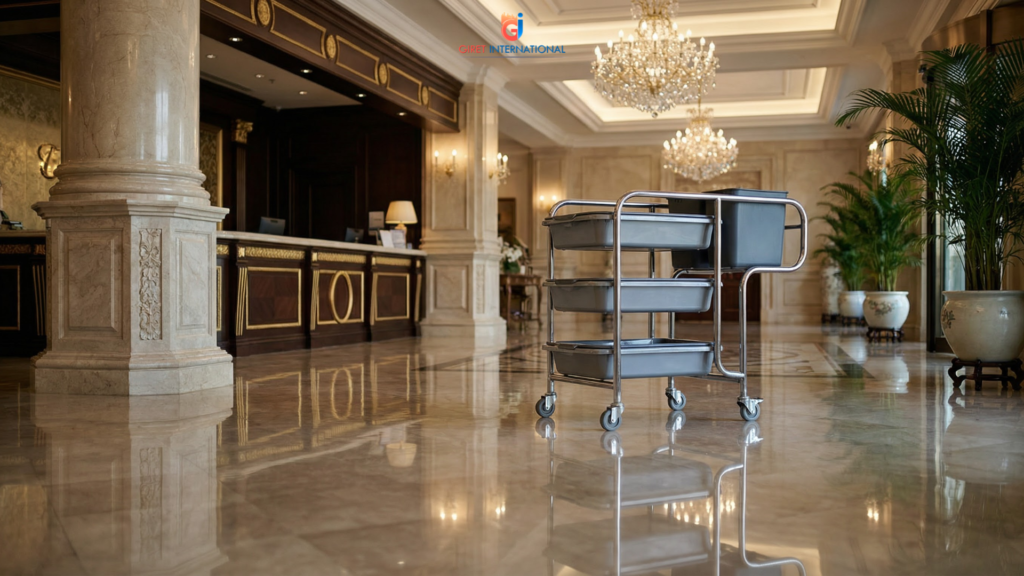
6 Common Workflow Mistakes in Dining Areas
1. Unplanned Clearing Routes
Staff clear tables randomly instead of following a logical path.
A Restaurant Collection Trolley supports circular movement patterns.
2. Simultaneous Clearing by Multiple Employees
Two servers may approach the same section, creating overlap.
Assigned trolley zones prevent duplication.
3. Delayed Transfer to Wash Area
Irregular dish movement causes backend congestion.
Consistent trolley transport maintains steady dishwashing rhythm.
4. Task Switching Mid-Service
Servers interrupt guest interaction to carry dishes.
Centralized placement inside a Restaurant Collection Trolley allows quick deposit without distraction.
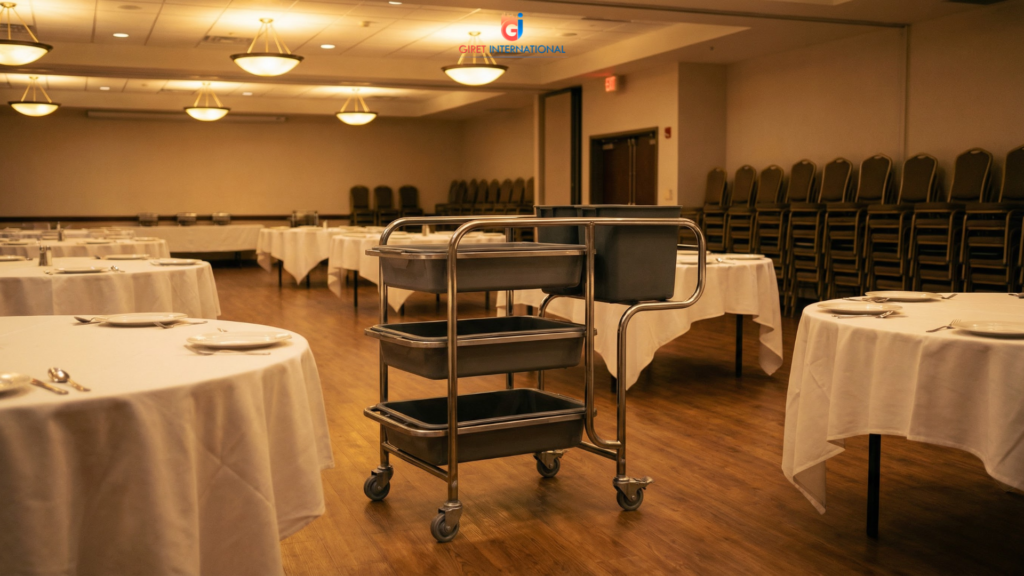
5. Bottleneck Near Kitchen Entrance
Crowding increases when everyone approaches the same point.
Distributed clearing routes reduce pressure buildup.
6. Reactive Instead of Predictive Movement
Waiting until tables are fully cluttered slows workflow.
Scheduled rounds using a Restaurant Collection Trolley maintain proactive clearing.
Each corrected mistake strengthens operational stability.
Service-to-Kitchen Coordination Improvement
Kitchen teams depend on predictable dish flow. Sudden heavy batches overwhelm washing stations, while long gaps reduce productivity.
A Restaurant Collection Trolley ensures balanced and continuous transfer. Items arrive in manageable quantities instead of irregular surges.
This stabilizes cleaning cycles and supports faster plate return.
Coordination improves without additional staffing.
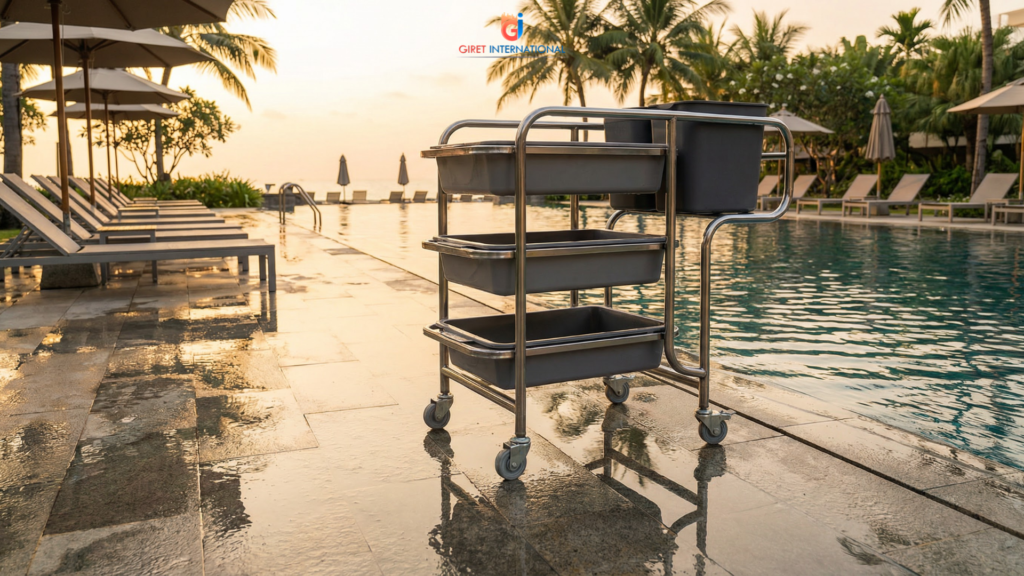
Section-Based Clearing Model
Dividing the dining area into zones enhances clarity. Each section follows a defined clearing interval.
Using a Restaurant Collection Trolley, staff move systematically across their assigned area before transferring dishes.
Benefits include:
- balanced workload
- shorter walking distance
- reduced overlap
Predictability replaces improvisation.
Reducing Task Overlap Among Staff
Overlapping responsibilities create confusion. When no one knows who clears which table, hesitation appears.
A Restaurant Collection Trolley clarifies roles. Staff assigned to clearing focus exclusively on movement and reset support.
This separation allows serving staff to maintain eye contact and engagement with guests.
Defined duties increase efficiency.
Rush Hour Workflow Stabilization
Peak service reveals workflow weaknesses immediately. Multiple guests leaving simultaneously create clearing pressure.
A Restaurant Collection Trolley supports continuous small clearing cycles rather than chaotic large cleanups.
Steady removal maintains rhythm even during full occupancy.
Stable rhythm reduces stress across departments.
Enhancing Communication Between Teams
Clear workflow reduces verbal interruptions. Staff no longer need to coordinate clearing decisions constantly because routes are predefined.
A Restaurant Collection Trolley becomes part of the operational language. Movement direction indicates progress without verbal instruction.
Silent coordination improves speed and professionalism.
Operational Transparency for Managers
Managers often struggle to identify bottlenecks. Structured clearing routes make inefficiencies visible.
When a Restaurant Collection Trolley follows a scheduled path, deviations become noticeable. This allows supervisors to correct issues quickly.
Operational transparency supports better decision-making.
Long-Term Process Discipline and Scalability
As restaurants expand, inconsistent processes become costly.
A Restaurant Collection Trolley introduces repeatable workflow standards that can scale across multiple outlets. Training becomes simpler because the process remains uniform.
Consistency across branches strengthens brand reliability.
Scalable workflow protects service quality during growth.
Final Thoughts
Workflow mistakes are not signs of incompetence. They are signs of missing structure.
By integrating a Restaurant Collection Trolley into daily operations, hotels and restaurants eliminate overlapping tasks, stabilize dish transfer and maintain predictable service flow.
Clear routes reduce confusion.
Defined roles improve coordination.
Structured movement enhances performance.
When workflow becomes organized, service becomes effortless.
About Giret International
Contact Us
Hospitality Products
Instagram | Facebook | Pinterest | YouTube | X (Twitter)