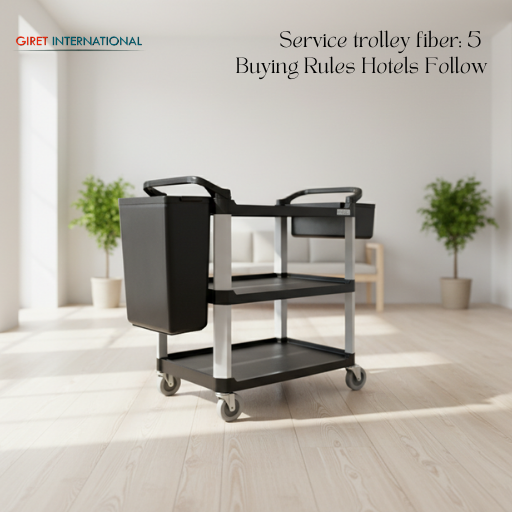
Service trolley fiber purchasing requires more than checking dimensions and price. Smart hotels treat operational equipment as a long-term investment rather than a short-term expense. A well-selected trolley improves efficiency, hygiene, and staff comfort for years. A poorly chosen one creates silent operational friction.

When evaluating a Service trolley fiber, experienced hospitality managers follow structured buying rules. These rules ensure the trolley supports real workflow needs, withstands heavy use, and maintains professional appearance.
In this guide, we break down five buying rules hotels consistently follow before finalizing their service cart investment.
Why Buying Strategy Matters in Hospitality
Service carts are not decorative tools.
They are part of daily infrastructure. A poorly selected Service trolley fiber can disrupt movement, increase staff fatigue, and require frequent repairs. Over time, these inefficiencies reduce productivity and inflate operational costs.
Hotels that approach purchasing strategically focus on performance consistency rather than temporary savings.
Service trolley fiber Buying Rule 1: Evaluate Structural Strength First
The first rule smart hotels follow is to inspect structural stability.
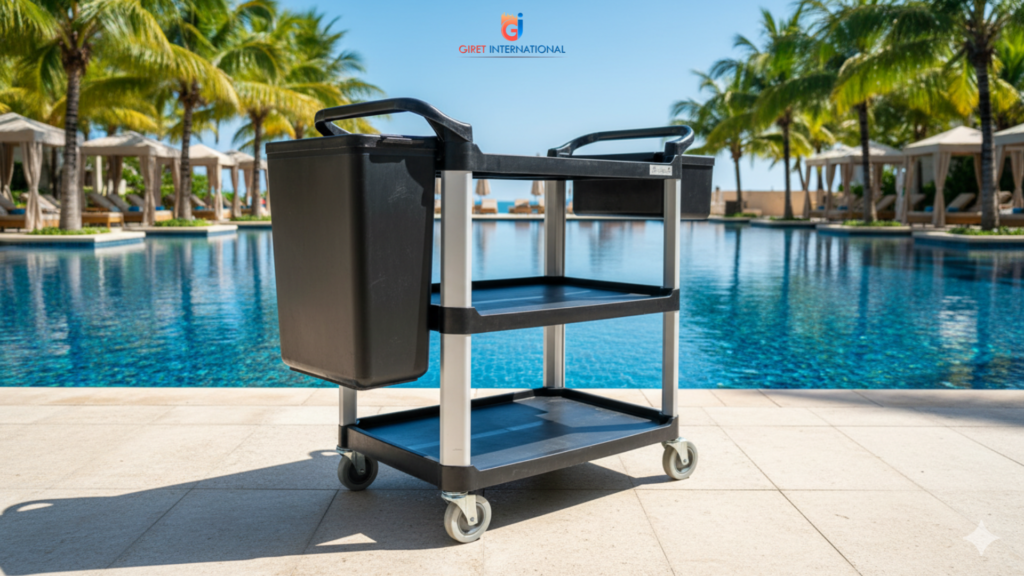
A Service trolley fiber must maintain balance under full load. Reinforced ABS panels, durable aluminum framing, and stable wheel assemblies determine performance longevity.
Structural Aspects to Check
- Load-bearing capacity of each tier
- Reinforced corner joints
- Frame rigidity under pressure
- Wheel durability and shock absorption
A strong structure ensures smooth movement and prevents wobbling during daily use.
Weak construction may lead to vibration, cracking, or instability over time.
Service trolley fiber Buying Rule 2: Match Design with Operational Workflow
Every hotel has unique workflow patterns.
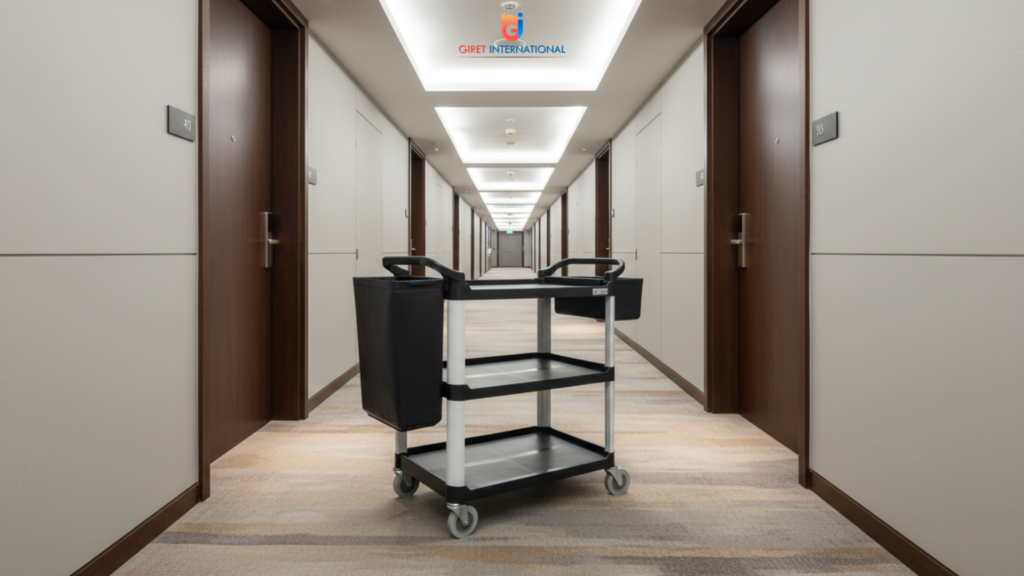
Some prioritize banquet movement, others focus on room service cycles or maintenance support. A properly selected Service trolley fiber should align with those patterns.
Workflow Compatibility Questions
- Is a 3-tier configuration sufficient?
- Are side bins necessary for waste segregation?
- Does the cart fit inside elevators comfortably?
- Is turning radius suitable for narrow corridors?
Matching design with operational needs prevents friction and improves task efficiency.
Service trolley fiber Buying Rule 3: Prioritize Material Quality and Finish
Material quality directly impacts durability and visual presentation.
A high-quality Service trolley fiber resists surface wear, cracking, and discoloration. Smooth ABS surfaces support easy cleaning and maintain professional appearance.
Material Evaluation Points
- Thickness of fiber panels
- Resistance to moisture
- Ease of sanitization
- Long-term corrosion protection
The finish should remain consistent even after months of heavy use.
Service trolley fiber Buying Rule 4: Consider Maneuverability and Space Compatibility
Movement efficiency determines operational success.
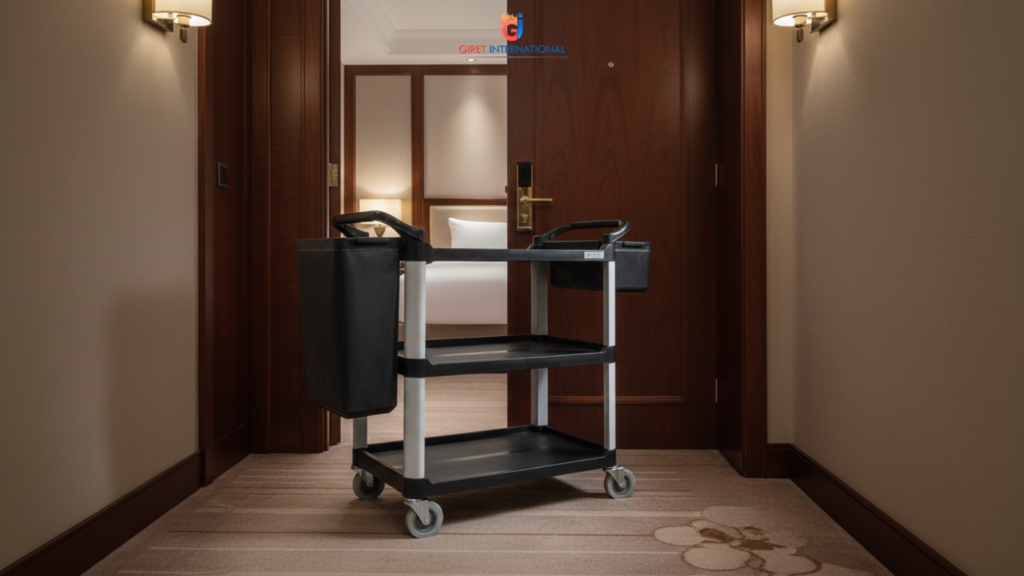
A well-balanced Service trolley fiber should glide smoothly across different floor types. Lightweight yet sturdy construction reduces strain on staff.
Maneuverability Factors
- Wheel rotation flexibility
- Grip-friendly handle design
- Balanced weight distribution
- Stable movement under load
Proper space compatibility ensures the cart navigates corridors and service elevators without disruption.
Poor maneuverability increases staff fatigue and slows service cycles.
Buying Rule 5: Plan for Long-Term Durability and Maintenance
Smart hotels think beyond immediate usage.
A durable Service trolley fiber should require minimal maintenance while maintaining structural integrity over years.
Long-Term Planning Includes
- Availability of spare parts
- Ease of cleaning and repair
- Warranty considerations
- Supplier reliability
Investing in durability reduces replacement frequency and protects budget stability.
Comparing Short-Term vs Long-Term Purchasing Mindsets
Short-term buyers often focus on upfront cost.
Long-term planners evaluate performance consistency, staff comfort, and operational stability.
A strategically selected Service trolley fiber prevents hidden expenses such as repeated maintenance or premature replacement.
The difference between reactive buying and strategic buying becomes clear within the first year of usage.
Department-Specific Buying Considerations
Banquet Operations
Require stable multi-tier storage and smooth maneuverability.
Room Service
Needs controlled item segregation and silent movement.
Maintenance Teams
Benefit from structured load distribution and durable material.
Each department benefits differently from a thoughtfully chosen Service trolley fiber.
Supporting Staff Productivity
Reliable equipment enhances confidence.
When staff operate a stable Service trolley fiber, they focus on service delivery instead of adjusting unstable loads.
Reduced physical strain leads to improved performance consistency.
Protecting Brand Image Through Smart Buying
Operational tools influence guest perception.
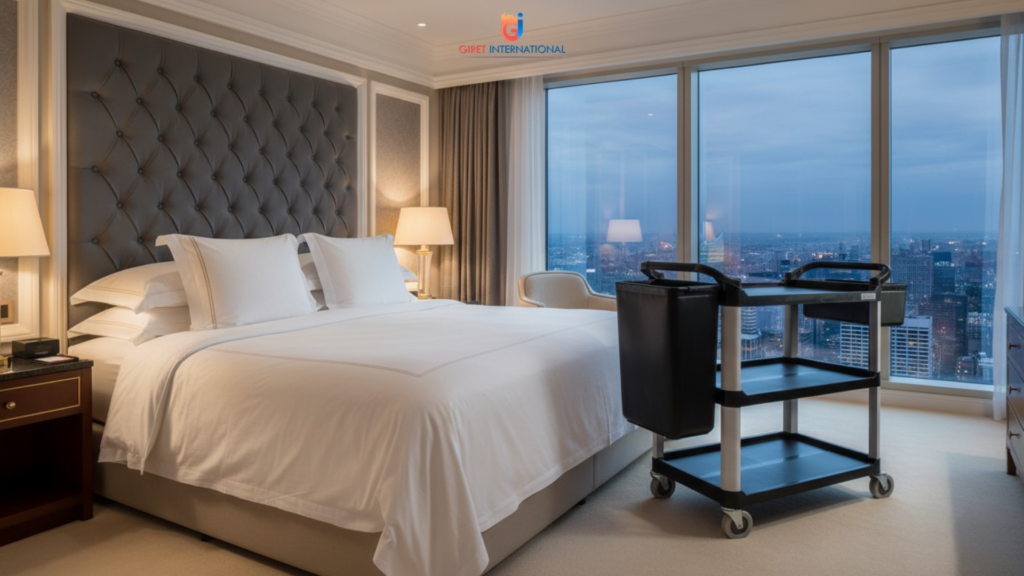
A visually clean and structurally balanced Service trolley fiber strengthens professional presentation in public areas.
Smart buying protects brand image indirectly but consistently.
Final Summary
The five essential buying rules hotels follow when selecting Service trolley fiber models include:
- Evaluate structural strength first
- Match design with operational workflow
- Prioritize material quality and finish
- Ensure maneuverability and space compatibility
- Plan for long-term durability and maintenance
These principles help hotels avoid costly mistakes and ensure operational efficiency.
A carefully selected Service trolley fiber becomes more than a transport tool it becomes a reliable infrastructure asset that supports productivity, hygiene, and professional hospitality standards for years to come.
About Giret International
Contact Us
Hospitality Products
Instagram | Facebook | Pinterest | YouTube | X (Twitter)