
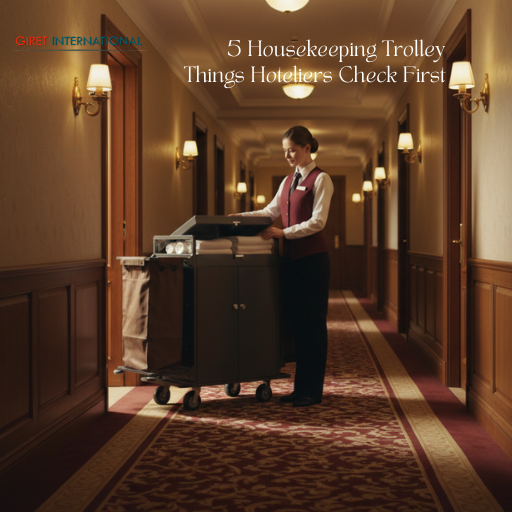
Housekeeping Trolley selection is never an impulsive decision for experienced hoteliers. While it may appear to be a basic housekeeping tool, in reality it directly affects room turnaround time, staff efficiency, hygiene discipline, and even guest perception in service corridors. Hotels that perform smoothly behind the scenes almost always have one thing in common: they choose housekeeping trolleys with intent, not assumptions.
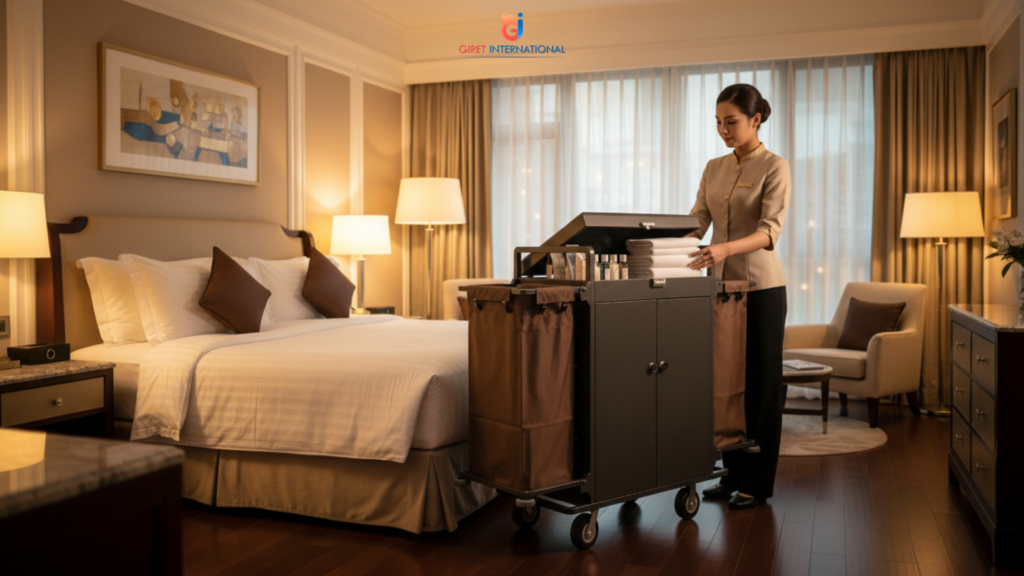
Before approving any purchase, hoteliers follow a clear evaluation mindset. They don’t just look at price or appearance they assess how a Housekeeping Trolley will behave in real hotel conditions, day after day. This blog breaks down the five exact things hoteliers check first before finalizing a housekeeping trolley.
Why Hoteliers Are Careful About Housekeeping Trolleys
Housekeeping operations repeat every single day. Any inefficiency in tools gets multiplied across rooms, floors, and shifts. A poorly chosen Housekeeping Trolley slows staff, creates clutter, and increases physical strain.
Hoteliers understand that once a trolley is deployed across the property, replacing it becomes costly and disruptive. That is why they apply strict evaluation criteria before approving any model.
This careful approach protects long-term operational stability.
Thing 1: Housekeeping Trolley Design and Maneuverability
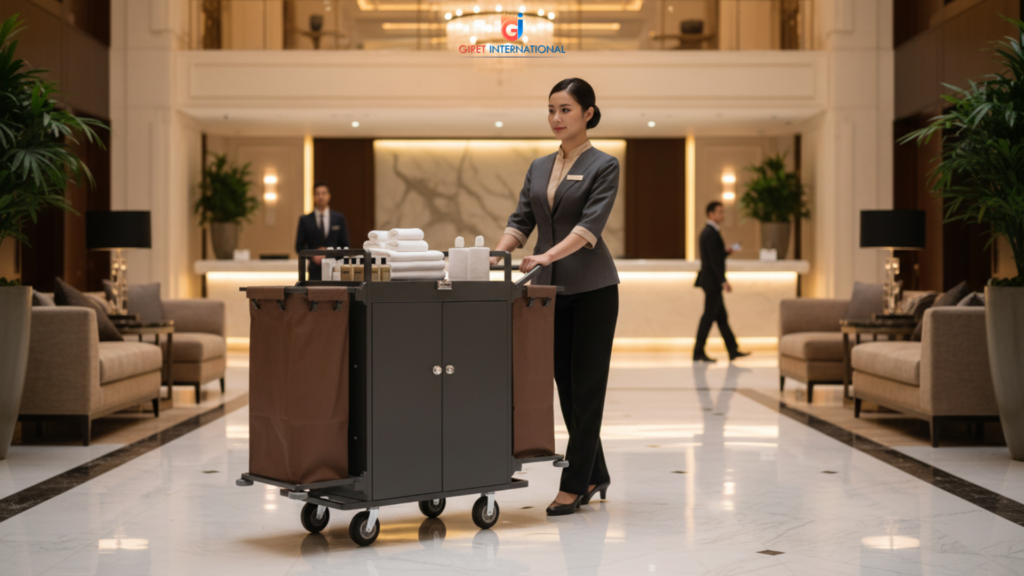
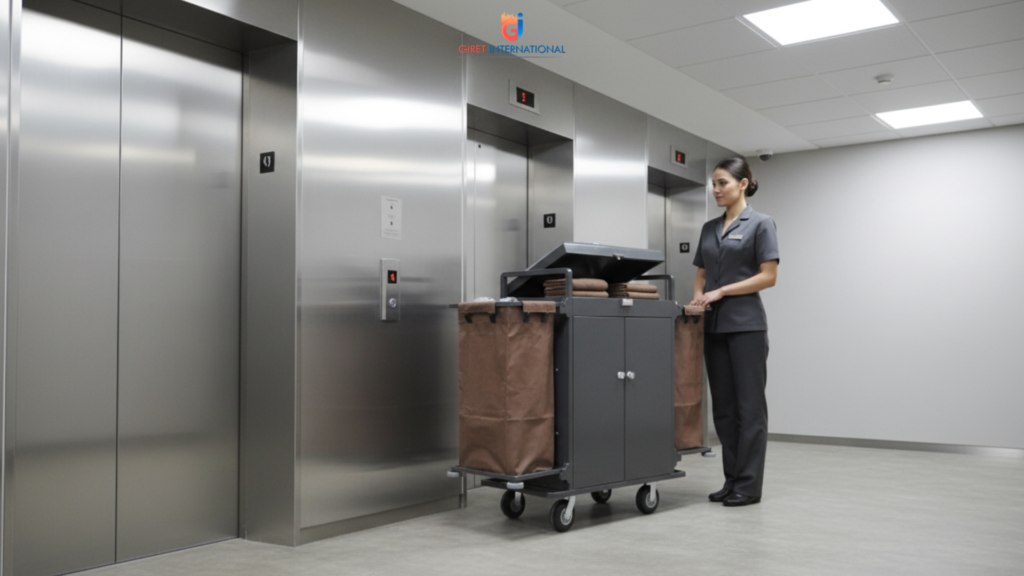
The very first thing hoteliers assess is how the trolley moves. Hotels are filled with narrow corridors, service elevators, and sharp turns.
A hotel-ready Housekeeping Trolley must:
- Turn easily without scraping walls
- Fit comfortably inside service elevators
- Move smoothly even when fully loaded
If a trolley feels bulky or awkward during trial movement, it is usually rejected immediately. Smooth maneuverability is non-negotiable because it directly affects speed and safety.
Thing 2: Material Strength and Surface Finish
Material quality is the second major checkpoint. A Housekeeping Trolley is exposed to moisture, cleaning chemicals, and constant handling.
Hoteliers closely inspect:
- Frame strength
- Powder coating quality
- Resistance to rust and chipping
MS powder-coated construction is often preferred because it offers durability without excessive weight. A weak finish leads to corrosion, stains, and an unprofessional appearance over time.
Material failure is one of the fastest ways a trolley loses trust.
Thing 3: Storage Layout and Shelf Practicality
Storage design matters more than storage volume. Hoteliers look at how shelves are arranged, not just how many exist.
A functional Housekeeping Trolley should offer:
- Clearly accessible shelves
- Logical spacing for linen and supplies
- Easy restocking during shifts
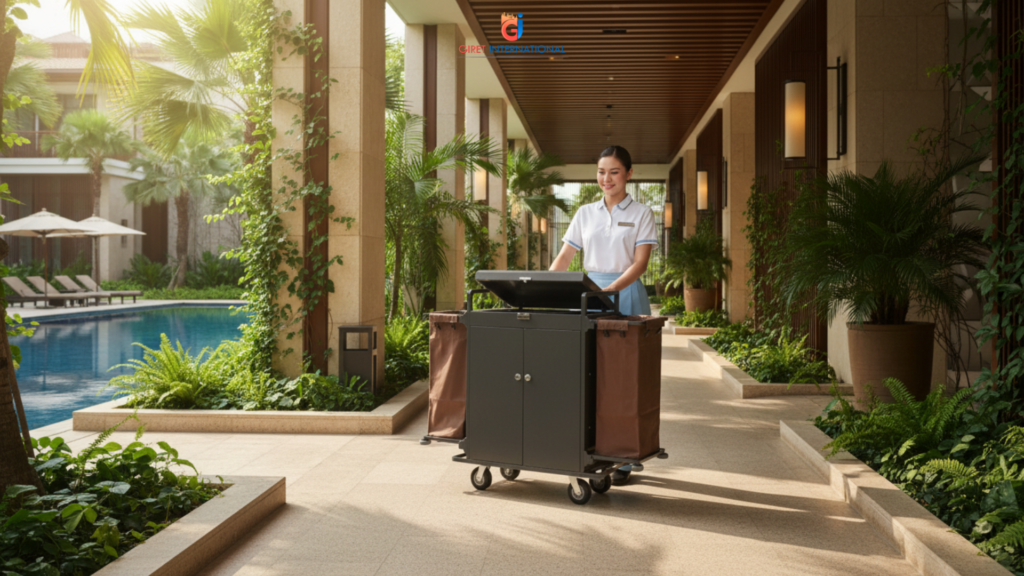
Overcrowded or poorly spaced shelves slow down housekeeping routines. Hoteliers favor designs that allow staff to work instinctively without rearranging items constantly.
Practical storage improves speed without adding bulk.
Thing 4: Hygiene Control and Separation Capability
Hygiene discipline is a major inspection point. Hoteliers check whether the Housekeeping Trolley supports proper separation between clean and used items.
Key hygiene considerations include:
- Separate canvas bags for waste and linen
- Clear zones for amenities
- No overlap between clean and dirty items
When separation is unclear, hygiene protocols fail silently. Hoteliers therefore prioritize trolley designs that enforce hygiene naturally through layout.
This reduces inspection issues and supports consistent cleanliness standards.
Thing 5: Staff Comfort and Daily Handling
Housekeeping staff push and manage trolleys for hours every day. Hoteliers pay close attention to how comfortable the trolley feels during use.
A good Housekeeping Trolley offers:
- Balanced weight distribution
- Comfortable handle height
- Minimal physical strain during movement
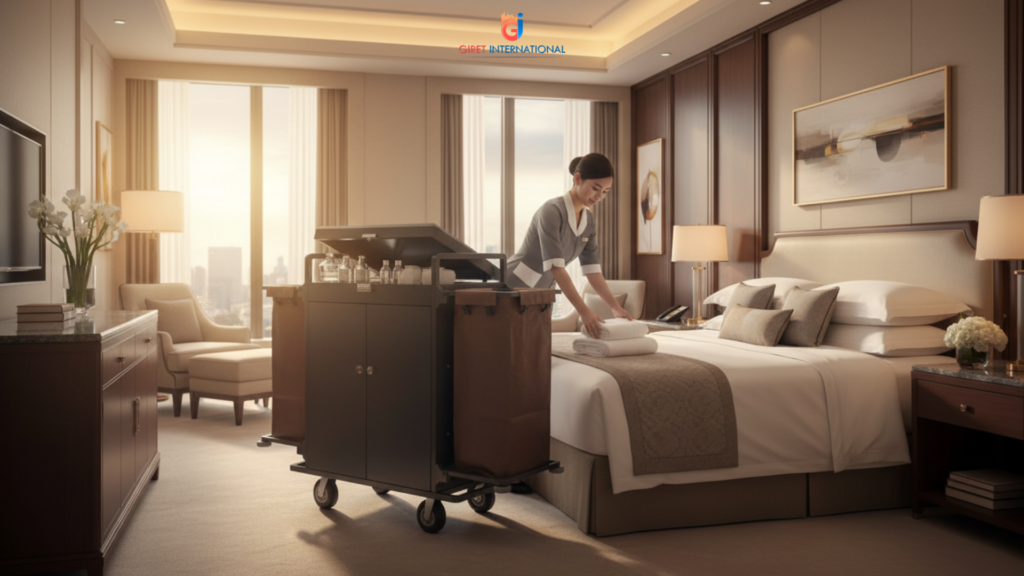
If staff struggle to handle the trolley during trials, hoteliers know productivity will suffer over time. Comfort directly influences efficiency and morale.
Staff-friendly tools always perform better in real operations.
How These Checks Prevent Operational Problems
Each of these five checks protects hotels from long-term issues such as:
- Slow room turnaround
- Staff fatigue and errors
- Hygiene lapses
- Congested service areas
A poorly chosen Housekeeping Trolley may work on day one but fail under continuous use. Hoteliers evaluate upfront to avoid repeated fixes later.
This proactive approach saves time, money, and operational stress.
Connecting Buying Logic with Collapsible Design
Many of the above checks naturally lead hoteliers toward collapsible trolley designs. Collapsible structures improve maneuverability, storage flexibility, and corridor management without compromising strength.
The operational logic behind this preference is explained in detail in the previous pillar guide:
Housekeeping Trolley: Why Hotels Prefer Collapsible Design
Understanding this connection helps hotels make confident buying decisions.
Why Experienced Hoteliers Avoid Price-Only Decisions
Cost is important, but it is never the first filter. Hoteliers know that a cheaper Housekeeping Trolley that fails early becomes more expensive over time.
Instead of focusing on upfront price, they evaluate:
- Daily performance
- Durability under hotel conditions
- Impact on staff efficiency
This mindset separates professional hotel operations from reactive ones.
Final Buying Insight for Hoteliers
A Housekeeping Trolley is a silent partner in hotel operations. When chosen correctly, it improves efficiency without drawing attention. When chosen poorly, it creates daily friction.
Hoteliers consistently check five things first: maneuverability, material strength, storage practicality, hygiene separation, and staff comfort. These criteria protect operations and support long-term performance.
In hospitality, smooth operations are built through thoughtful decisions made early. And the right housekeeping trolley is one of those decisions that pays back every single day.
About Giret International
Contact Us
Hospitality Products
Instagram | Facebook | Pinterest | YouTube | X (Twitter)