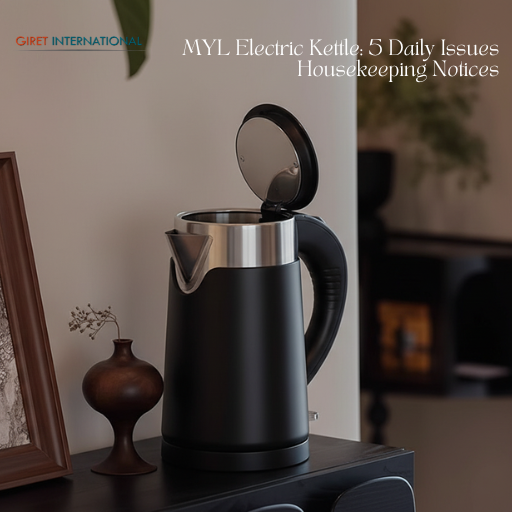
MYL Electric Kettle is one of the most frequently checked appliances during daily housekeeping rounds. Unlike fixed installations, kettles are moved, filled, emptied, and reused multiple times by guests, which means housekeeping teams become the first line of observation for potential issues.
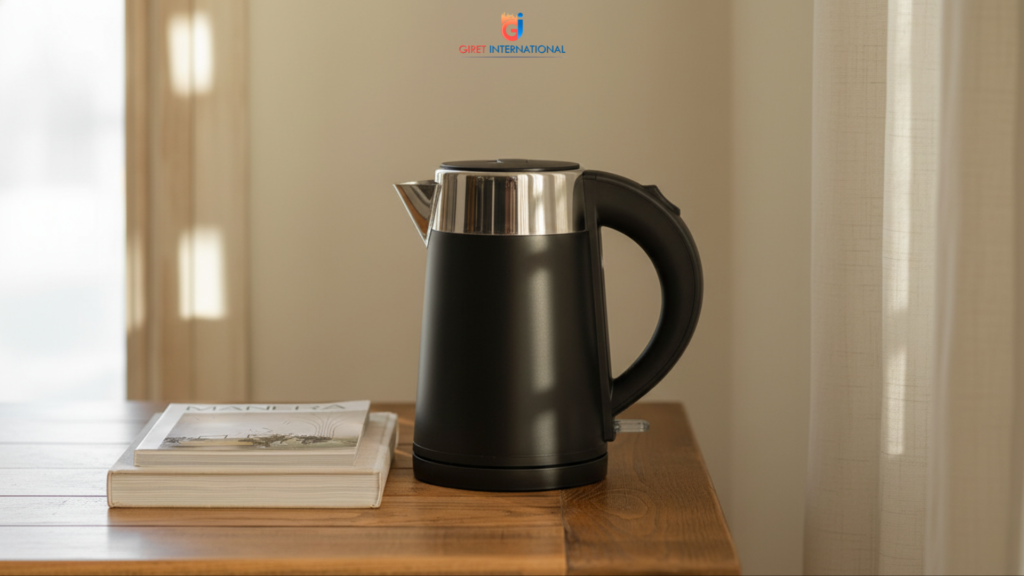
Housekeeping staff may not always report problems verbally, but their daily actions cleaning, resetting, replacing, or repositioning reveal recurring patterns. These patterns help hotels understand how kettles perform under real guest behavior and where operational attention is required.
This article highlights five daily issues housekeeping teams consistently notice when managing in-room electric kettles.
Why Housekeeping Plays a Key Role in Kettle Monitoring
Housekeeping teams interact with kettles more consistently than any other department. While guests use the kettle briefly, housekeeping resets it daily. This makes housekeeping feedback invaluable for identifying repeated operational issues.
Daily checks help hotels:
- Detect misuse patterns
- Identify safety triggers
- Maintain hygiene standards
- Reduce guest complaints
Because issues often appear gradually, housekeeping observations provide early warning signals long before a guest reports a problem.
MYL Electric Kettle and Water Residue Issues
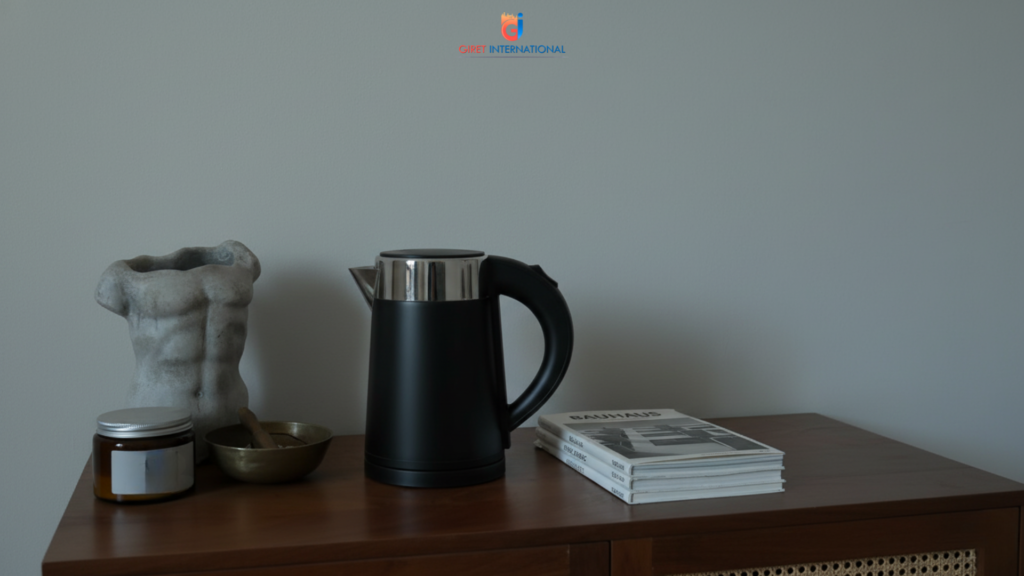
One of the most common daily issues housekeeping notices is water residue left inside or around the kettle. This happens when guests:
- Do not empty leftover water
- Overfill the kettle
- Spill water while pouring
Water residue can lead to:
- Limescale buildup
- Hygiene concerns
- Slippery tray surfaces
Housekeeping teams routinely dry and reset kettles, but repeated residue signals usage behavior that hotels must account for in appliance selection and placement.
MYL Electric Kettle and Signs of Guest Misuse
Housekeeping staff often identify misuse not through complaints, but through visual cues. These may include:
- Lid left open or misaligned
- Kettle placed away from its base
- Water marks on furniture
Such signs indicate guests may be:
- Refilling incorrectly
- Moving the kettle while hot
- Using it in unintended locations
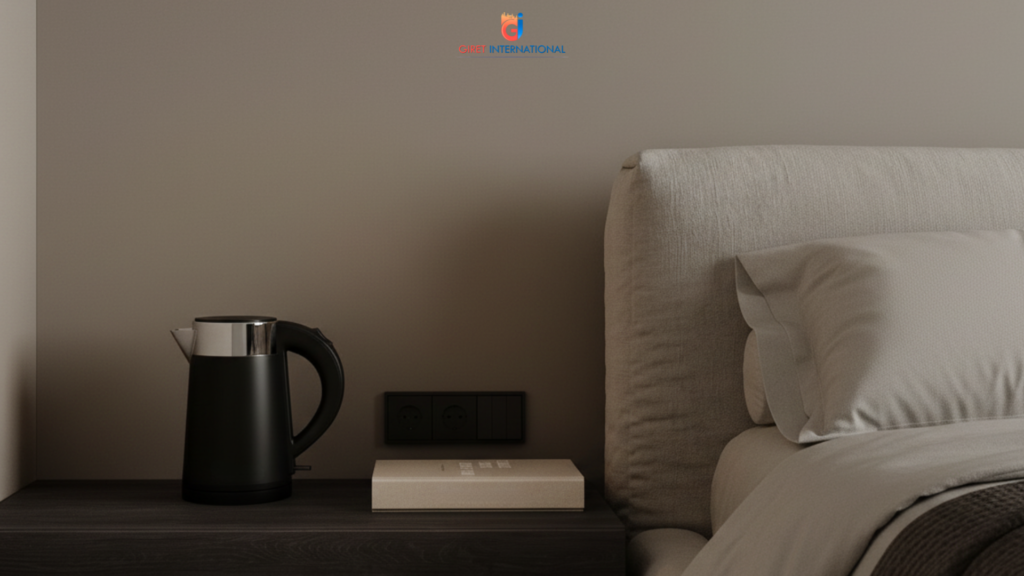
These observations help hotels understand how guests actually interact with in-room appliances rather than how they are expected to use them.
MYL Electric Kettle and Auto Cut-Off Checks
Another daily checkpoint for housekeeping is whether the kettle’s auto cut-off system has been triggered. Staff may notice:
- Kettle left switched off unexpectedly
- No heat after guest checkout
- Reset needed before next guest
Auto cut-off activations often occur due to dry use or overheating. While the safety system works as intended, repeated triggers alert hotels to frequent misuse patterns.
Housekeeping teams are trained to reset and test the kettle during room turnover, ensuring the next guest experiences normal operation.
MYL Electric Kettle and External Surface Cleaning
External cleanliness is a major housekeeping concern. Kettles may accumulate:
- Finger marks
- Water splashes
- Steam residue
Frequent cleaning is necessary to maintain hygiene and presentation standards. However, surfaces that retain marks too easily increase cleaning time and effort.
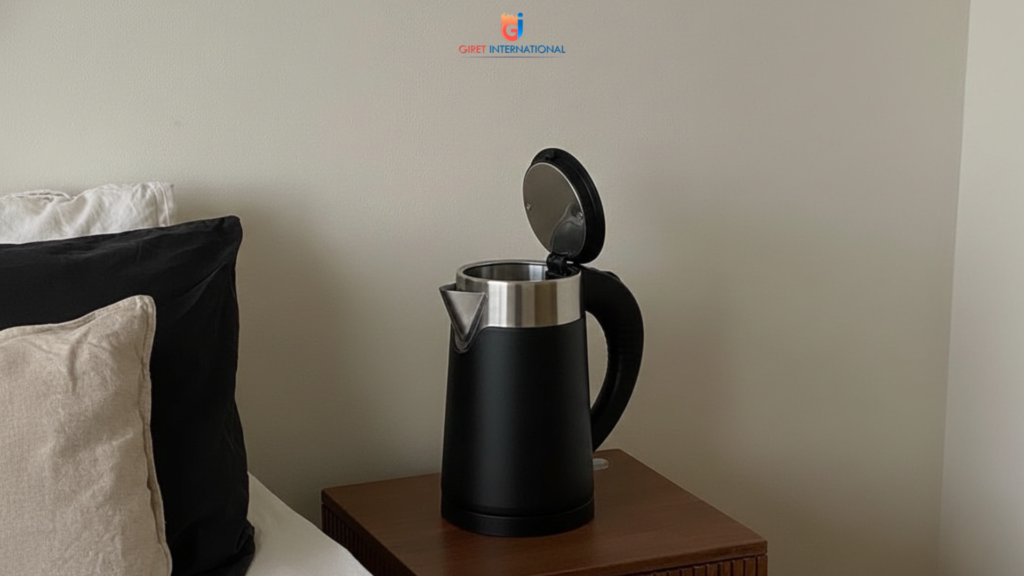
Housekeeping feedback helps hotels evaluate how kettle materials respond to daily wiping and whether the appliance maintains its appearance under repeated use.
MYL Electric Kettle and Placement Reset Problems
Guests often move kettles from their designated positions. Housekeeping teams regularly find kettles:
- Shifted closer to beds
- Placed near curtains
- Moved onto unstable surfaces
Resetting placement becomes a routine task. Repeated repositioning highlights the importance of stable bases and compact design, especially in smaller rooms.
Housekeeping teams ensure kettles are returned to safe, visible locations during every room reset.
How Hotels Use Housekeeping Feedback
Hotels rely heavily on housekeeping input to improve operational decisions. Rather than waiting for guest complaints, hotels analyze:
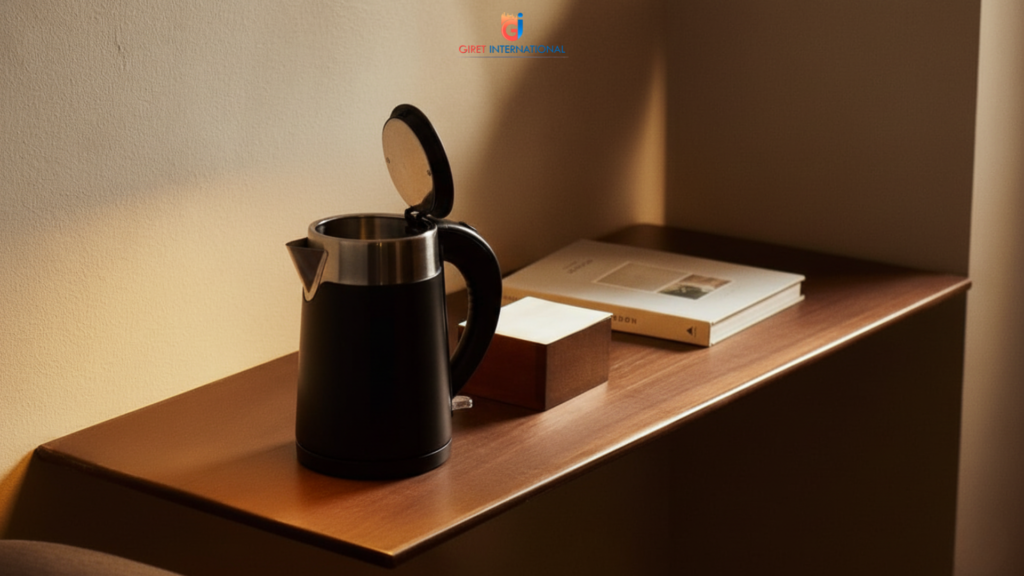
- Frequency of residue cleaning
- Number of cut-off resets
- Repeated misuse indicators
This feedback loop helps hotels refine appliance choices and placement strategies across properties.
Housekeeping insights also reduce:
- Maintenance calls
- Guest dissatisfaction
- Equipment replacement frequency
Internal Safety Alignment with Risk Monitoring
Housekeeping observations directly support broader safety monitoring efforts. The issues identified here align closely with risk factors discussed in the pillar article, MYL Electric Kettle: 6 Safety Risks Hotels Watch Closely.
By connecting daily checks with risk awareness, hotels create a unified safety strategy that spans departments instead of isolated responses.
Final Operational Perspective
Electric kettles may seem like minor room amenities, but from a housekeeping perspective they require constant attention. MYL Electric Kettle performance is judged not only by guest convenience but by how easily it integrates into daily cleaning, resetting, and safety checks.
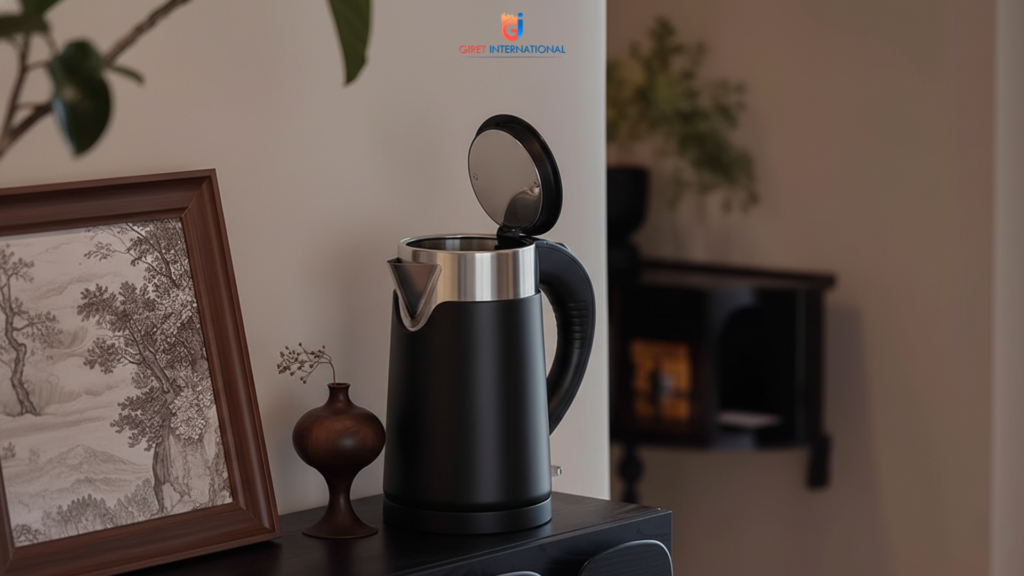
By understanding the five daily issues housekeeping teams notice water residue, misuse signs, cut-off activation, surface cleaning, and placement reset hotels maintain safer rooms, smoother operations, and consistent guest experiences.
Housekeeping feedback transforms routine cleaning into valuable operational intelligence.
About Giret International
Contact Us
Hospitality Products
Instagram | Facebook | Pinterest | YouTube | X (Twitter)