MYL Electric Kettle is designed for daily hotel-room use, but guest behavior often introduces usage problems that hotels must anticipate and manage. In hospitality environments, guests come from different backgrounds, cultures, and usage habits. While most guests use kettles responsibly, a small percentage of incorrect usage patterns can create recurring operational challenges.
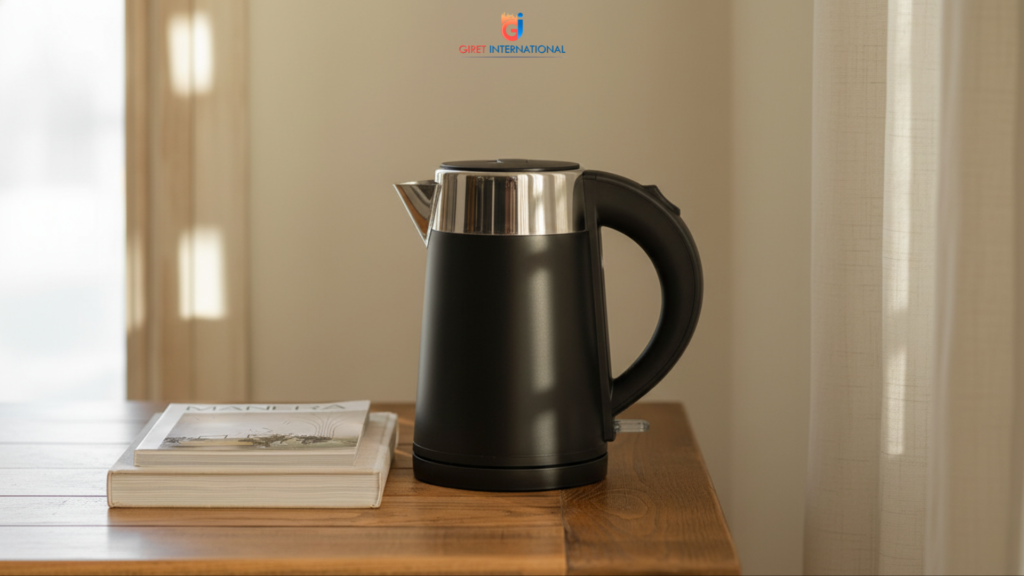
This long-tail article focuses on seven common usage problems guests create when using an electric kettle in hotel rooms and how hotels plan around these behaviors to protect safety, hygiene, and room efficiency.
Why Guest Usage Problems Matter in Hotels
In a hotel setting, electric kettles are self-service appliances. Guests operate them without staff supervision, which means hotels must assume:
- No prior instruction
- No technical understanding
- No consistent usage pattern
A single misuse incident may seem minor, but repeated across dozens or hundreds of rooms, these issues can impact:
- Guest safety
- Appliance lifespan
- Housekeeping workload
- Maintenance costs
This is why guest behavior is treated as a core operational variable in hospitality planning.
MYL Electric Kettle Usage Problem 1: Dry Use Without Water
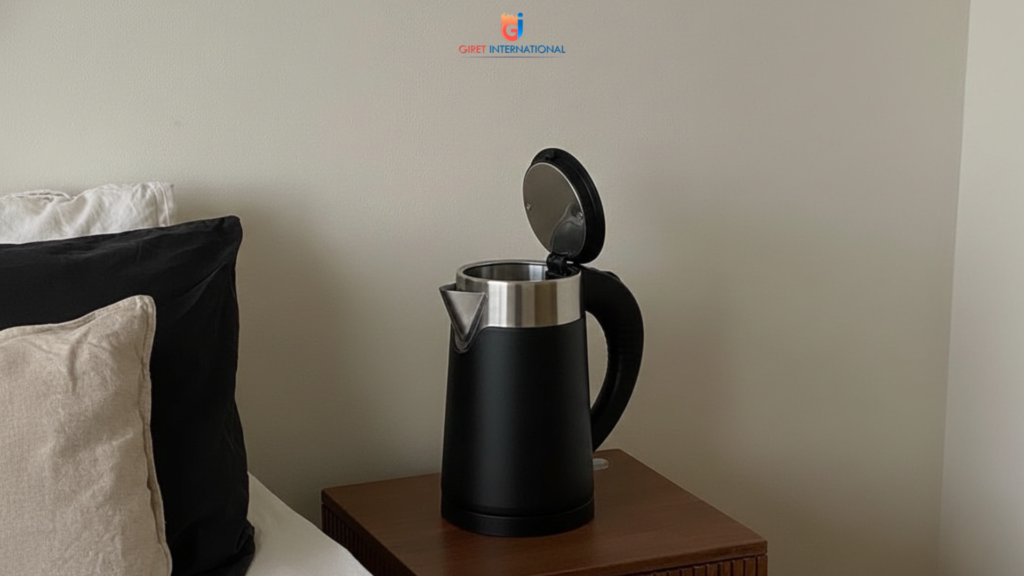
One of the most frequent guest-related issues is switching on the kettle without water inside. This can happen when:
- Guests forget to refill after previous use
- Guests test the kettle without checking water level
- Housekeeping accidentally leaves the kettle empty
Dry use can lead to:
- Overheating risks
- Internal component stress
- Safety-triggered shutdowns
Hotels anticipate this behavior by using kettles with dry-boil protection systems, reducing damage and improving safety compliance.
MYL Electric Kettle Usage Problem 2: Overfilling Beyond Safe Levels
Overfilling is another common guest-created problem. Guests may assume “more water is better,” especially when:
- Making multiple cups
- Sharing the kettle among family members
- Rushing during checkout
Overfilling can cause:
- Water spillover during boiling
- Moisture damage to furniture
- Electrical safety concerns
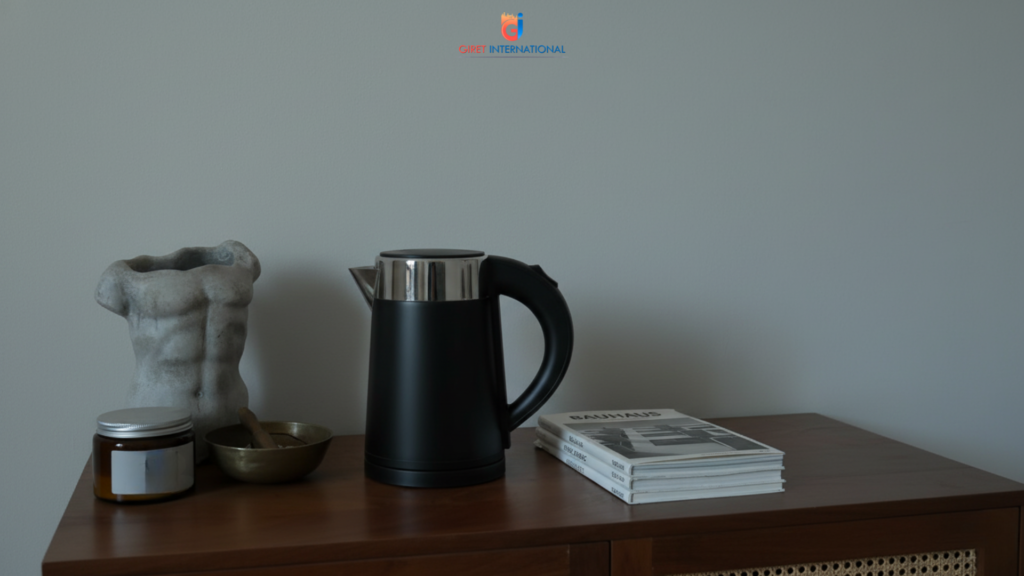
Hotels prefer kettles with clear water-level indicators, allowing guests to visually confirm safe fill limits before use.
MYL Electric Kettle Usage Problem 3: Unsafe Placement in Guest Rooms
Guests sometimes relocate kettles to unsafe surfaces, such as:
- Bedsides
- Bathroom counters
- Near curtains or soft furnishings
This behavior introduces:
- Burn risks
- Fire hazards
- Spillage-related damage
Hotel room planning assumes guests may move appliances, so kettles are selected for:
- Stable base design
- Balanced weight distribution
- Controlled heat dispersion
This minimizes risk even when placement is not ideal.
MYL Electric Kettle Usage Problem 4: Incorrect Water Window Monitoring
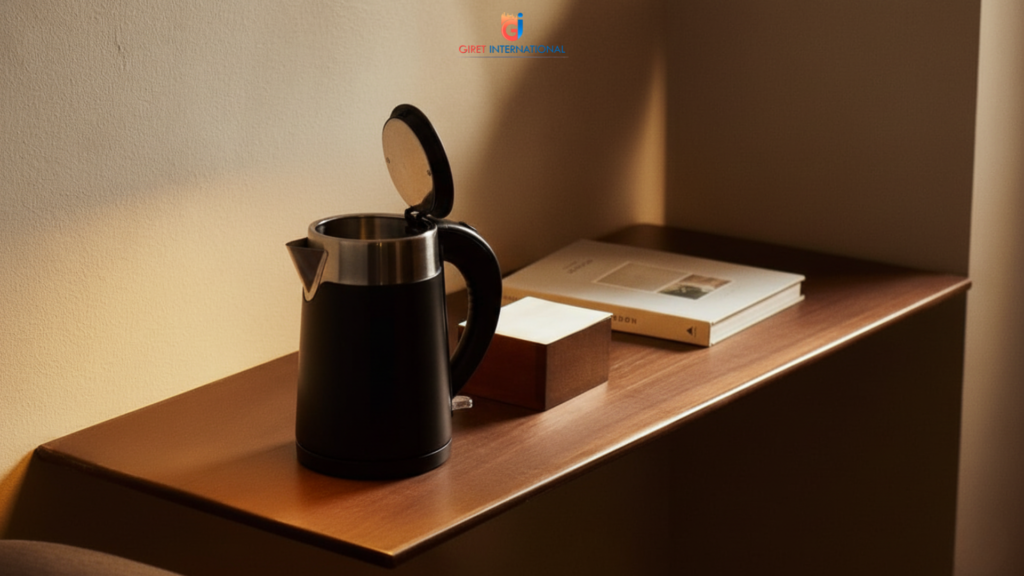
Some guests fail to monitor the water window properly. This may include:
- Misreading water levels
- Ignoring minimum or maximum markings
- Operating the kettle at borderline levels
Incorrect monitoring leads to:
- Inefficient boiling
- Incomplete heating cycles
- Increased auto cut-off activation
Hotels reduce this issue by standardizing kettles with high-visibility water windows, making level checks intuitive even for first-time users.
MYL Electric Kettle Usage Problem 5: Switching On Without Proper Setup
Another issue arises when guests:
- Switch on the kettle without placing it correctly on the base
- Tilt the kettle while operating
- Handle it before boiling completes
Such behavior can cause:
- Interrupted heating
- Sudden power cut-offs
- Guest confusion about performance
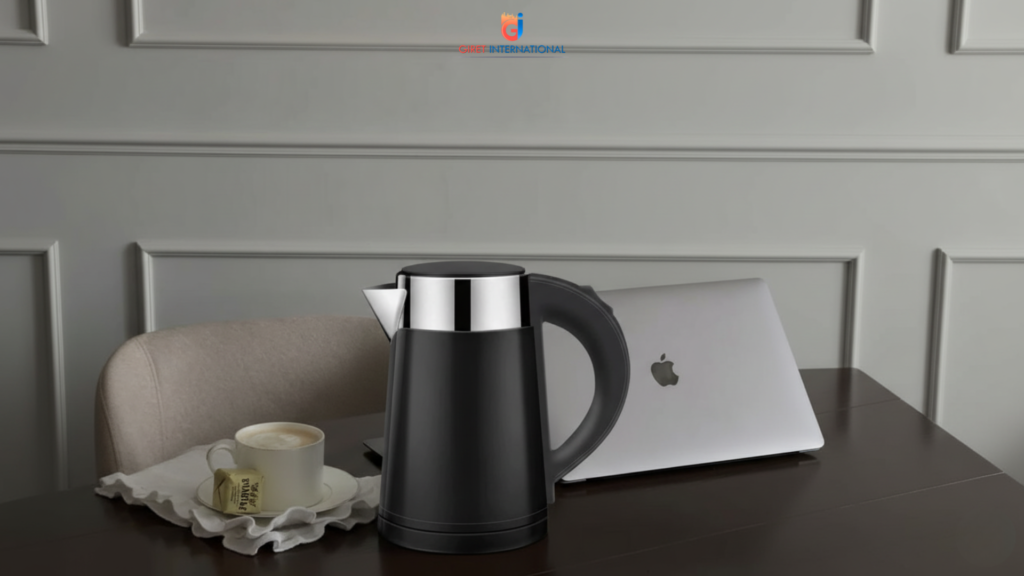
From an operational perspective, hotels expect these behaviors and select kettles with stable contact points and predictable activation mechanisms.
MYL Electric Kettle Usage Problem 6: Repeated Boiling Cycles
Some guests repeatedly boil water in short intervals for example:
- Reheating partially cooled water
- Making multiple drinks back-to-back
- Testing kettle speed
This behavior increases:
- Thermal load on internal components
- Electricity usage
- Wear on heating elements
Hotels mitigate this by using kettles engineered for frequent, repetitive heating cycles, ensuring performance consistency throughout the day.
MYL Electric Kettle Usage Problem 7: Improper Handling After Use
After boiling, guests may:
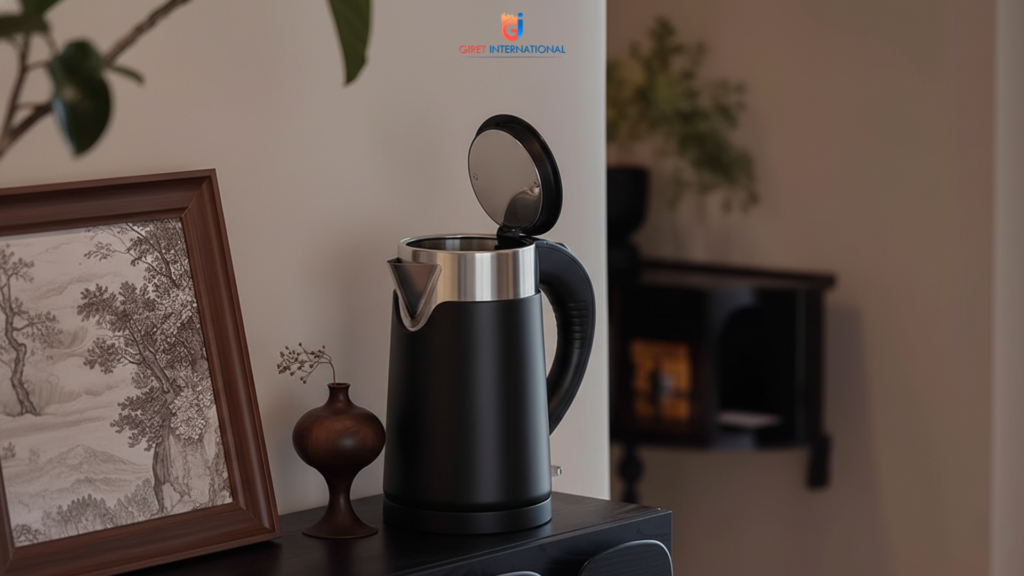
- Immediately touch hot surfaces
- Pour water carelessly
- Leave the kettle plugged in
Improper post-use handling can result in:
- Minor burns
- Water spillage
- Electrical misuse
To reduce such risks, hotels prefer kettles designed with:
- Heat-controlled outer surfaces
- Auto shut-off after boiling
- User-friendly grip structures
This protects both guests and hotel property.
How Hotels Anticipate Guest Behavior
Hotels do not expect perfect guest behavior. Instead, they plan around predictable misuse patterns. This includes:
- Choosing kettles with built-in safety layers
- Designing room layouts that guide proper use
- Training housekeeping teams to reset kettles correctly
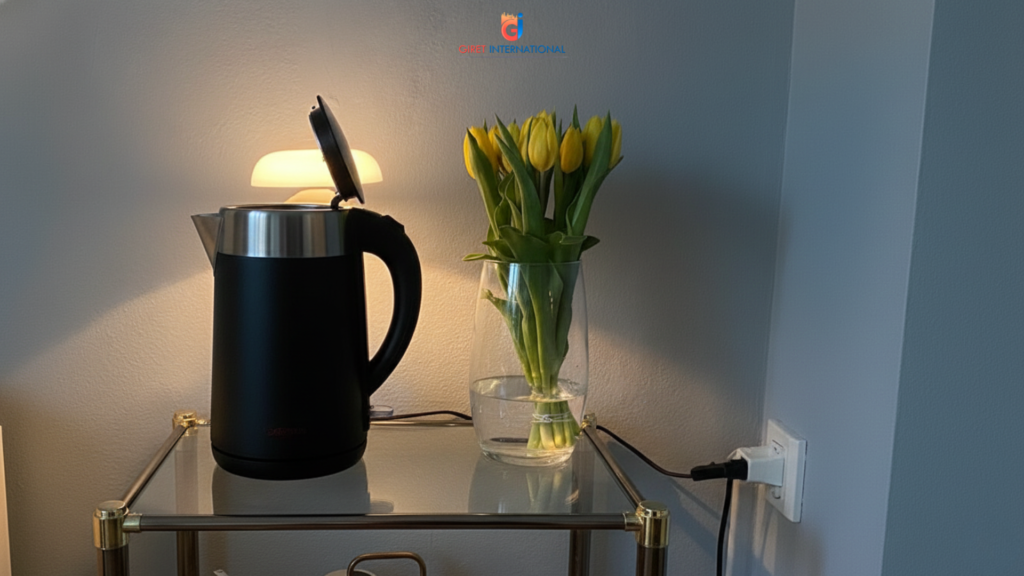
This proactive approach links directly with broader risk and maintenance strategies discussed in earlier posts.
MYL Electric Kettle: 6 Risk Factors Hotels Must Manage
MYL Electric Kettle: 5 Common Issues Hotels Encounter
Final Perspective for Hotel Operations
Guest-created usage problems are inevitable in hospitality environments. What matters is how well hotels prepare for them. By understanding common guest behaviors and selecting electric kettles designed to withstand misuse, hotels maintain:
- Safety standards
- Hygiene consistency
- Operational efficiency
The MYL Electric Kettle fits into this strategy by supporting controlled self-use, minimizing risk even when guest behavior is unpredictable.
About Giret International
Contact Us
Hospitality Products
Instagram | Facebook | Pinterest | YouTube | X (Twitter)