
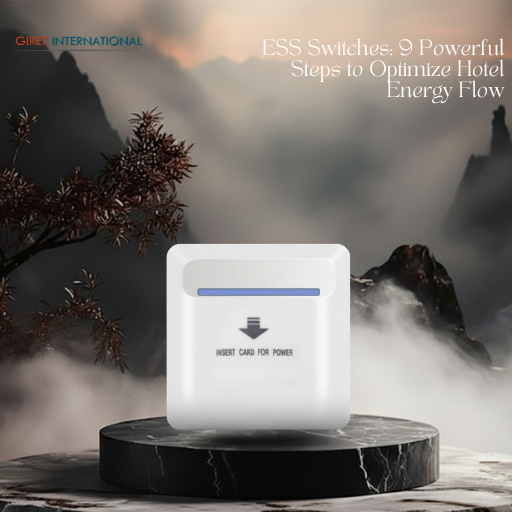
Energy management has become a defining pillar of modern hospitality. With rising electricity costs, unpredictable guest habits, and the growing pressure to adopt sustainable practices, hotels must move beyond traditional methods of controlling power usage. They need automation accurate, reliable, and intelligent. This is exactly where ESS Switches transform the hotel ecosystem by regulating energy flow with precision and efficiency.
These automated hotel energy controllers play a quiet yet powerful role. They ensure that lighting, HVAC units, and electrical appliances operate only when a guest is present, and shut off automatically once the room becomes vacant. This simple mechanism can save thousands of units of electricity every month. Yet many hotels underutilize this technology because they are unaware of the deeper steps required to optimize energy flow effectively.

If you want to understand more about ignored hotel energy opportunities, you can read:
ESS Switches: 5 Energy-Saving Secrets Modern Hotels Ignore.
Below are nine powerful and deeply practical steps every hotel must follow to achieve the highest level of energy optimization.
1. ESS Switches and the Step of Authentic Occupancy Control
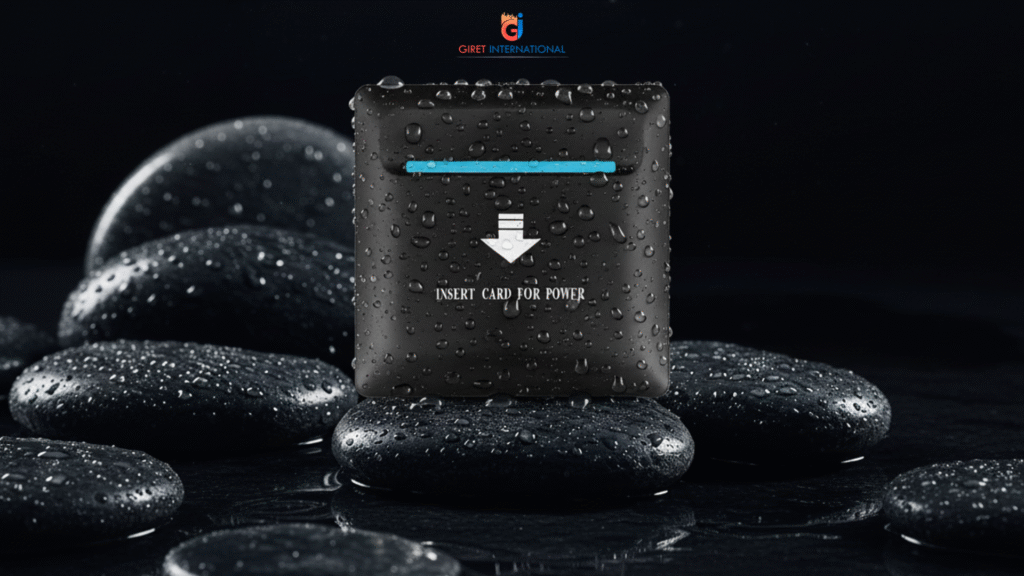
One of the biggest challenges in hotel energy management is false occupancy. Traditional card slots allow guests to insert any object paper cards, plastic tags, cardboard pieces and keep the room powered even when they are away.
Authentic occupancy is the first step to optimization.
With RFID-validated control:
- Only genuine hotel key cards activate power
- Electricity aligns with real guest presence
- No bypass tricks work
- Rooms behave consistently
- Energy wastage drops drastically
Hotels often underestimate how much electricity is lost due to unauthorized card insertion. Eliminating this loophole results in immediate savings.
When hotels begin using ESS Switches, power activation aligns with genuine occupancy instead of guest manipulation.
If you want deeper insights on smart energy behavior, refer to:
ESS Switches: 7 Key Factors Behind Smart Hotel Energy Use.
2. ESS Switches and the Step of Timed HVAC Shutdown
Air conditioning systems contribute to the largest share of electricity bills in hospitality. Guests frequently leave ACs running when they step out for breakfast or meetings. Without automation, this waste is unavoidable.
Timed HVAC shutdown fixes this.
Hotels benefit from:
- Automatic cooling cut-off after exit
- Reduced compressor strain
- More predictable temperature cycles
- Lower operational costs
- Longer equipment lifespan
This step alone can save lakhs annually in large hotels.
Cooling becomes far more efficient once ESS Switches control how long the HVAC continues after the guest leaves.
To explore similar savings, check:
ESS Switches: 6 Strategic Ways Hotels Can Save Electricity.
3. ESS Switches and the Step of Unified Lighting Automation
Lighting misuse is one of the most common silent leaks in hotels. Guests switch on multiple lights bedside lamps, ceiling lights, bathroom lights and forget to turn them off.
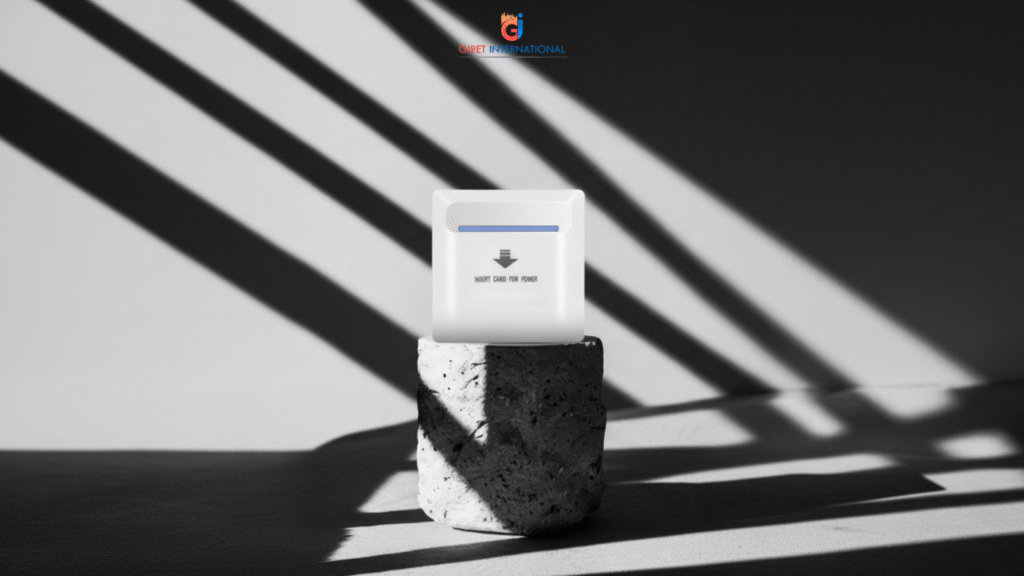
Lighting automation solves this instantly.
When the card is removed:
- Non-essential lights turn off
- Room enters a corrected power-down state
- Bulbs last longer
- Floor-wise lighting becomes uniform
- Electricity bills drop steadily
Hotels that adopt automated lighting gain predictable energy usage patterns across rooms, wings, and entire floors.
To explore how lighting fits into wider energy strategies, see:
ESS Switches: 9 Smart Approaches for Better Hotel Power Control.
Lighting behavior becomes consistent and predictable when ESS Switches manage illumination automatically.
4. ESS Switches and the Step of Eliminating Phantom Load
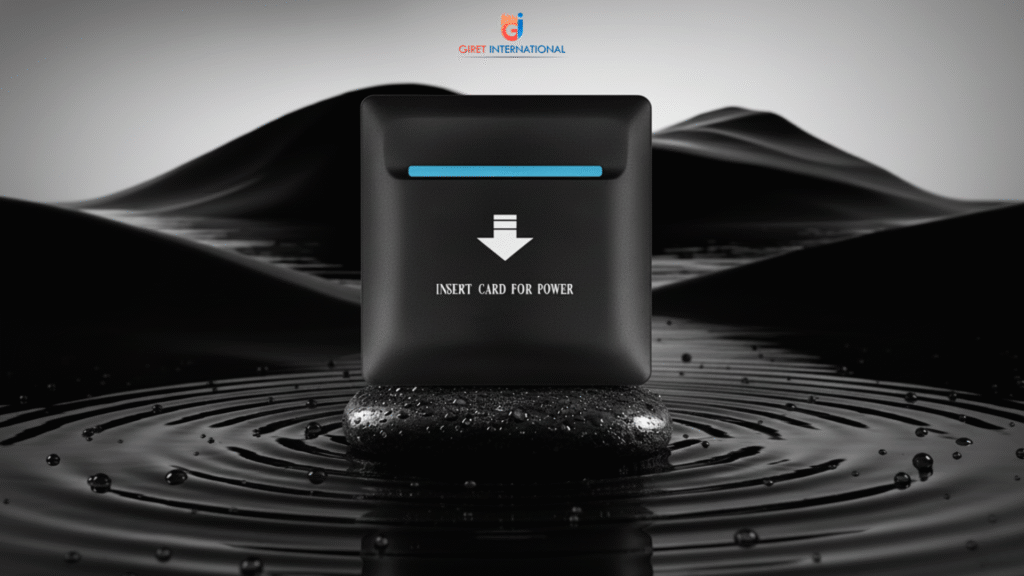
Phantom load refers to electricity consumed by devices even when they are not actively being used chargers, kettles, grooming devices, and power banks often draw voltage silently.
This is a hidden, often ignored energy drain.
Automated switches eliminate phantom load by:
- Cutting power to every device on guest exit
- Preventing wasted wattage from chargers
- Securing unused appliances
- Reducing stress on room circuits
Hotels rarely calculate this loss, but it becomes significant when multiplied across hundreds of rooms.
Unseen device consumption stops completely when ESS Switches cut all power during vacancy.
If you’re exploring errors hotels often overlook, refer to:
ESS Switches: 7 Hidden Rules Behind Efficient Hotel Energy Flow.
5. ESS Switches and the Step of Smart-Room Integration
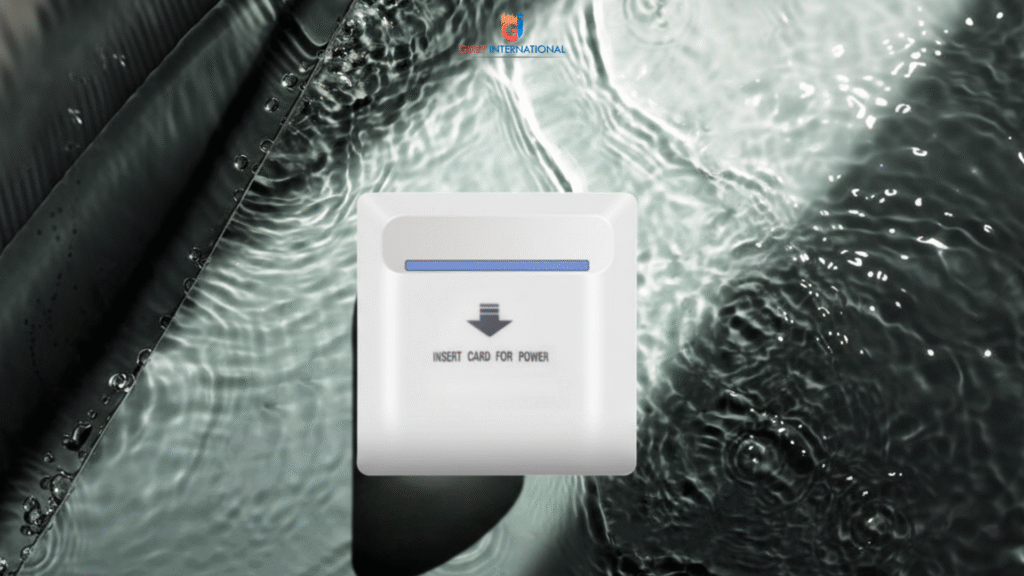
Modern hotel rooms rely heavily on technology:
- Digital DND/MUR indicators
- Touch-sensitive panels
- Doorbell modules
- Modular combo switches
These systems require stable and predictable energy. Without energy discipline, digital panels malfunction or lag.
Integration with automated switches ensures:
- Consistent power behavior
- Reduced device failures
- Stronger panel performance
- More intuitive guest experience
- Fewer engineering complaints
This integration is essential for hotels with modern interior automation.
Smart-room panels operate seamlessly once ESS Switches regulate the flow of electricity behind them.
6. ESS Switches and the Step of Standardized Energy Flow Across Floors
Hotels typically operate across multiple floors, each with different occupancy and energy patterns. Without automation, these patterns become unpredictable, making energy audits difficult.
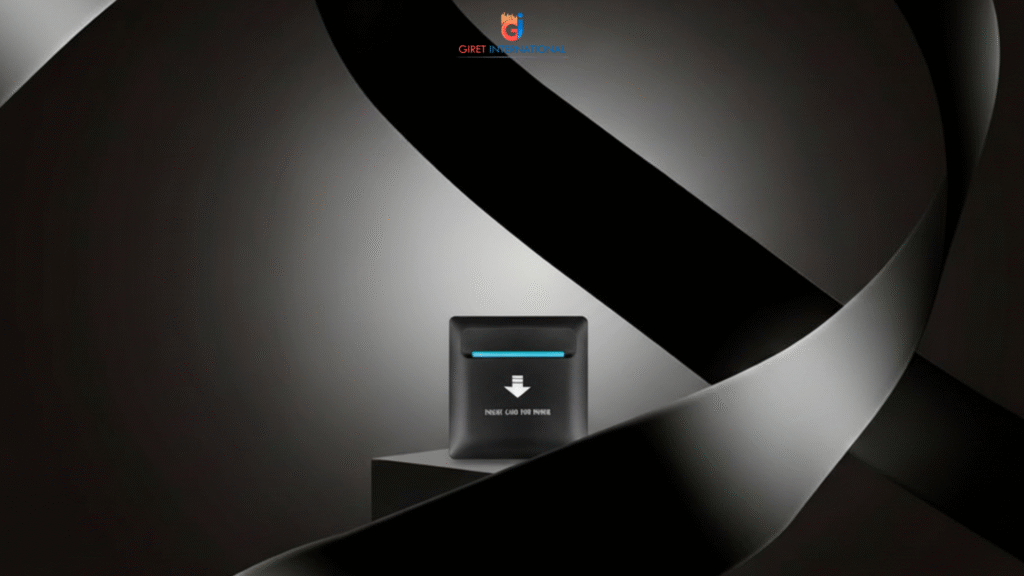
Standardizing energy logic helps hotels:
- Control floor-wise consumption
- Identify peak usage patterns
- Reduce sudden load spikes
- Improve maintenance planning
- Simplify engineering inspections
Predictable energy behavior is a major advantage for large and mid-sized hotels.
Floor-wise electricity becomes easier to forecast when ESS Switches enforce identical power logic across rooms.
7. ESS Switches and the Step of Operational Safety Optimization
Electrical safety is often ignored until a problem occurs. Guests leave appliances plugged in hair straighteners, irons, kettles which continue to heat or draw current even when unattended.
Automation enhances safety by:
- Shutting off appliances automatically
- Preventing socket overheating
- Reducing circuit load
- Minimizing fire risk
- Protecting expensive room components
Hotels benefit from both improved safety and reduced maintenance expenditure.
Rooms become safer environments when ESS Switches prevent unattended appliances from drawing power.
8. ESS Switches and the Step of Sustainability Alignment
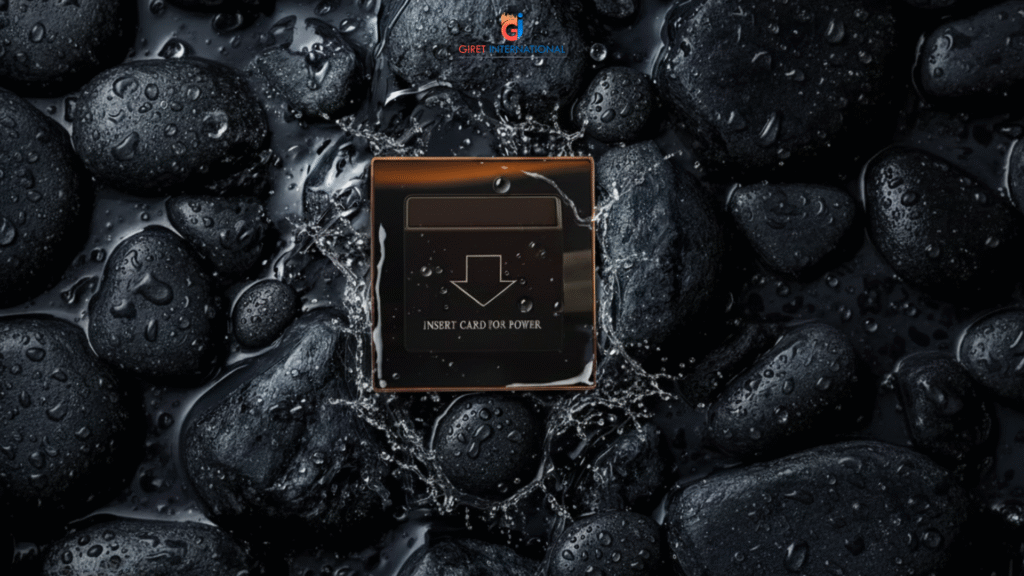
As global tourism shifts toward sustainability, hotels must follow eco-friendly practices. Automated energy control is one of the easiest and most impactful ways to support green goals.
Automation helps hotels:
- Reduce carbon emissions
- Avoid unnecessary energy waste
- Achieve sustainability certifications
- Strengthen eco-brand identity
- Meet modern guest expectations
Hotel energy efficiency is not just a financial decision it is a strategic sustainability commitment.
Eco-friendly performance improves dramatically once ESS Switches reduce daily excess electricity usage.
9. ESS Switches and the Step of Long-Term Cost Predictability
The final step in optimizing hotel energy flow is achieving predictable long-term electricity cost patterns. Hotels struggle with fluctuating bills due to inconsistent guest habits.
Automation eliminates this inconsistency by:
- Controlling peak load behavior
- Providing consistent usage data
- Helping engineering teams plan better
- Reducing sudden overconsumption
- Supporting predictable budgeting cycles
Long-term stability is an overlooked but powerful benefit of automated energy systems.
Why Hotels Choose Giret International for ESS Solutions
Giret International provides hospitality-grade, durable, and elegant systems engineered for long-term usage. Their ESS models include:
- RFID Mifare-only activation
- Tempered glass and PC body options
- 40A electrical support
- 20–30 second delay cutoff
- Seamless compatibility with touch panels
- Modern aesthetics suitable for premium hotels
These systems offer reliability, accuracy, and engineering-friendly installation.
About Giret International
Contact Us
Hospitality Products
Instagram | Facebook | Pinterest | YouTube | X (Twitter)